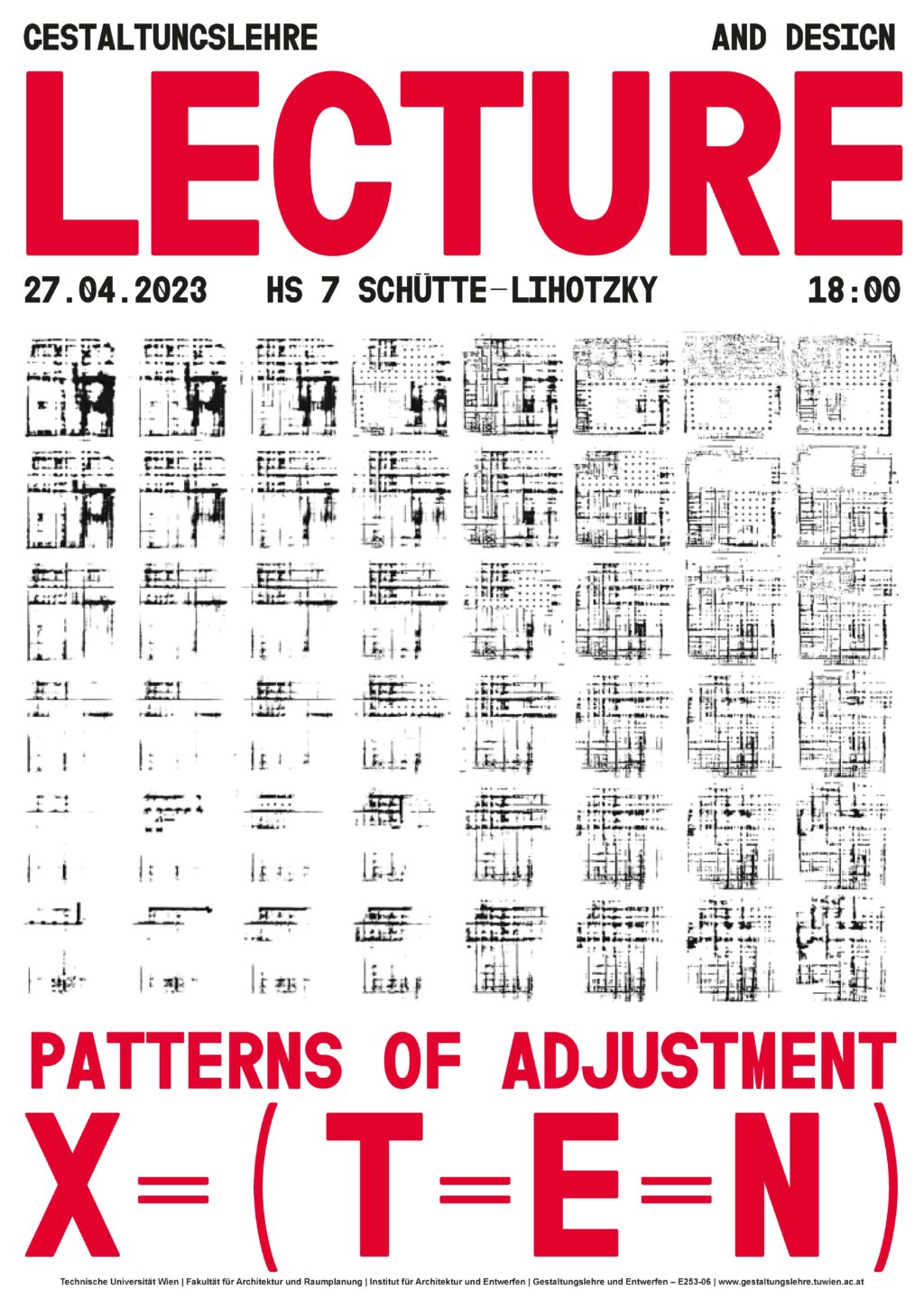
LECTURE:
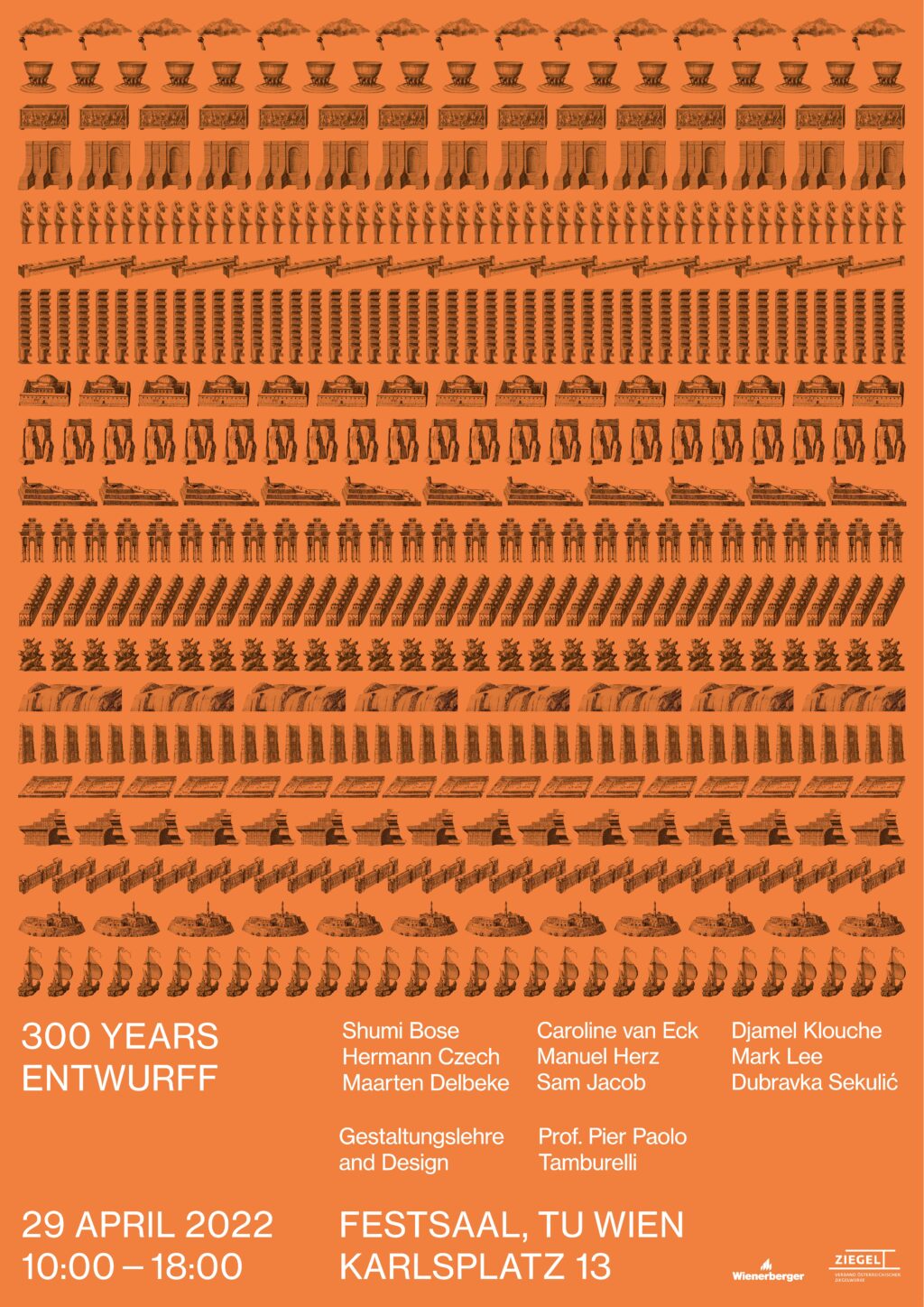
APR 29, 2022
10:00
Symposium:
300 Years EntwurfF
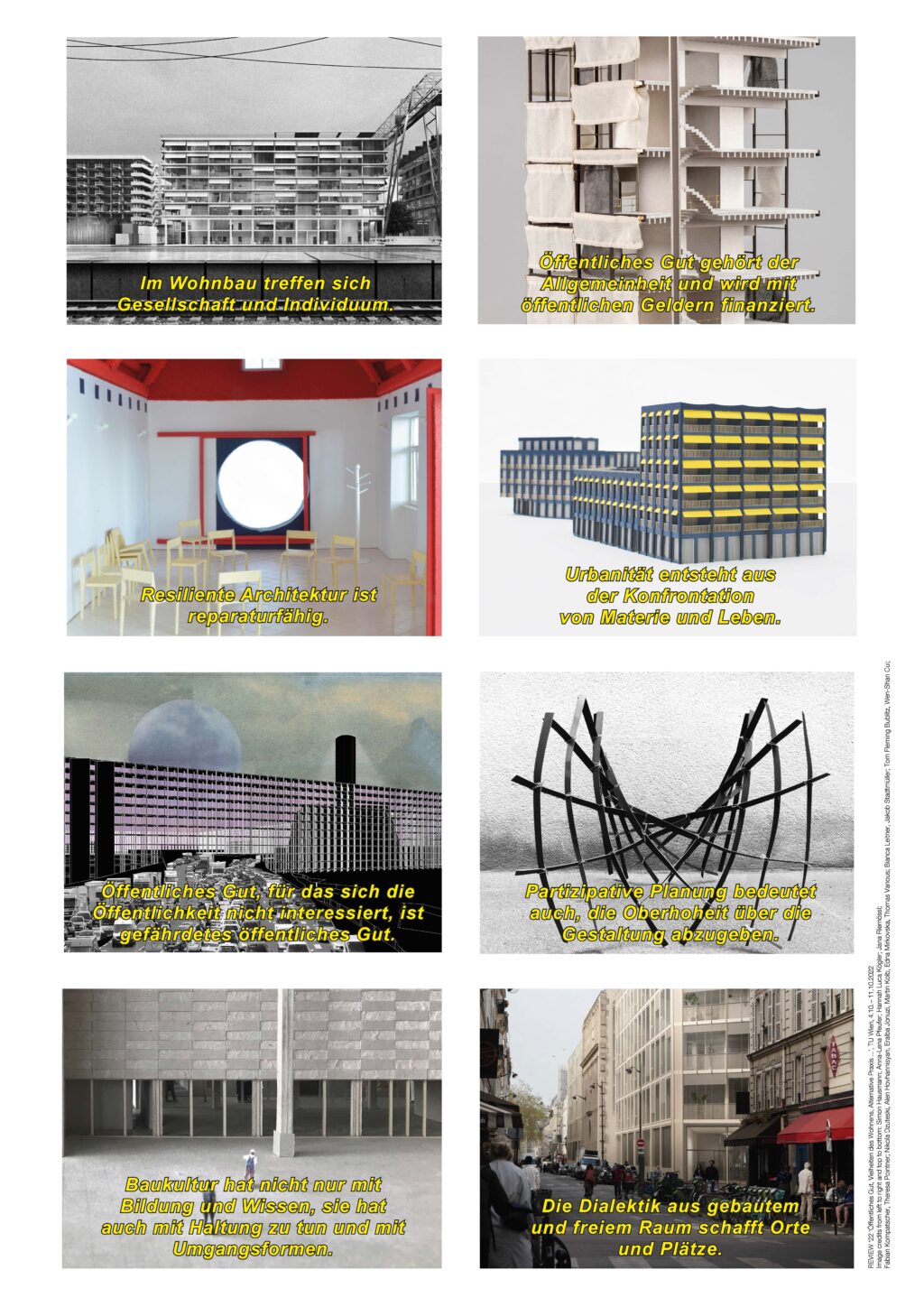
OCT 4, 2022
18:00
EXHIBITION:
REVIEW ‘22
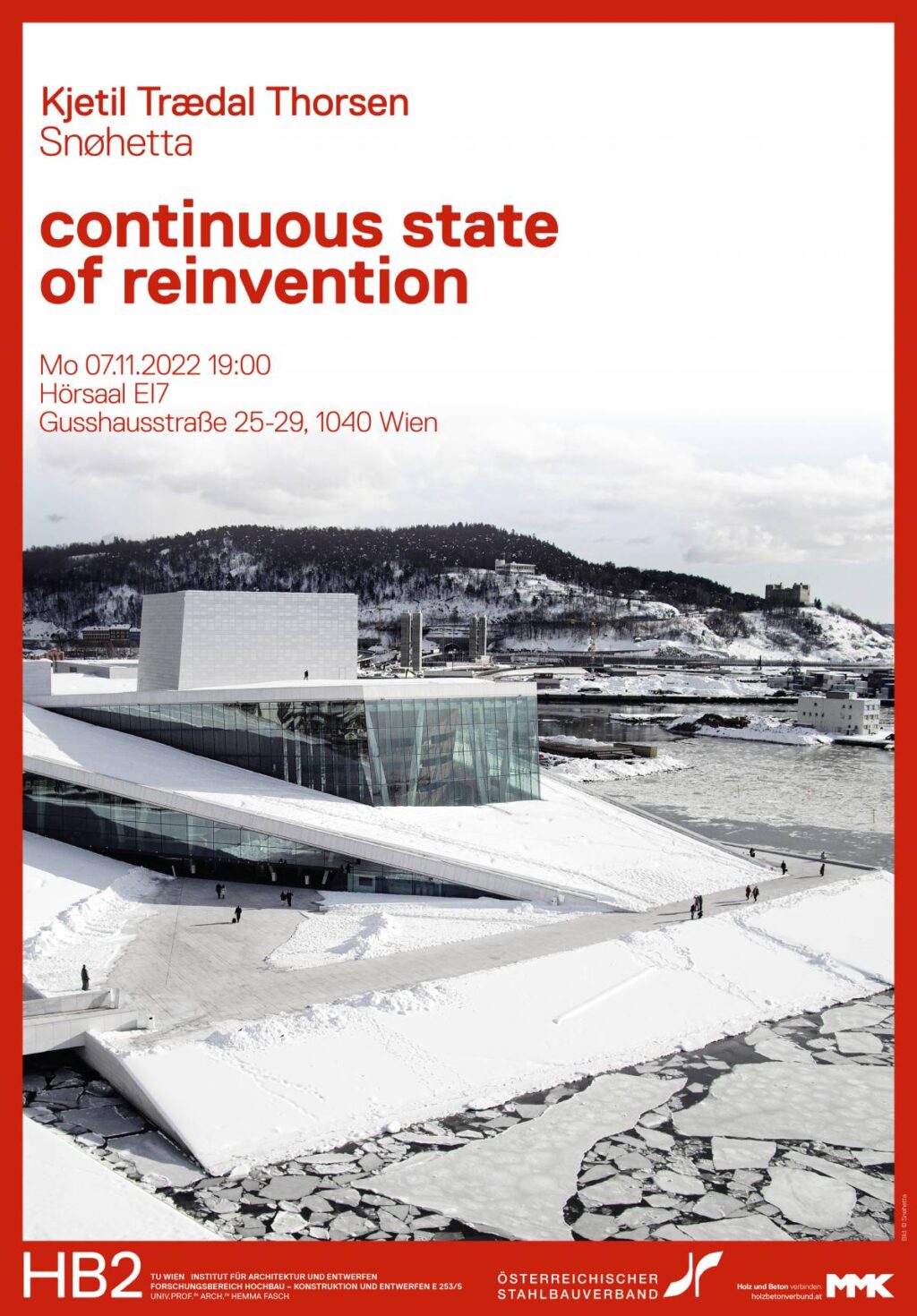
NOV 7, 2022
21:00
LECTURE:
Kjetil Trædal Thorsen, Snøhetta
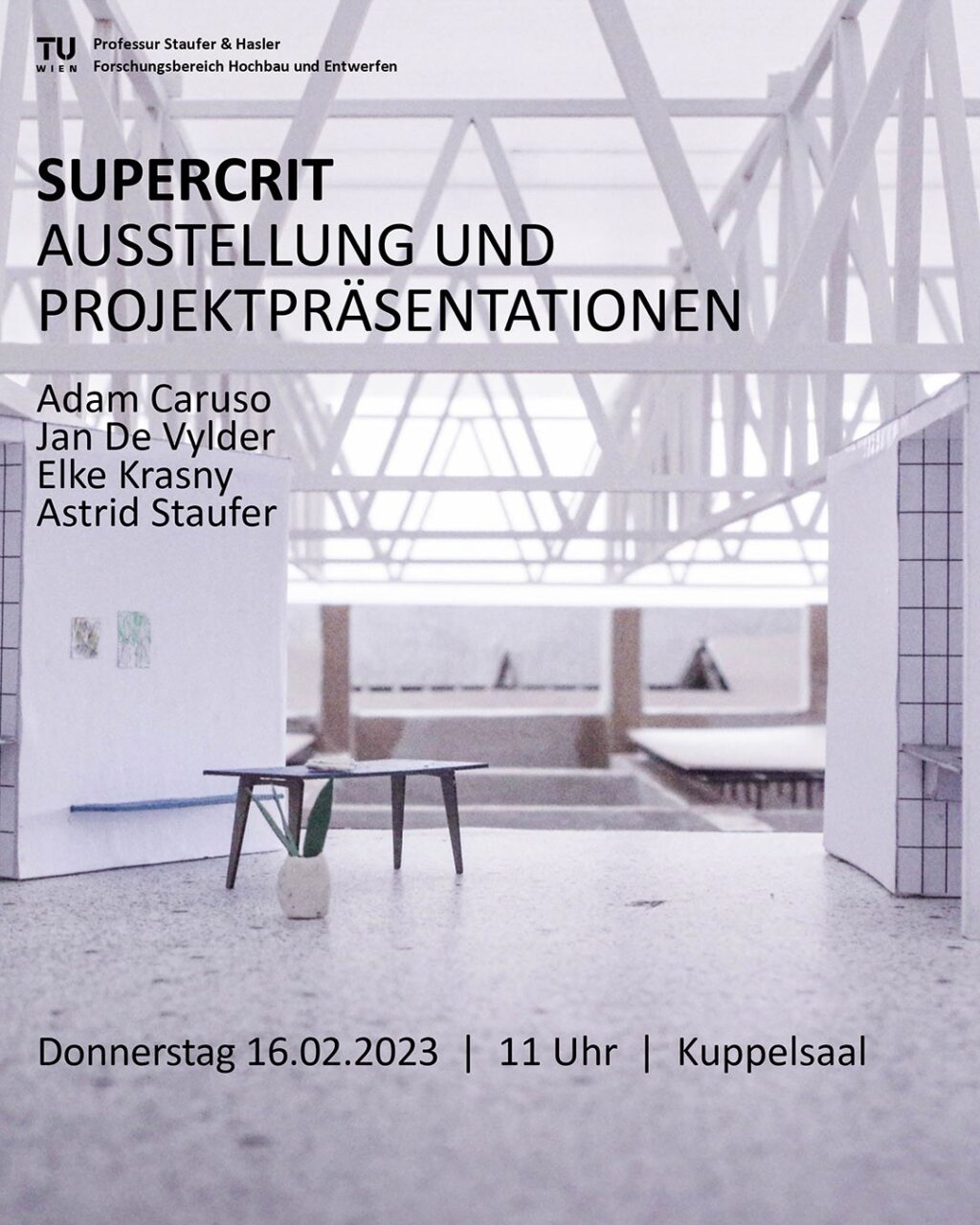
FEB 16, 2023
11:00
EXHIBITION & SUPERCRIT:
UMBAU IN DER LEHRE
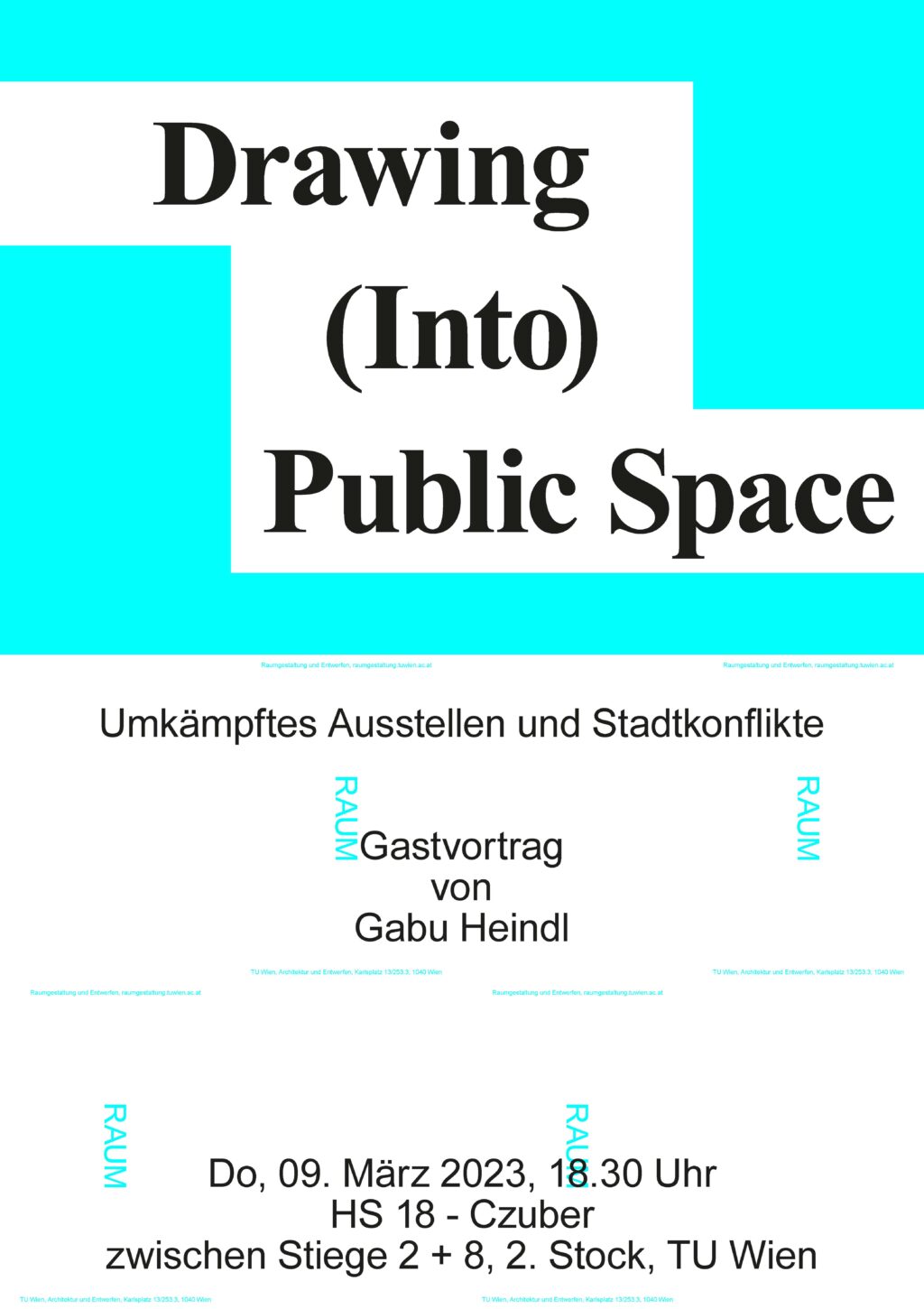
MAR 9, 2023
18:30
LECTURE:
GABU HEINDL
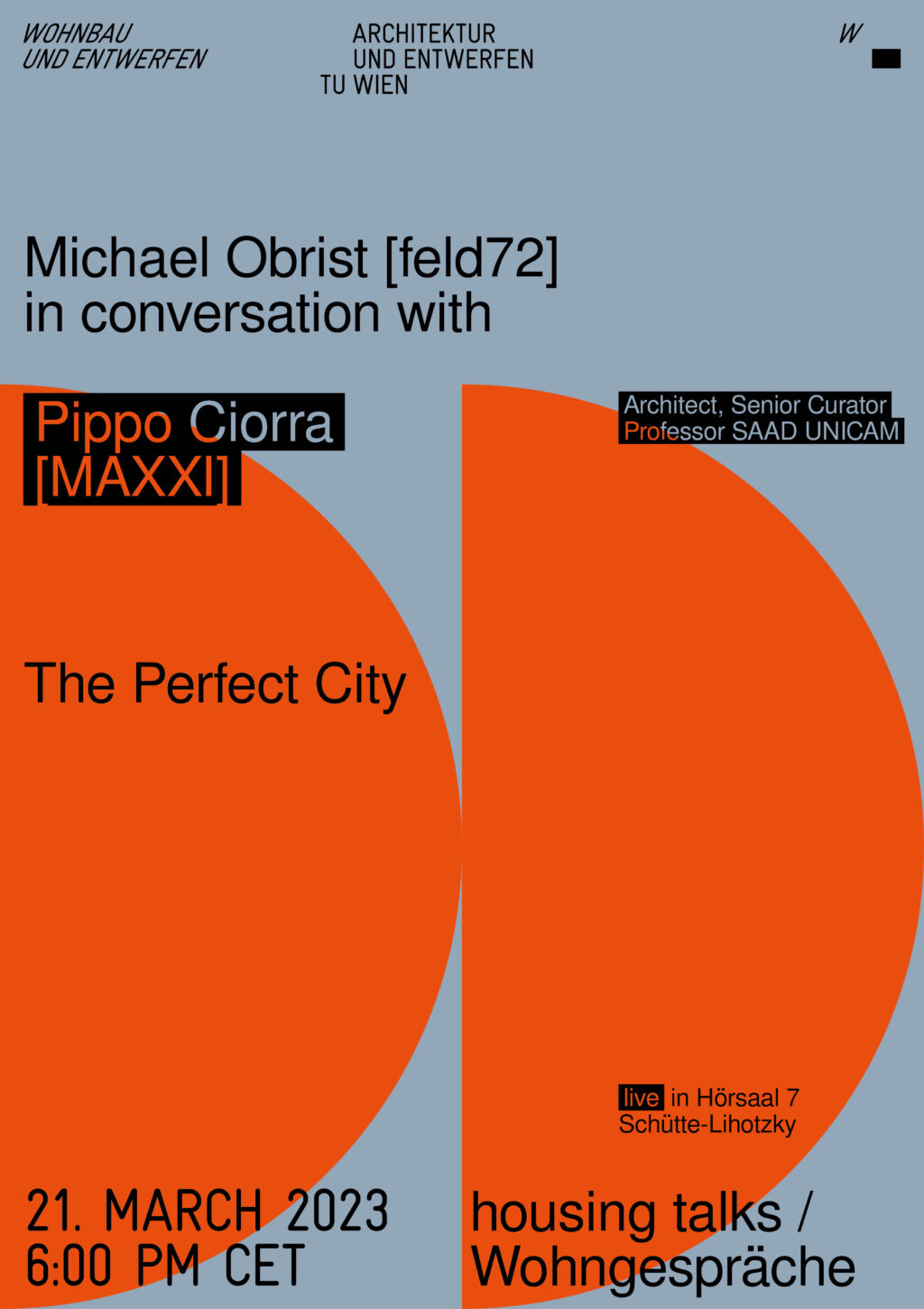
MAR 21, 2023
18:00
HOUSING TALKS:
PIPPO CIORRA, MAXXI
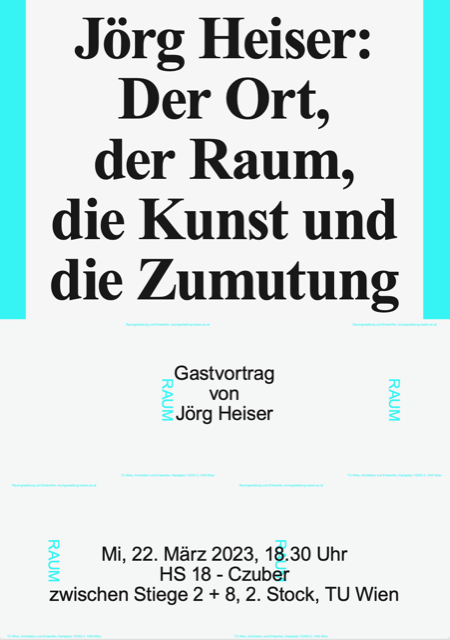
MAR 22, 2023
18:30
LECTURE:
JÖRG HEISER
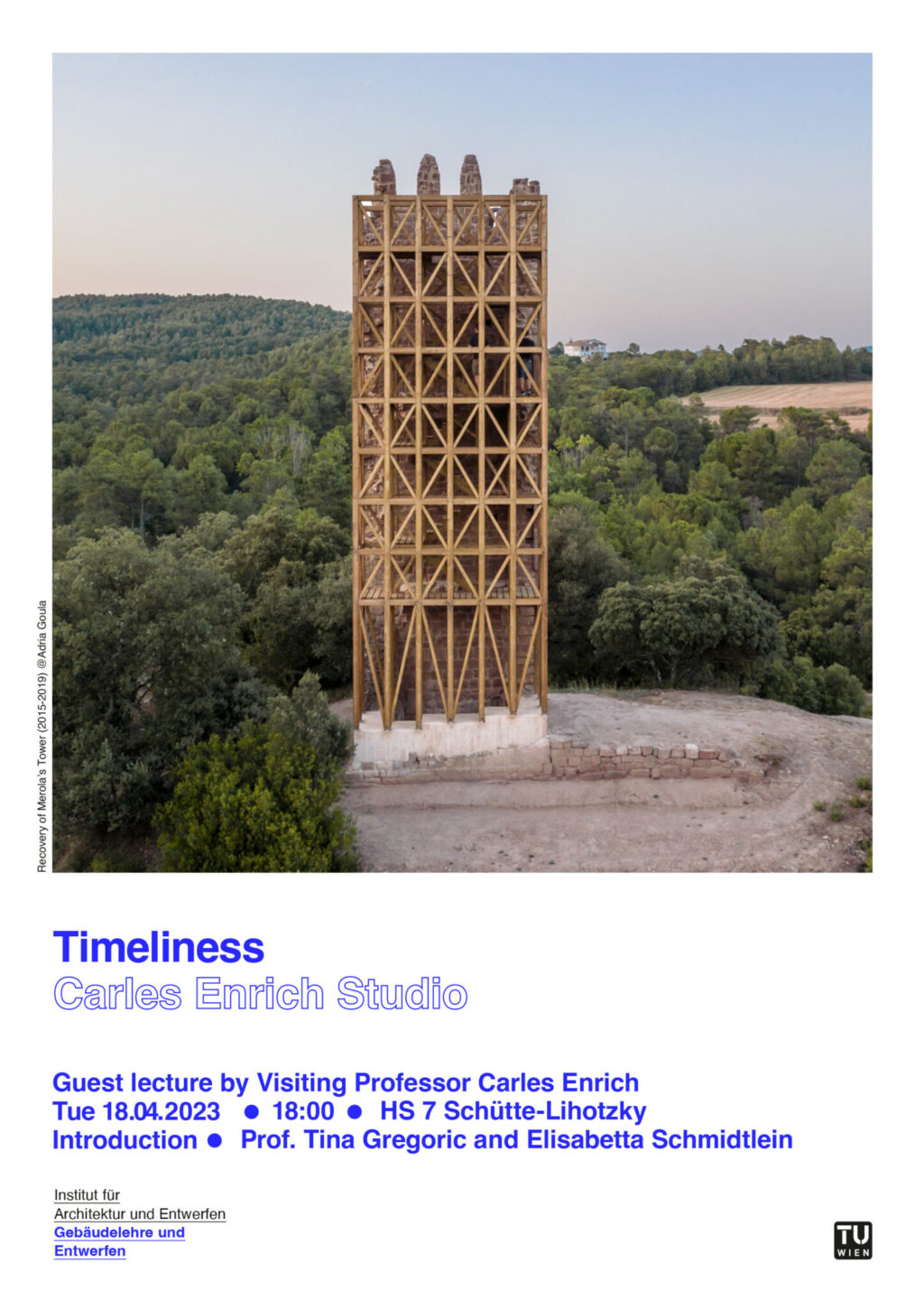
APR 18, 2023
18:00
LECTURE:
CARLES ENRICH

APR 19, 2023
18:30
LECTURE:
HEIKE MAIER-RIEPER

APR 26, 2023
18:30
LECTURE:
BERNHARD LEITNER
MAY 3, 2023
18:30
LECTURE:
LUISA ZIAJA
MAY 11, 2023
18:00
SYMPOSIUM:
MATERIAL REUSE STRATEGIES
MAY 16, 2023
18:00
HOUSING TALKS:
SANDI HILAL
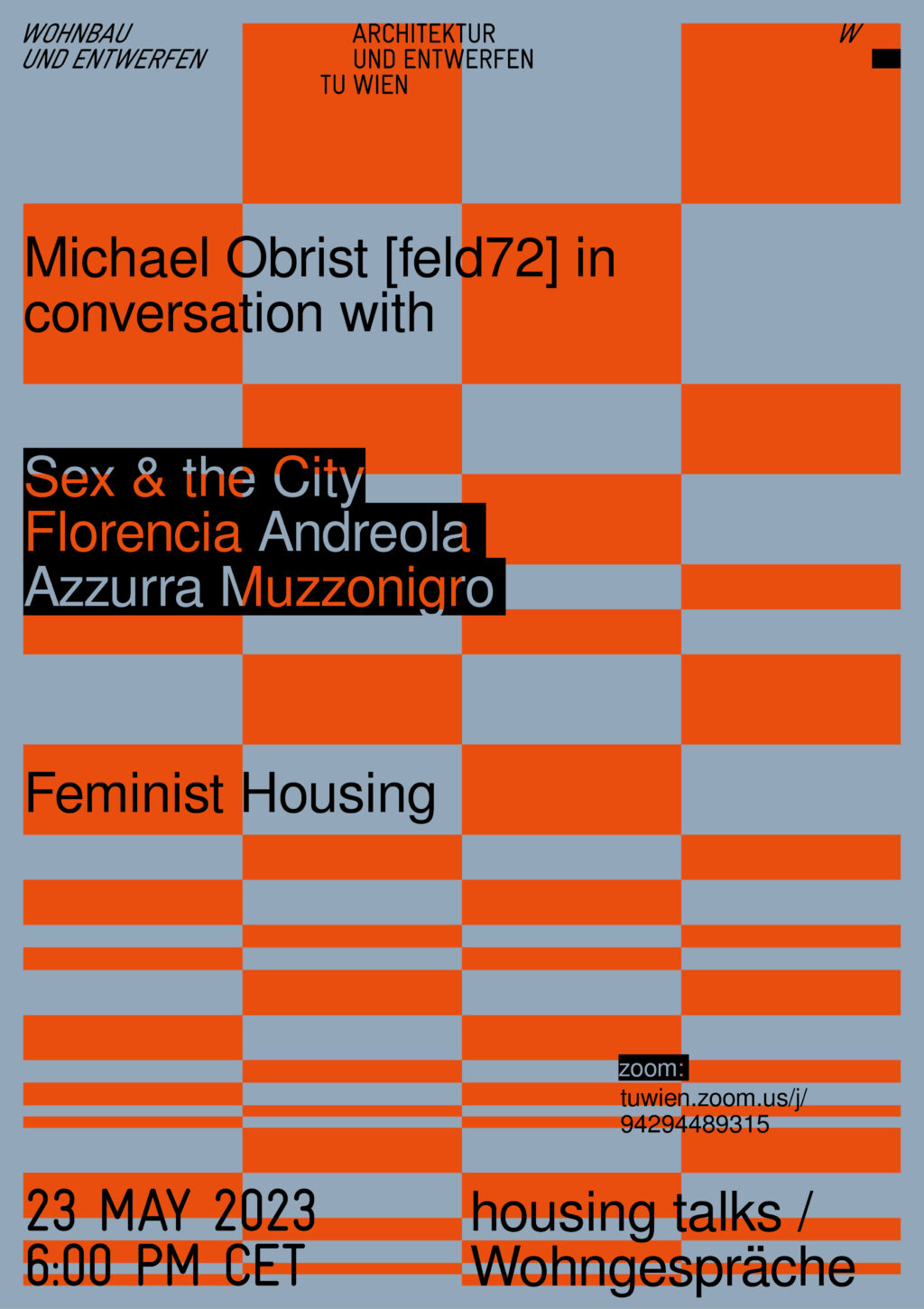
MAY 23, 2023
18:00
HOUSING TALKS:
FLORENCIA ANDREOLA, AZZURA MUZZONIGRO
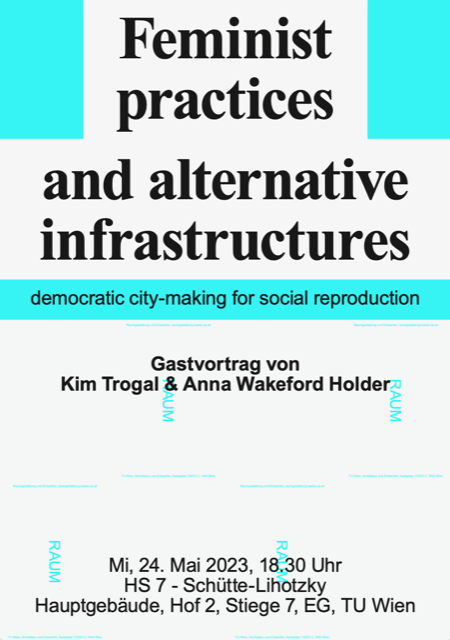
MAY 24, 2023
18:30
LECTURE:
KIM TROGAL & ANNA WAKEFORD HOLDER
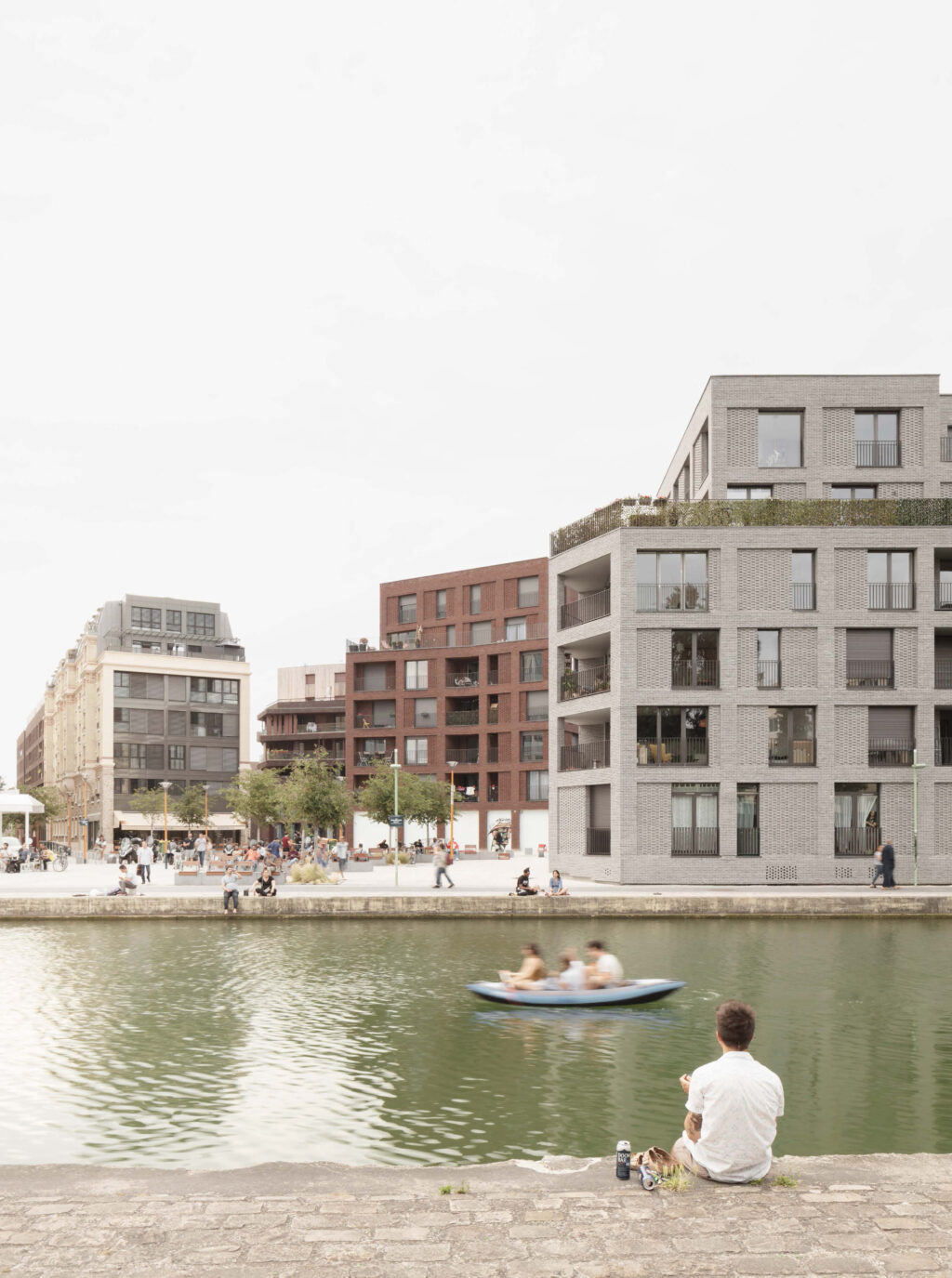
MAY 25, 2023
18:00
LECTURE:
AVENIER CORNEJO ARCHITECTS
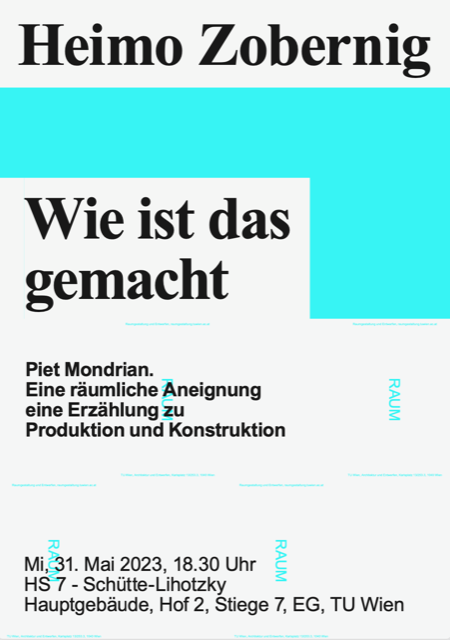
MAY 31, 2023
18:30
LECTURE:
HEIMO ZOBERNIG
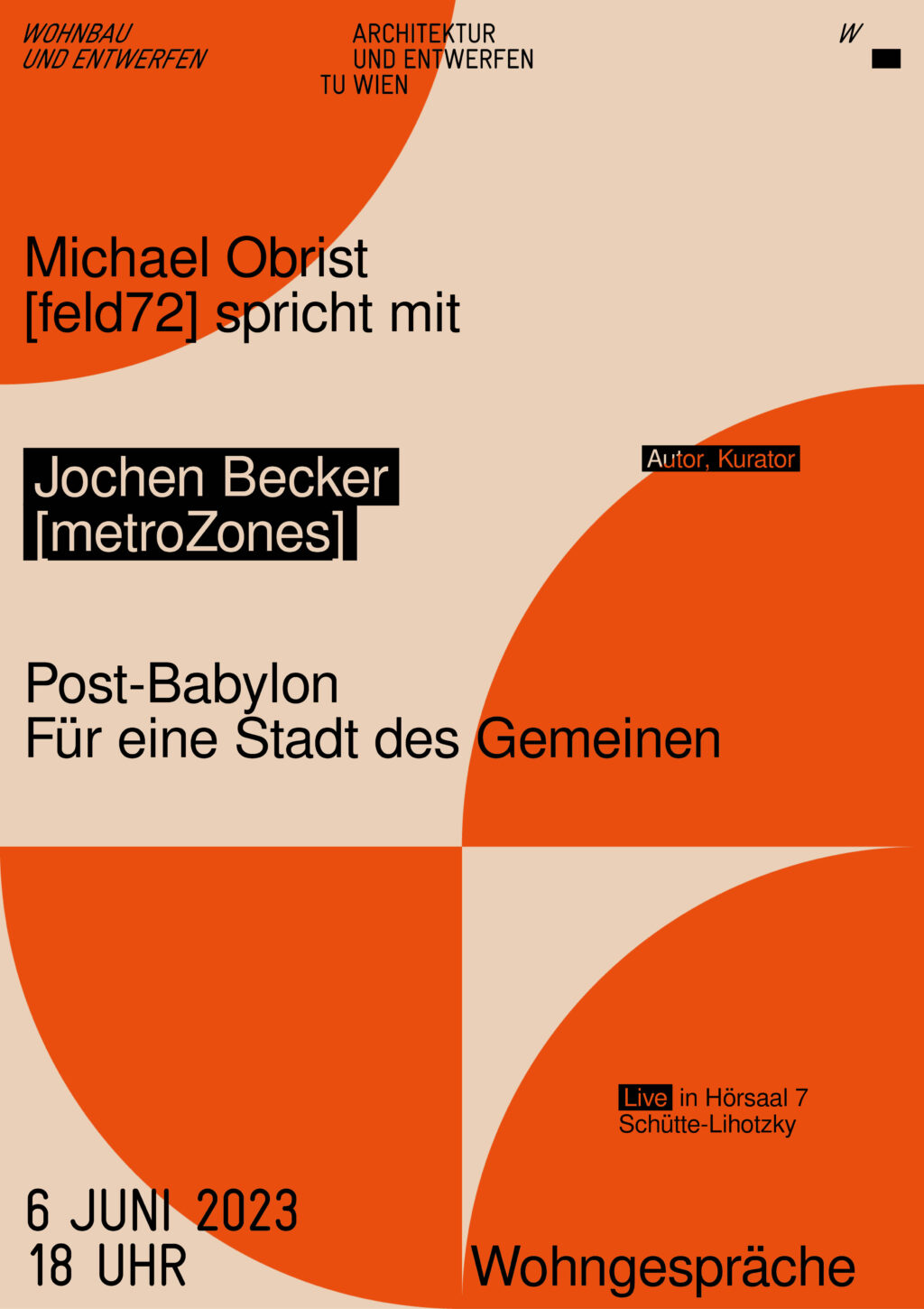
JUN 6, 2023
18:00
HOUSING TALKS:
JOCHEN BECKER, METROZONES

JUN 20, 2023
18:00
HOUSING TALKS:
SASHA PIRKER
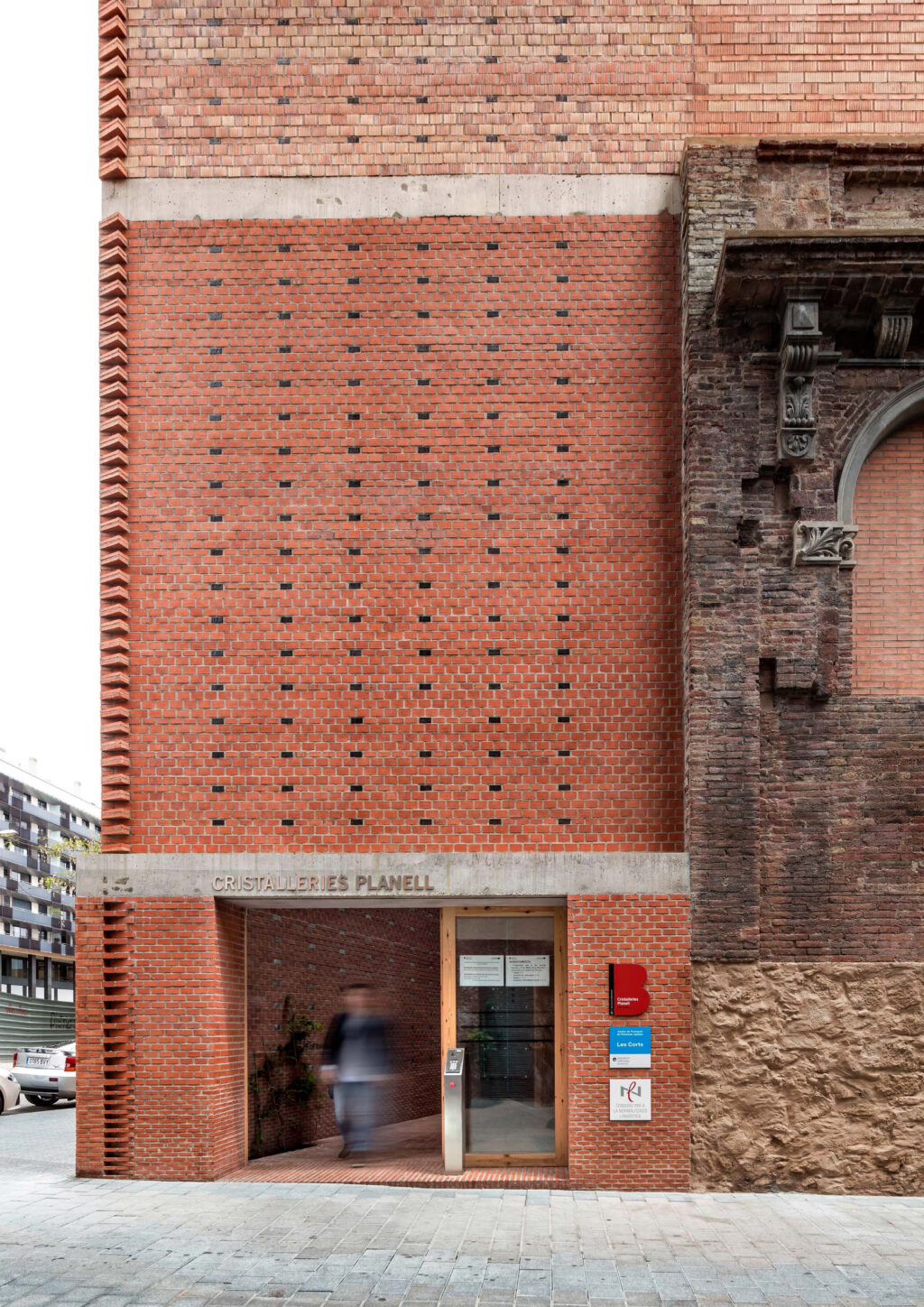
JUN 26, 2023
18:00
LECTURE:
JOSEP RICART, HARQUITECTES
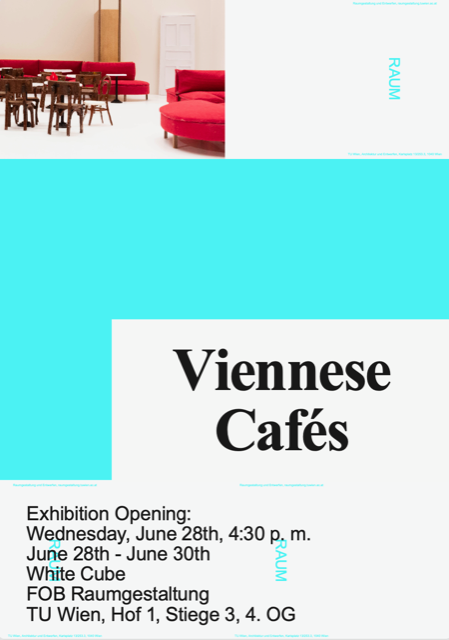
JUN 28, 2023
16:30
EXHIBITION:
VIENNESE CAFÉS: PUBLIC INTERIOR, URBAN SALON
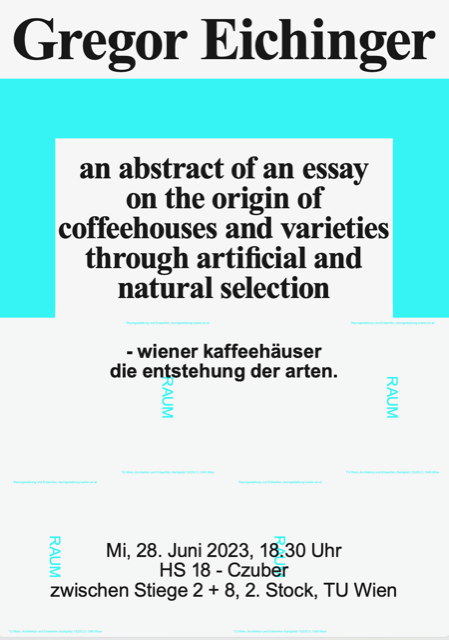
JUN 28, 2023
18:30
LECTURE:
GREGOR EICHINGER
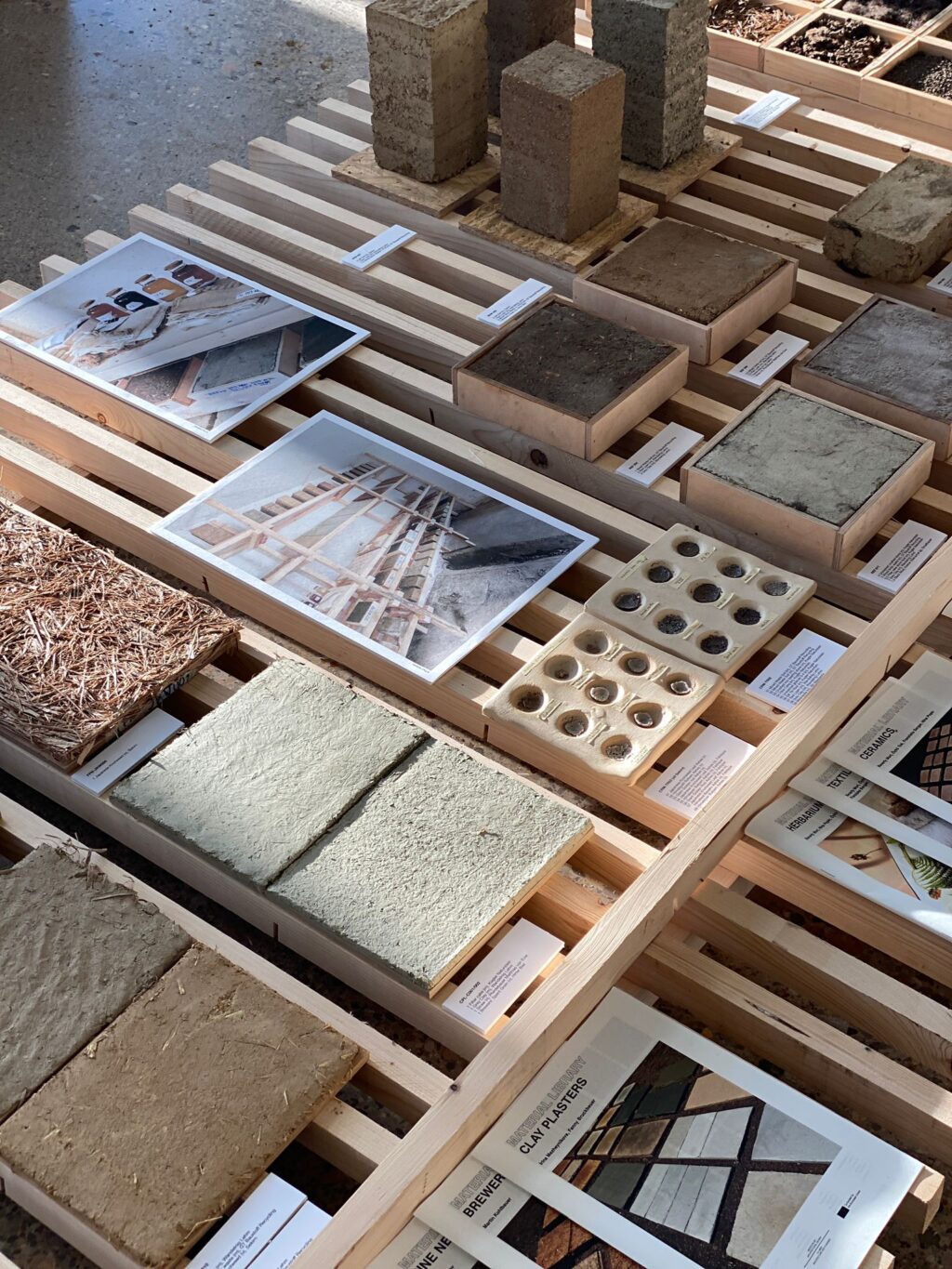
SEP 27, 2023
18:00
EXHIBITION:
Bioregionale Strategien der Wieder- verwendung
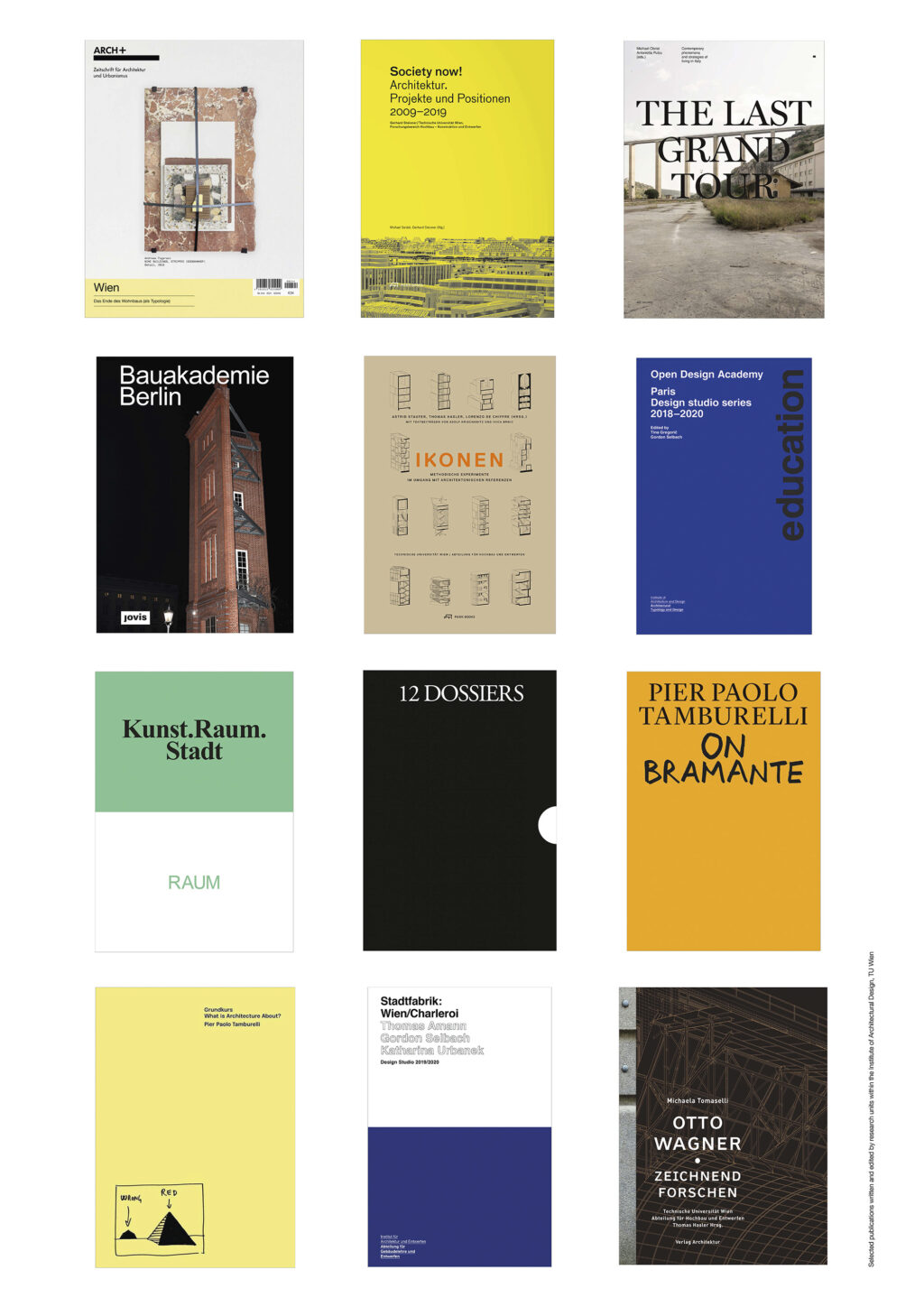
OCT 11, 2023
18:00
PRESENTATION & DISCUSSION:
WEBSITE LAUNCH & TALK ON PUBLICATIONS
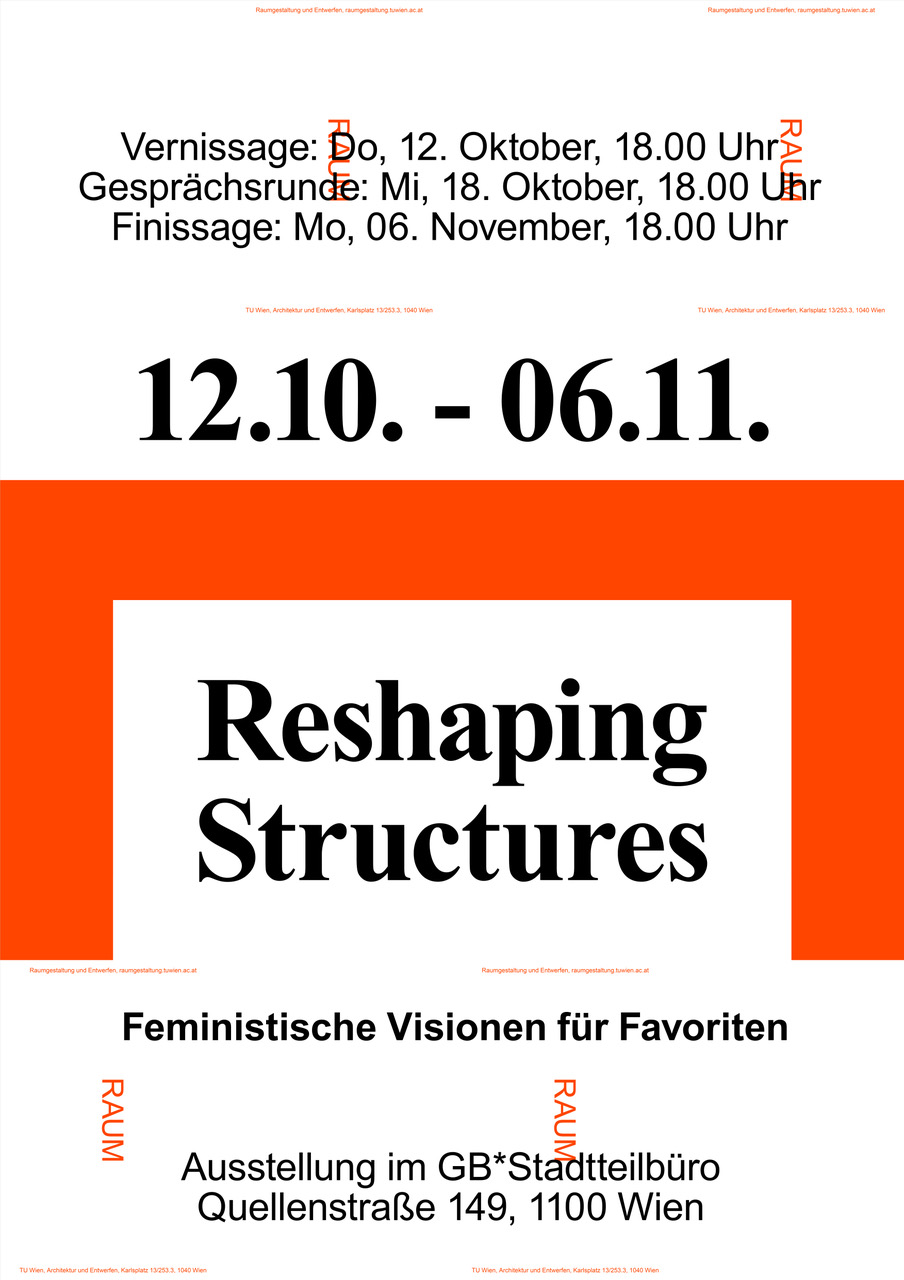
OCT 12, 2023
18:00
EXHIBITION:
RESHAPING STRUCTURES
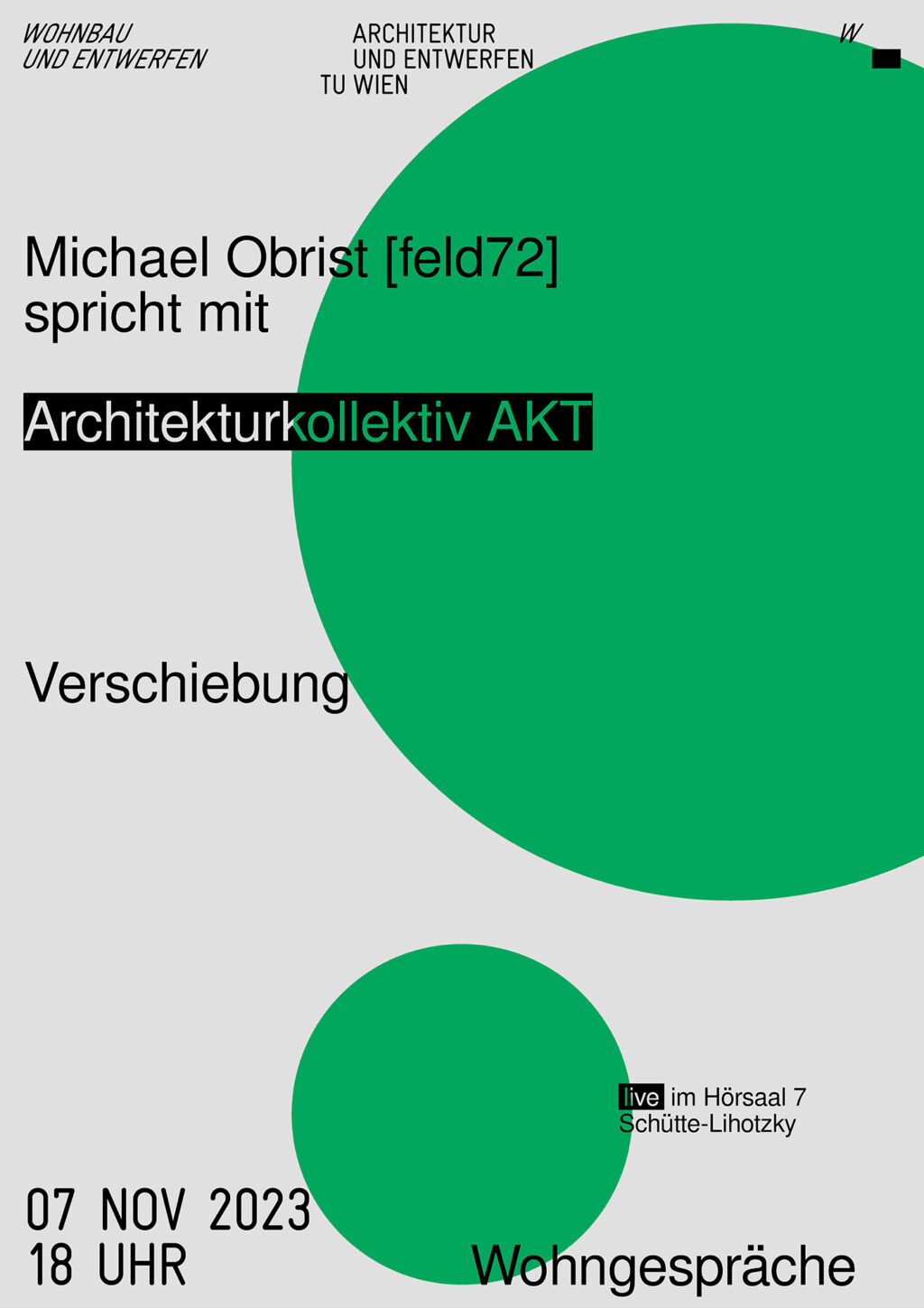
NOV 7, 2023
18:00
HOUSING TALKS:
ARCHITEKTUR-
KOLLEKTIV AKT
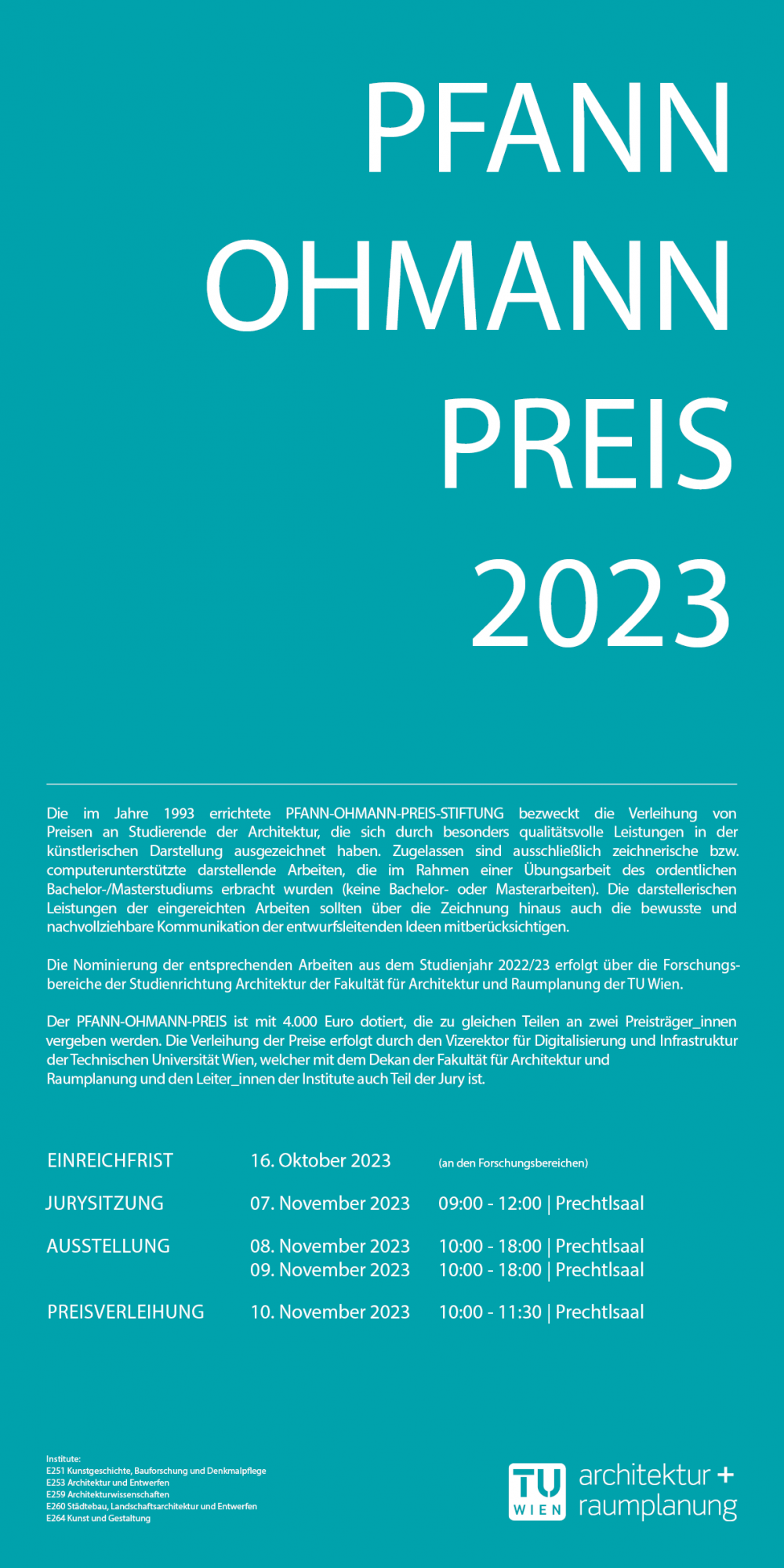
NOV 10, 2023
10:00
EXHIBITION:
PFANN-OHMANN-PREIS 2023
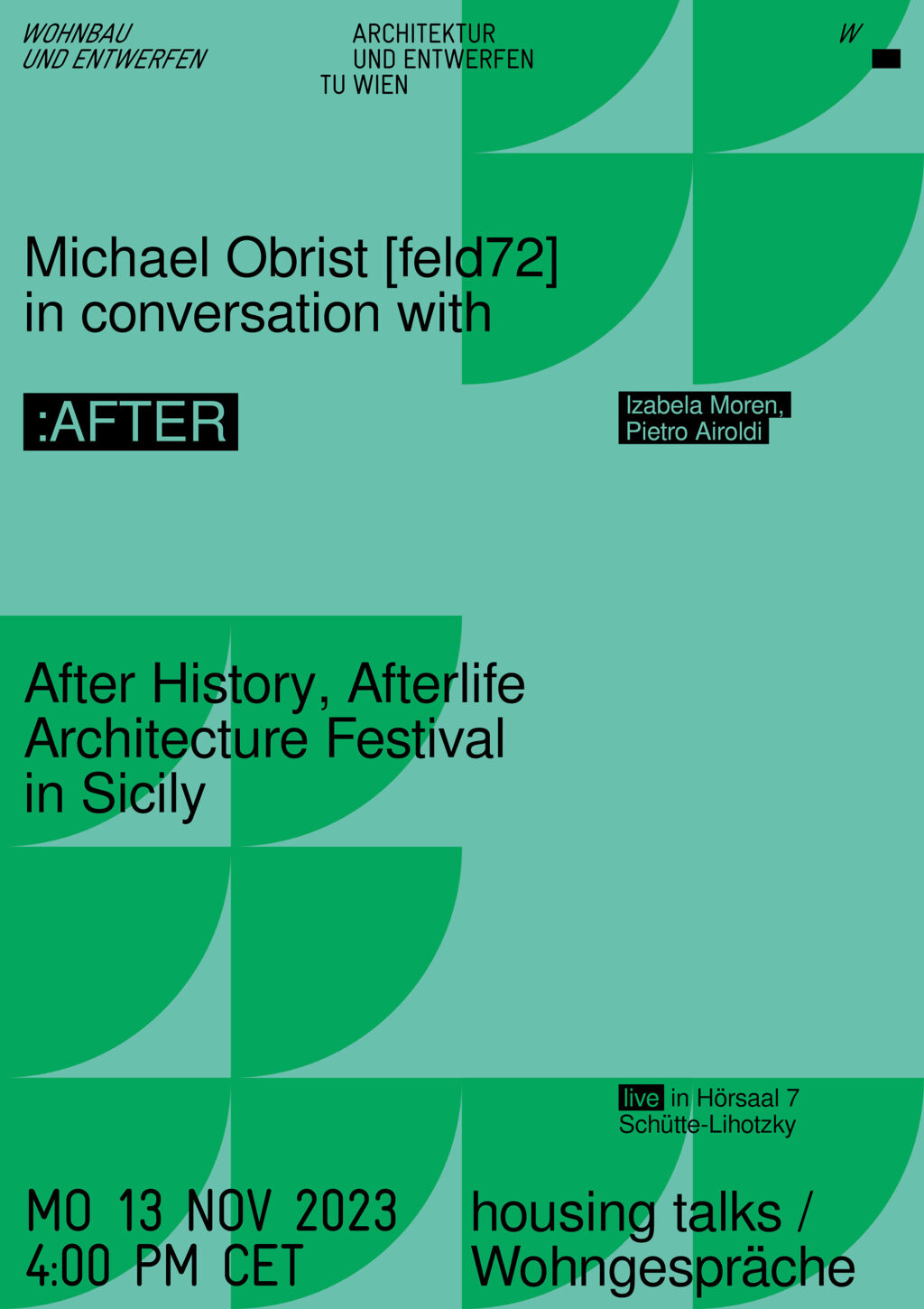
NOV 13, 2023
16:00
HOUSING TALKS:
IZABELA MOREN, PIETRO AIROLDI
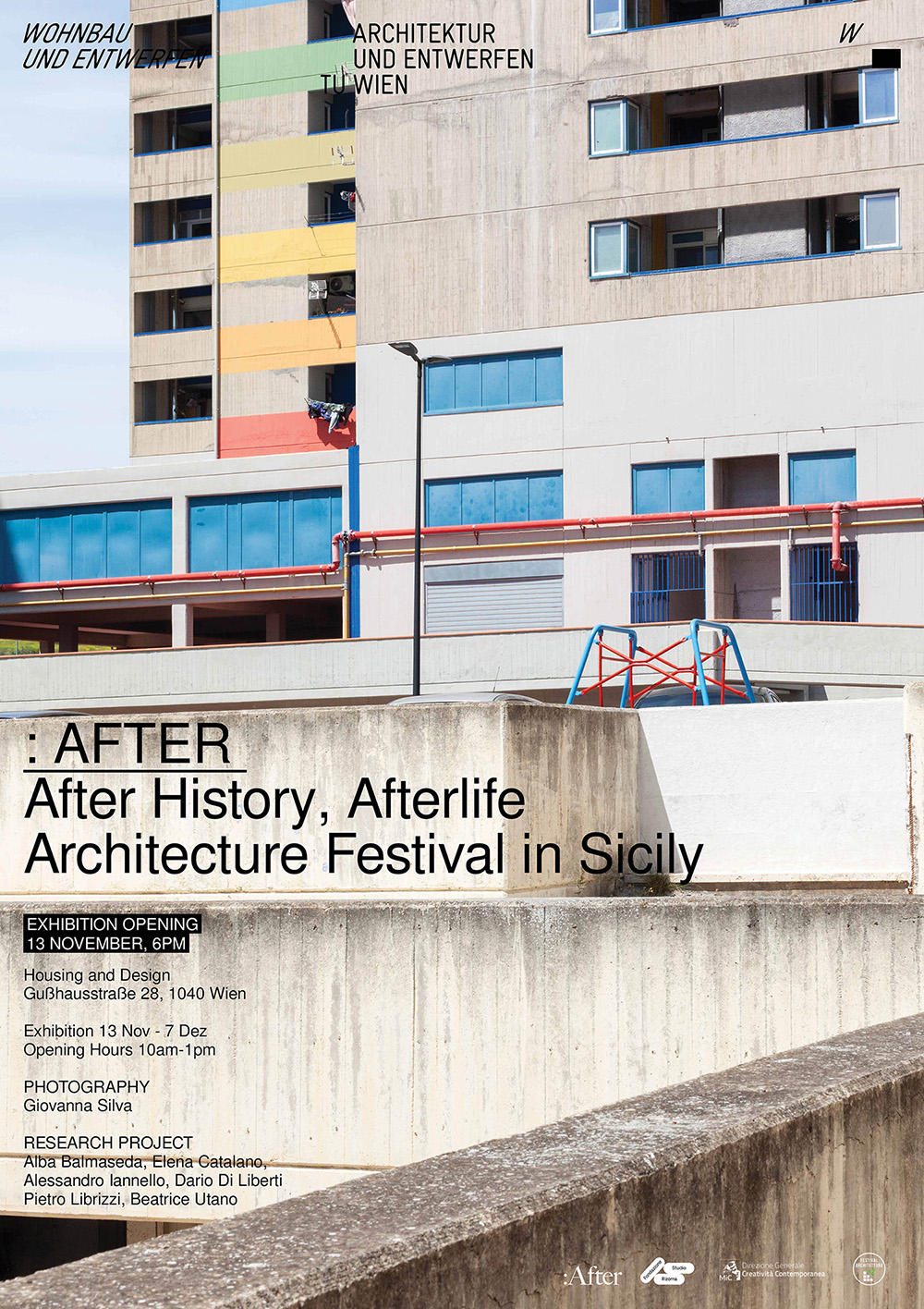
NOV 13, 2023
18:00
EXHIBITION:
MODERNITY SOUTH SOUTH

NOV 14, 2023
18:00
LECTURE:
STUDIO MUOTO
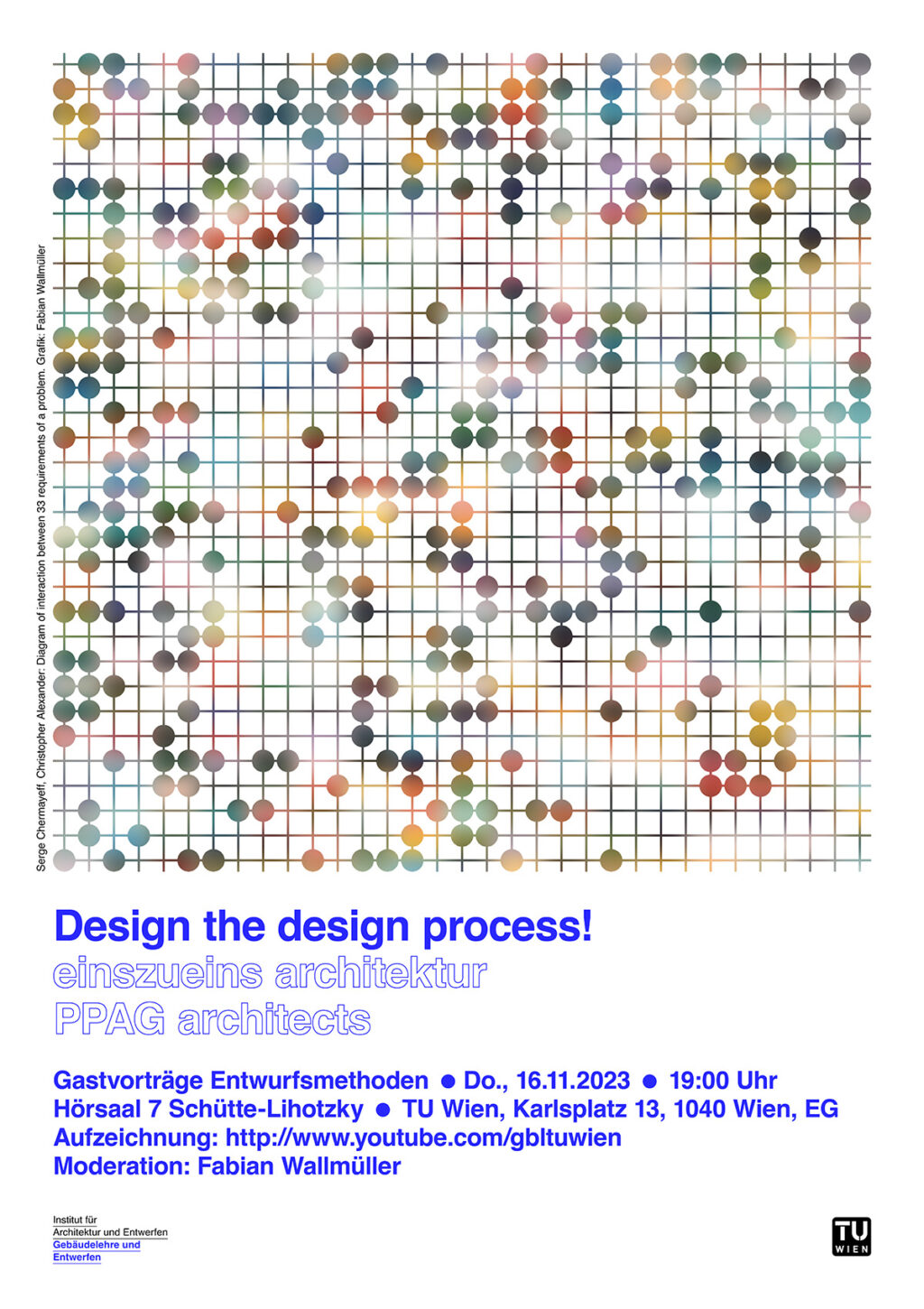
NOV 16, 2023
19:00
LECTURE:
einszueins architektur, PPAG architects
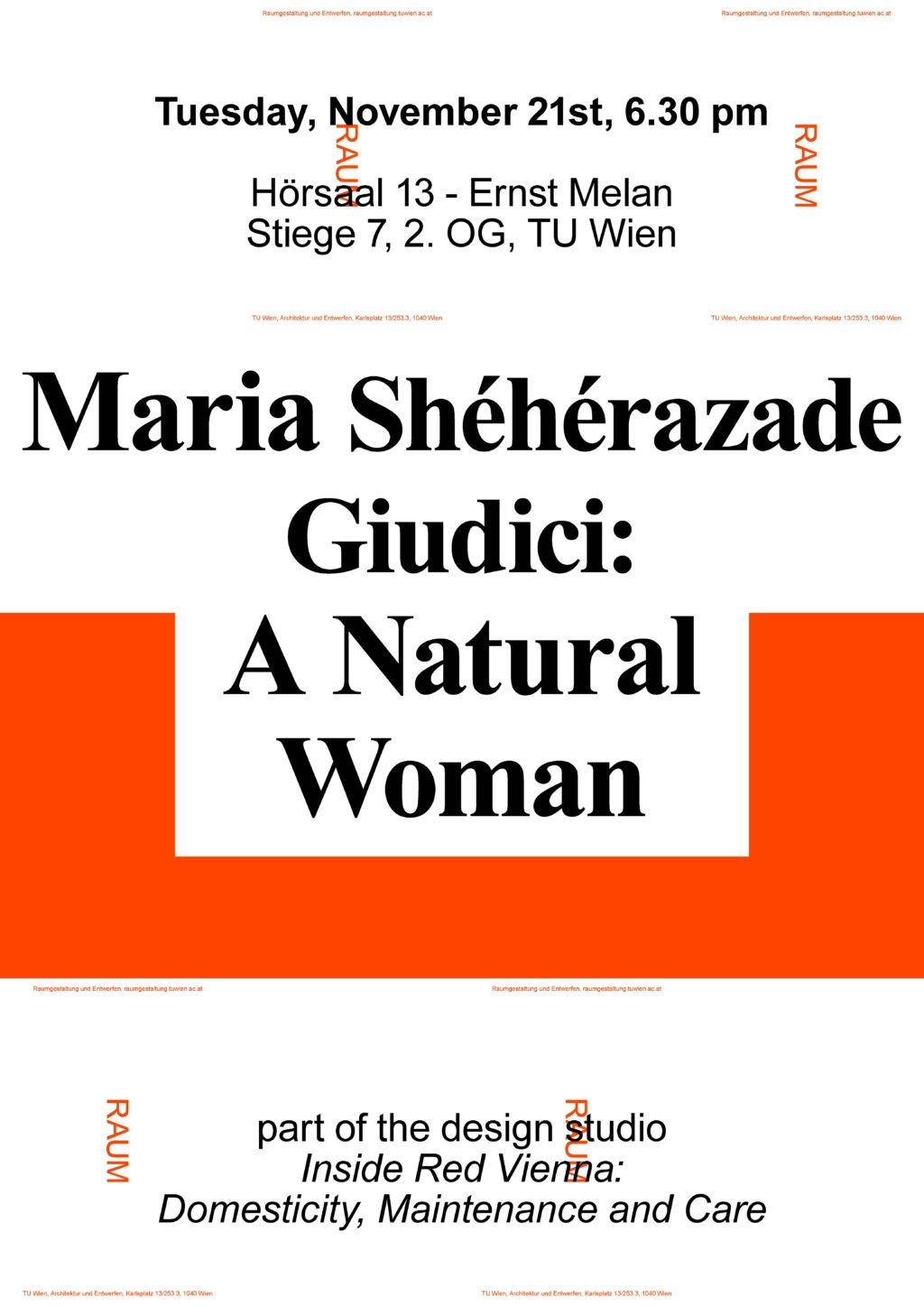
NOV 21, 2023
18:30
LECTURE:
MARIA SHÉHÉRAZADE GUIDICI
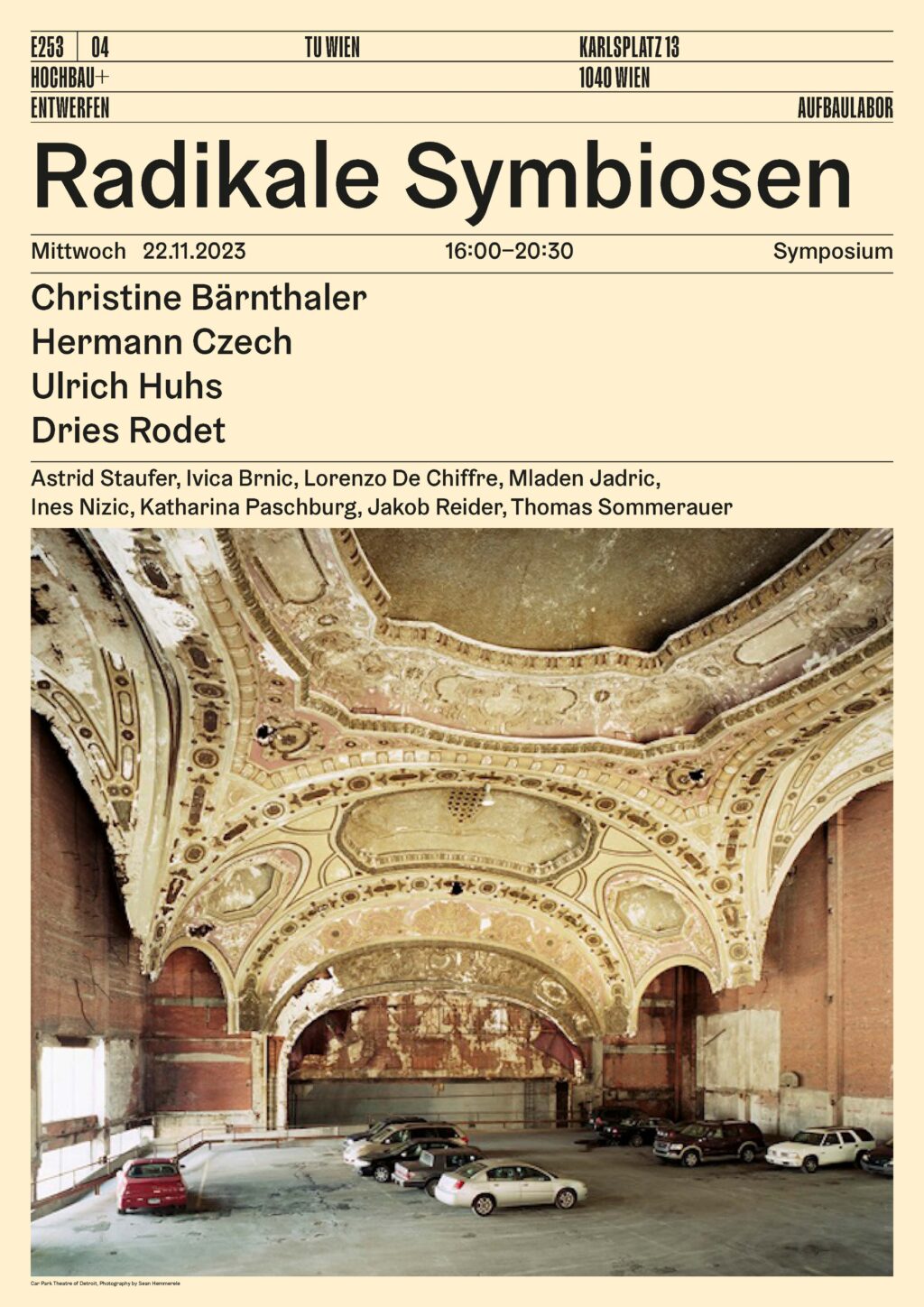
NOV 22, 2023
16:00
SYMPOSIUM:
RADIKALE SYMBIOSEN

NOV 24, 2023
18:00
BOOK LAUNCH:
EINE SKIZZENFIBEL
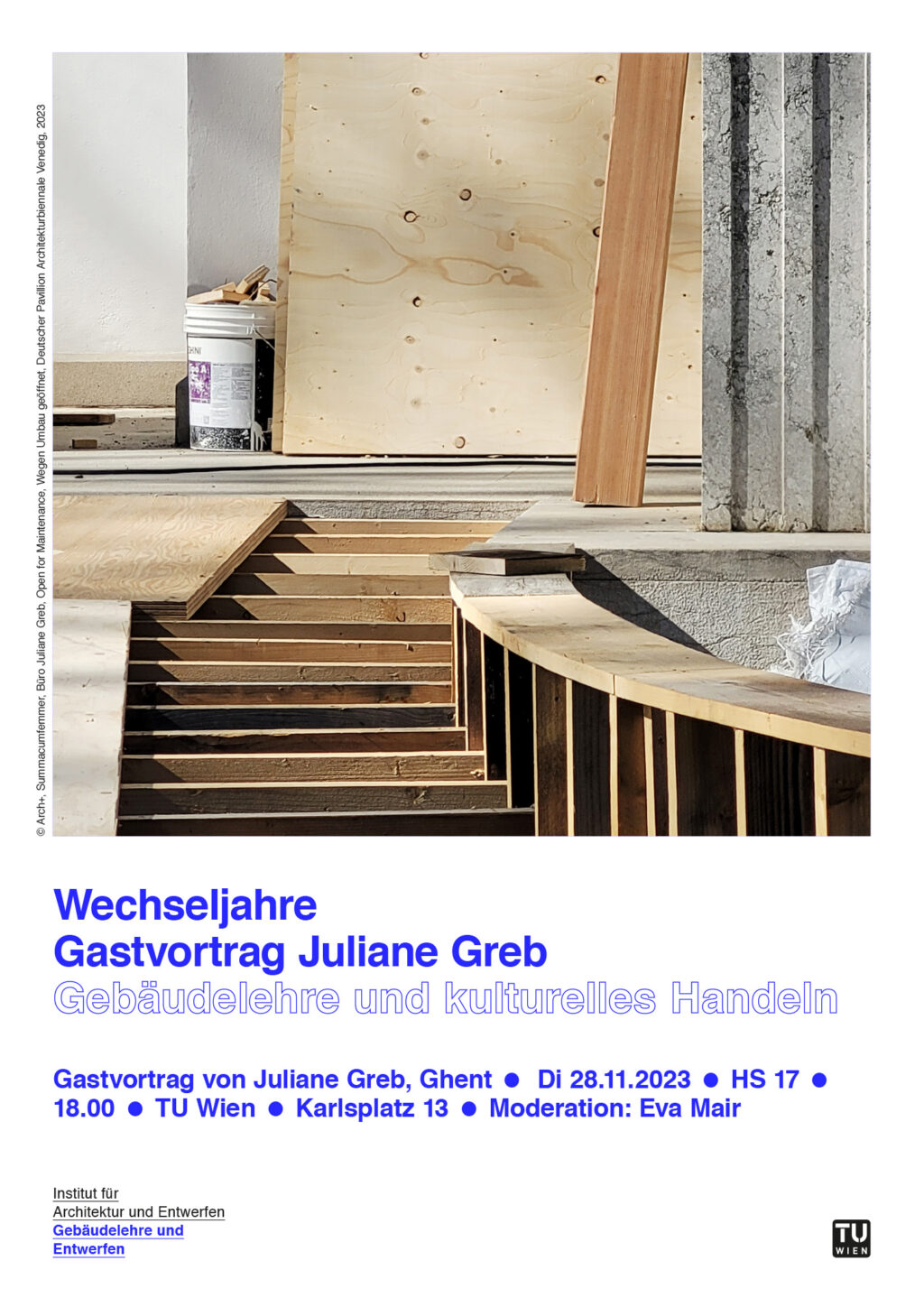
NOV 28, 2023
18:00
LECTURE:
JULIANE GREB
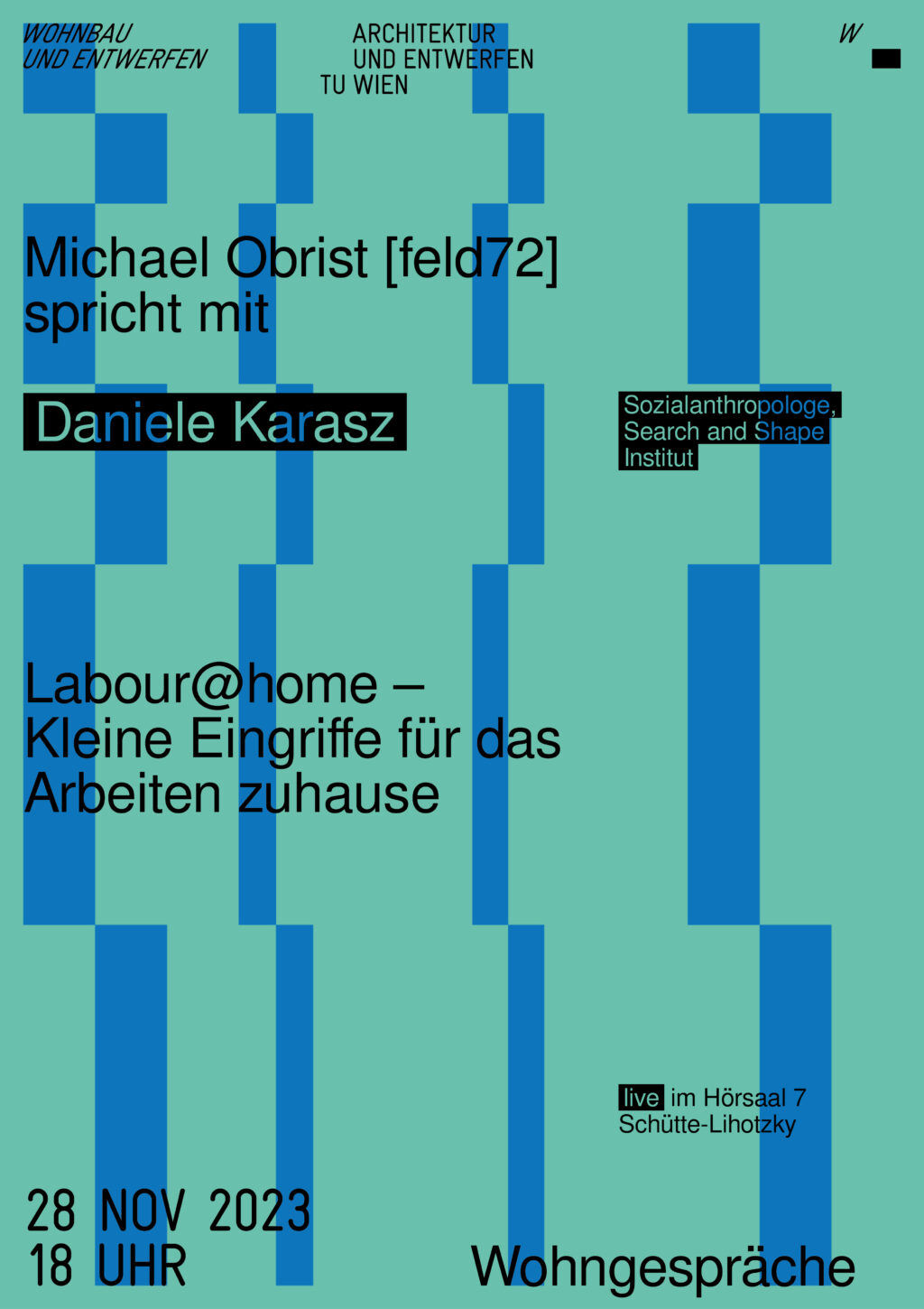
NOV 28, 2023
18:00
HOUSING TALKS:
DANIELE KARASZ
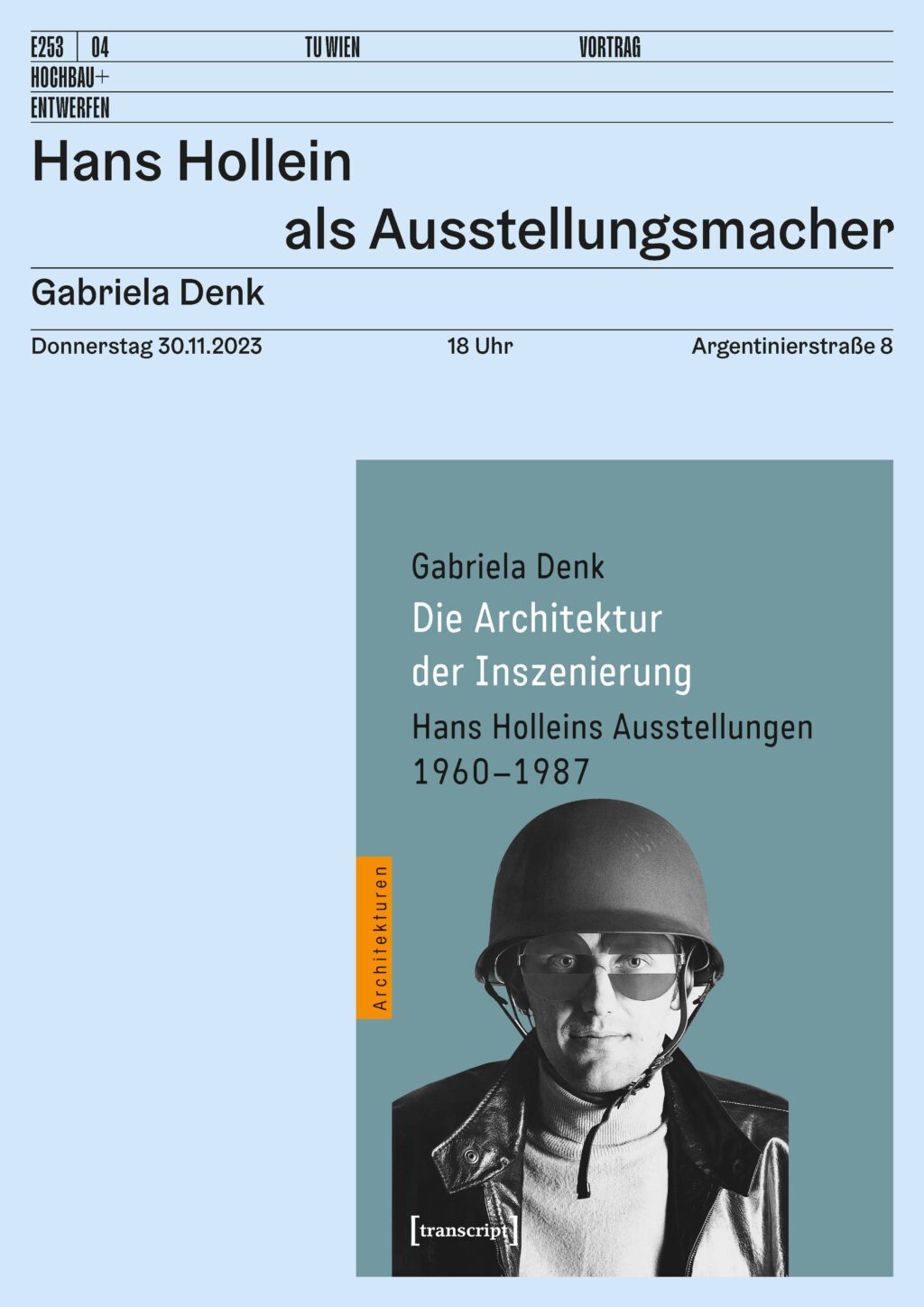
NOV 30, 2023
18:00
LECTURE:
GABRIELA DENK
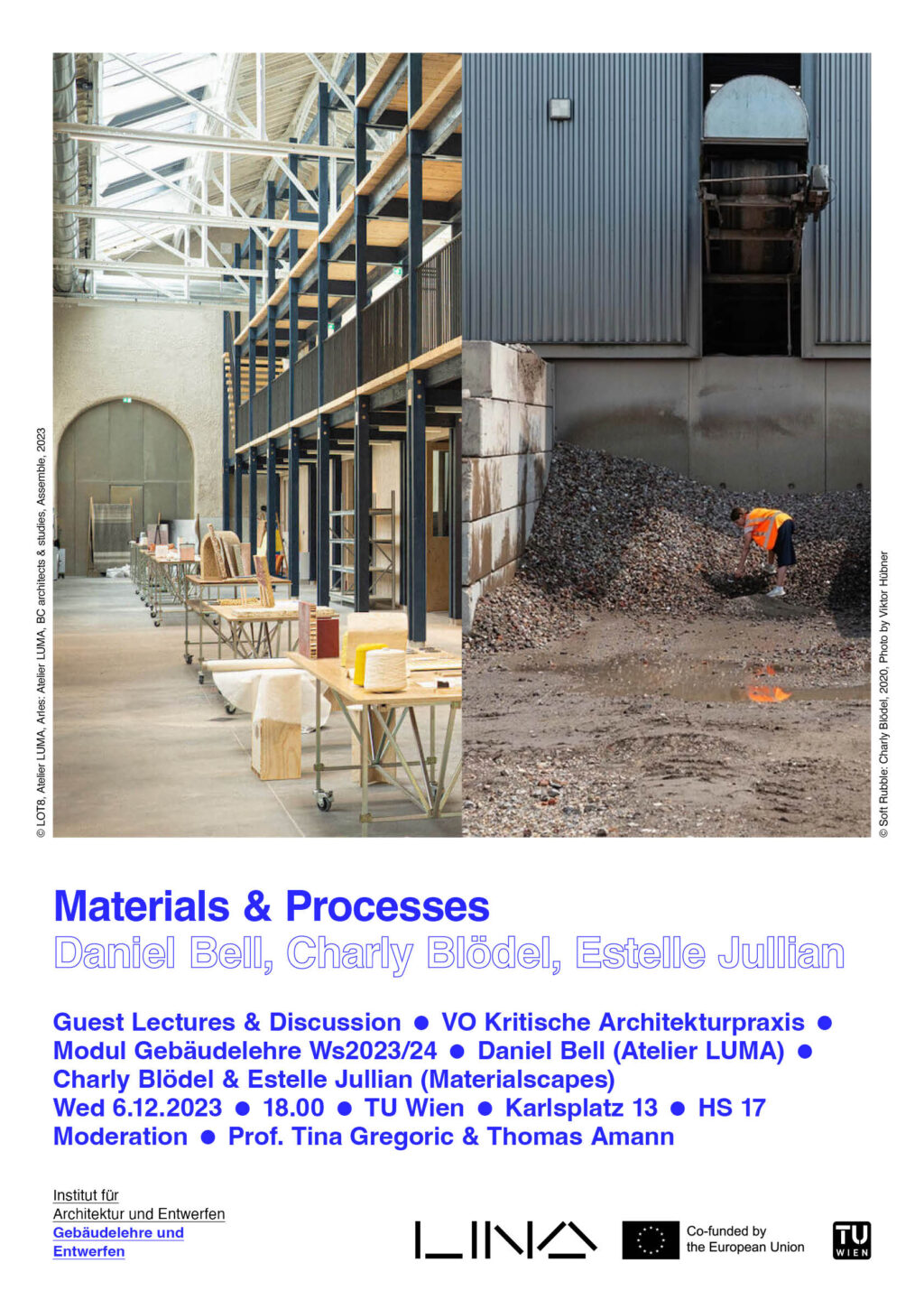
DEC 6, 2023
18:00
LECTURES:
DANIEL BELL, CHARLY BLÖDEL, ESTELLE JULLIAN
DEC 12, 2023
18:00
HOUSING TALKS:
MARINA OTERO VERZIER
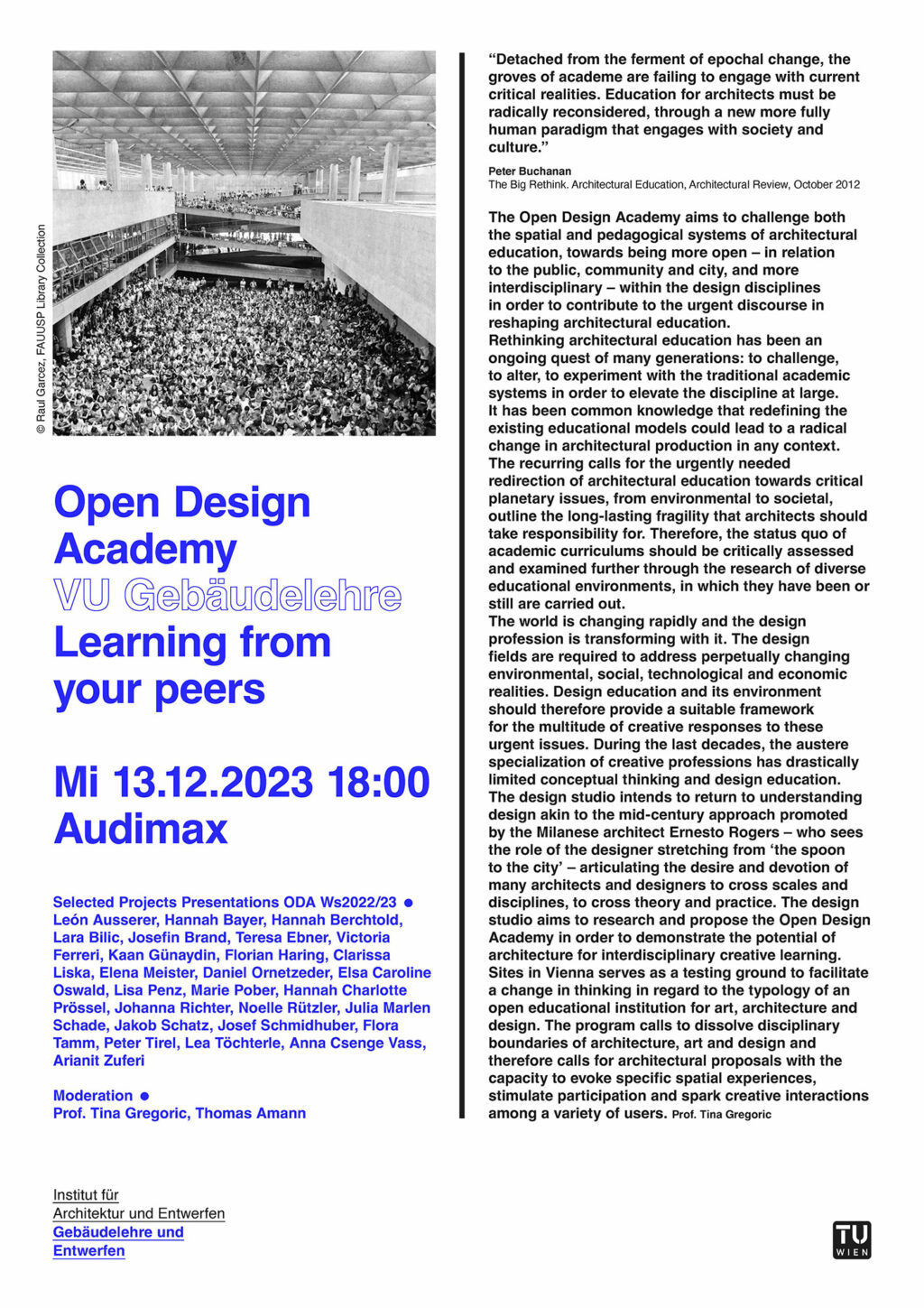
DEC 13, 2023
18:00
LECTURES:
OPEN DESIGN ACADEMY – LEARNING FROM YOUR PEERS
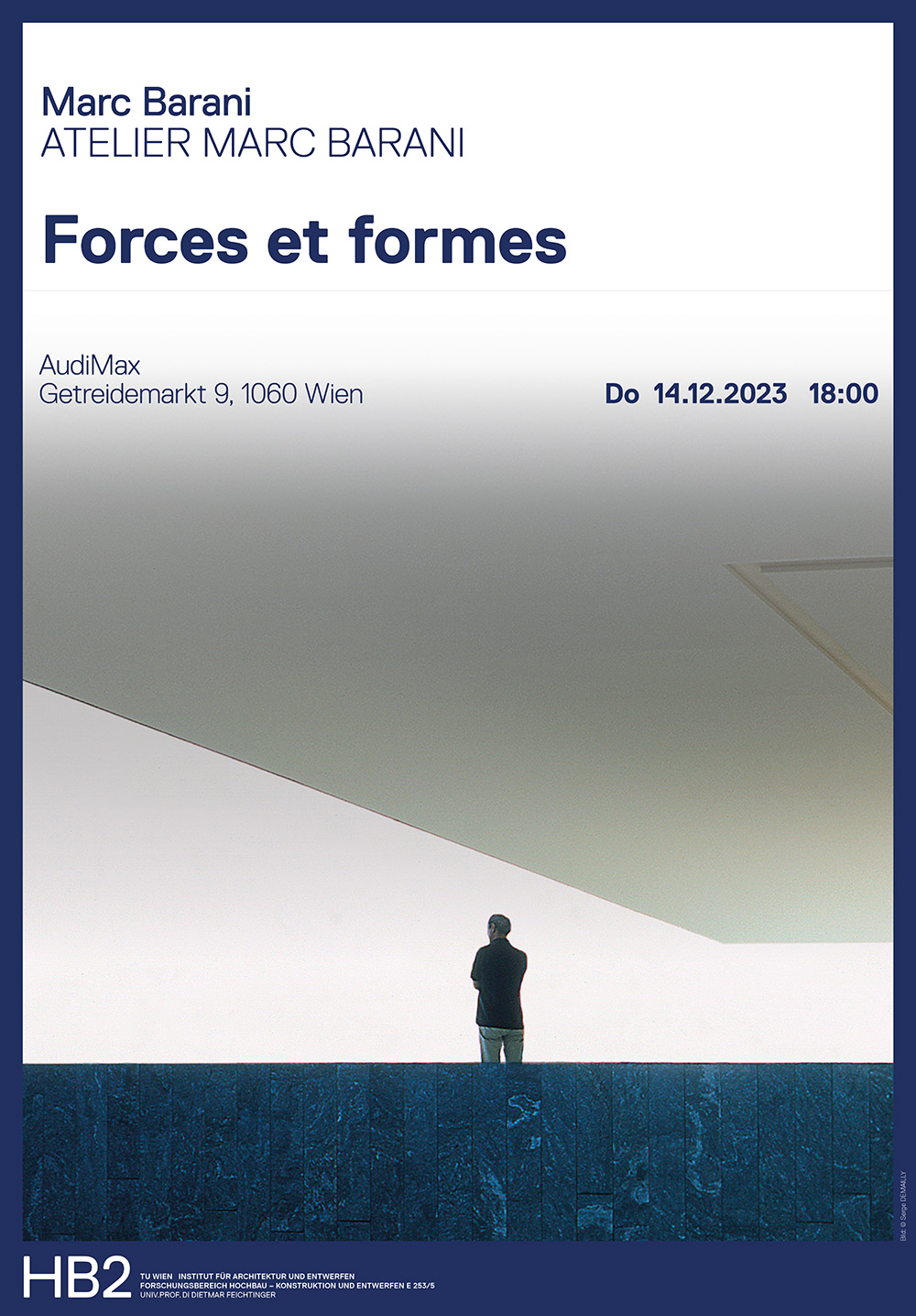
DEC 14, 2023
18:00
LECTURE:
Marc Barani
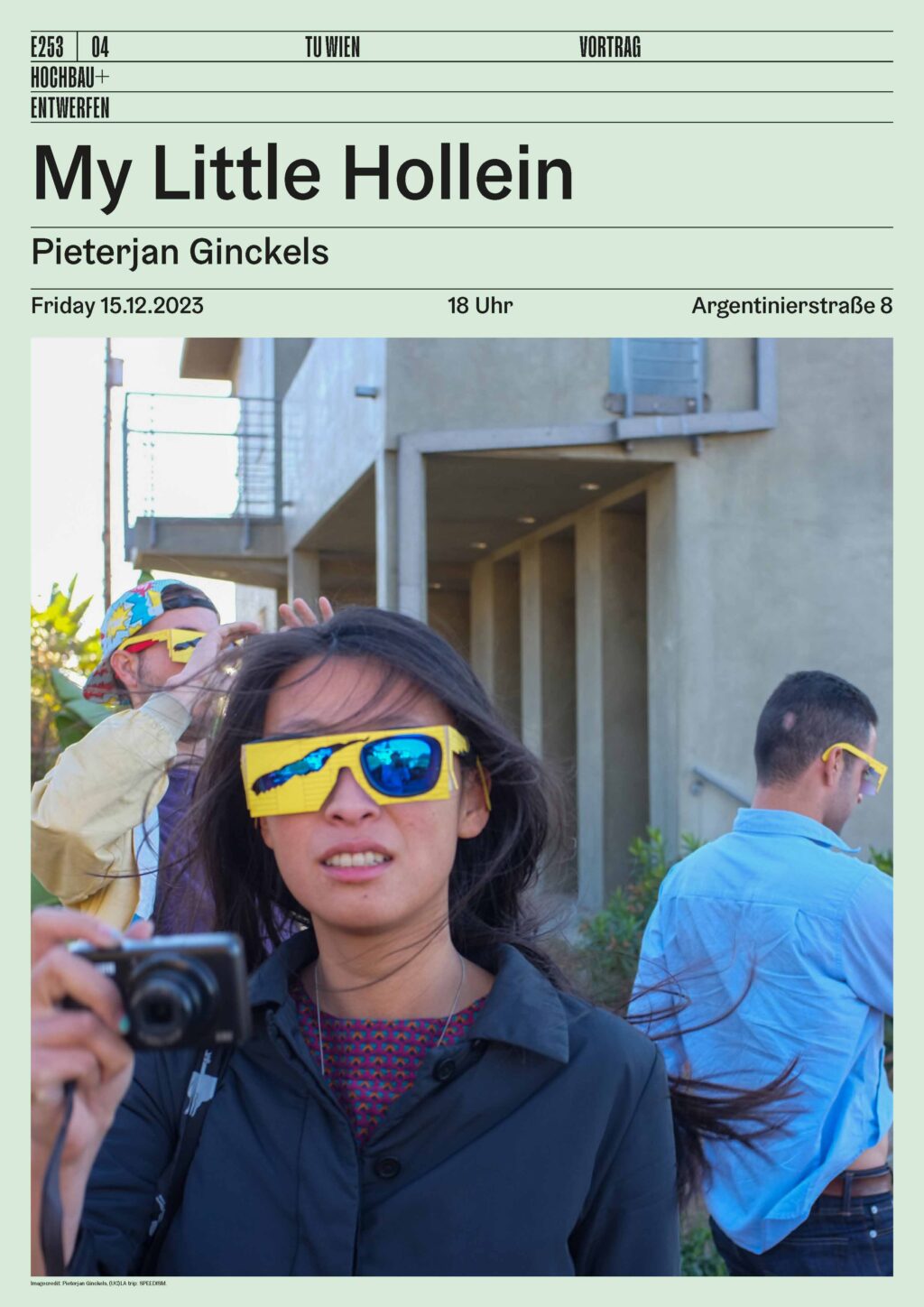
DEC 15, 2023
18:00
LECTURE:
PIETERJAN GINCKELS, KU LEUVEN
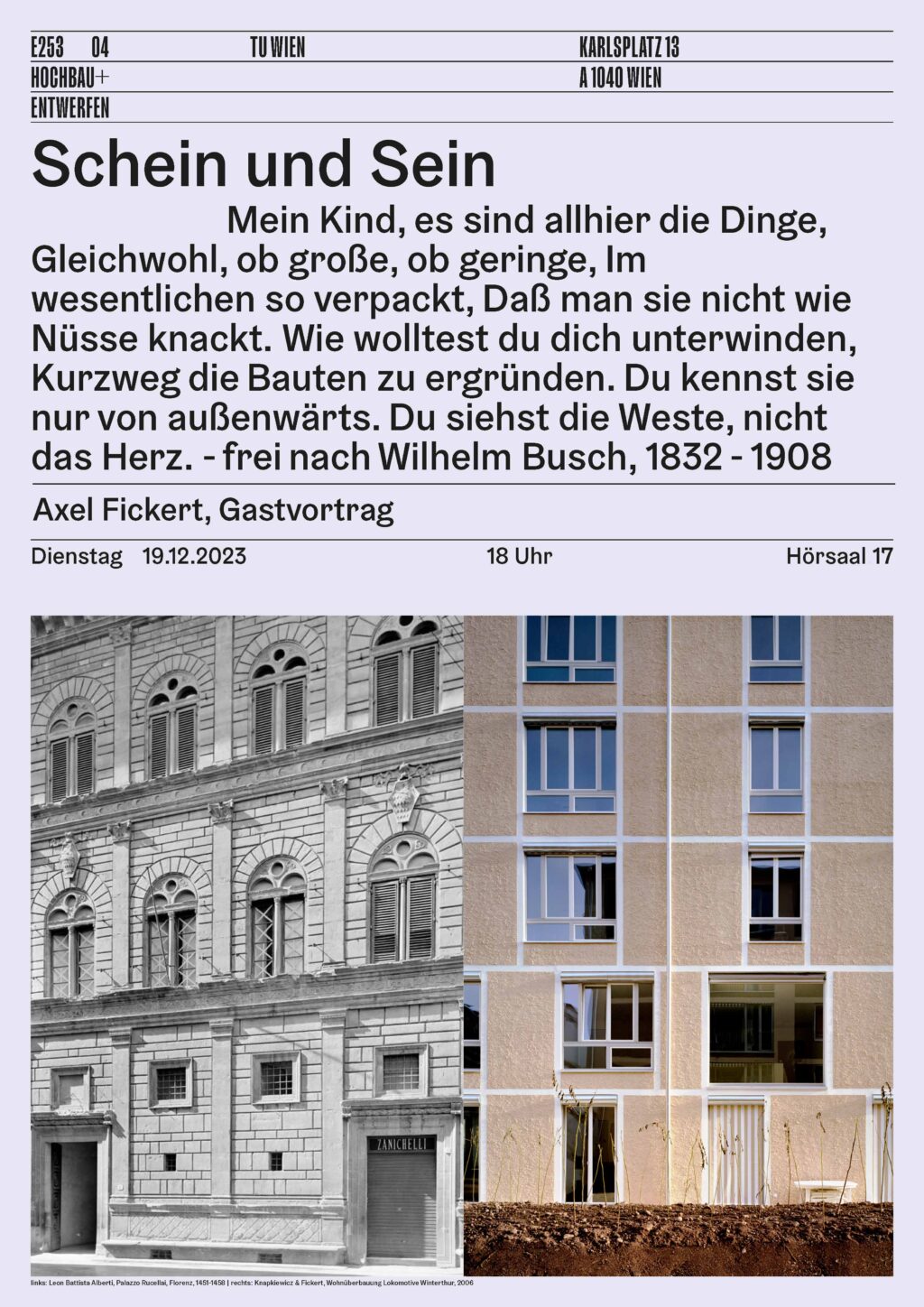
DEC 19, 2023
18:00
LECTURE:
AXEL FICKERT, KNAPKIEWICZ & FICKERT

DEC 20, 2023
18:30
BOOK LAUNCH:
ENTWURFF EINER HISTORISCHEN ARCHITEKTUR
JAN 9, 2024
18:00
HOUSING TALKS:
ANGELIKA HINTER-
BRANDNER
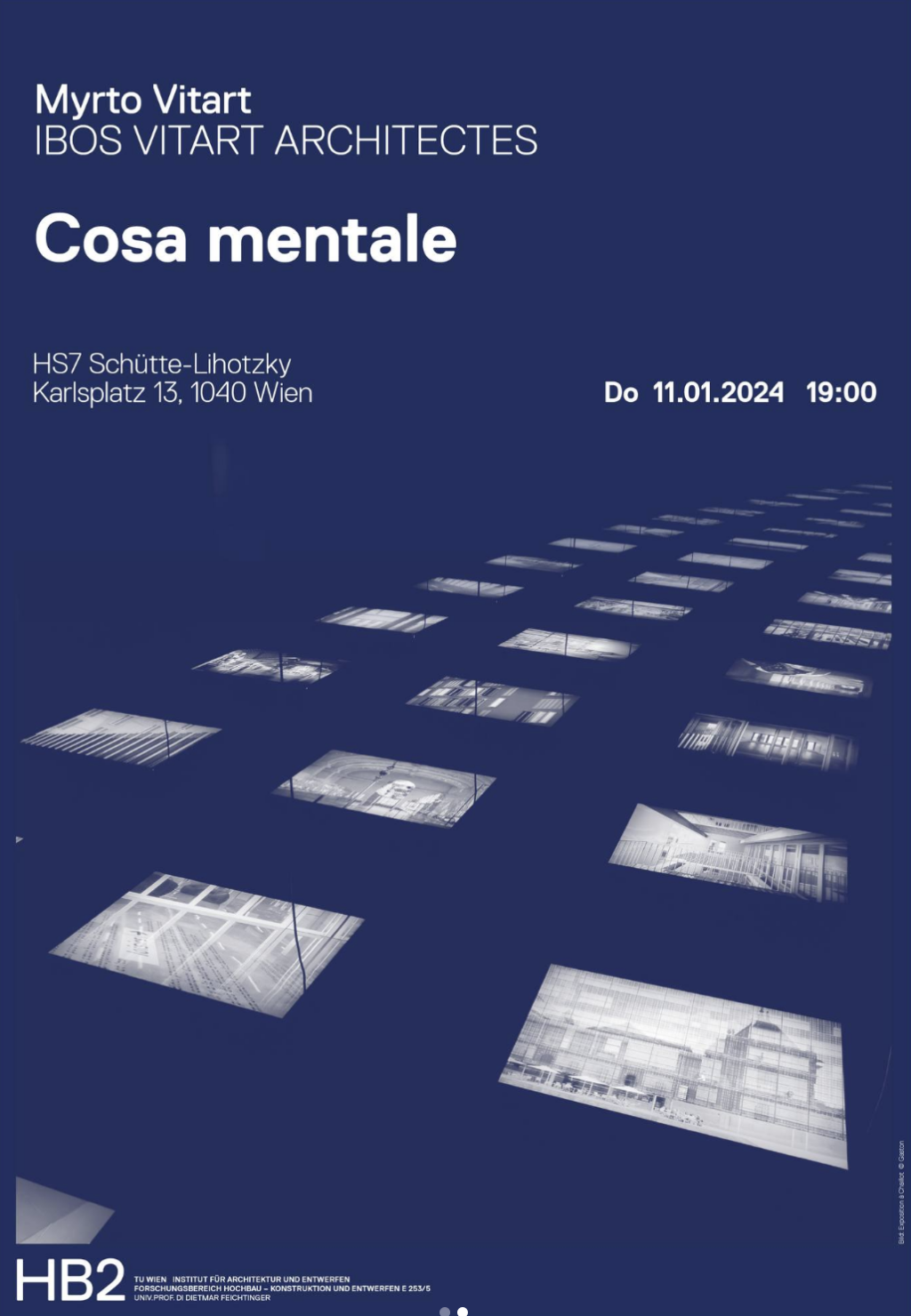
JAN 11, 2024
19:00
LECTURE:
Myrto Vitart
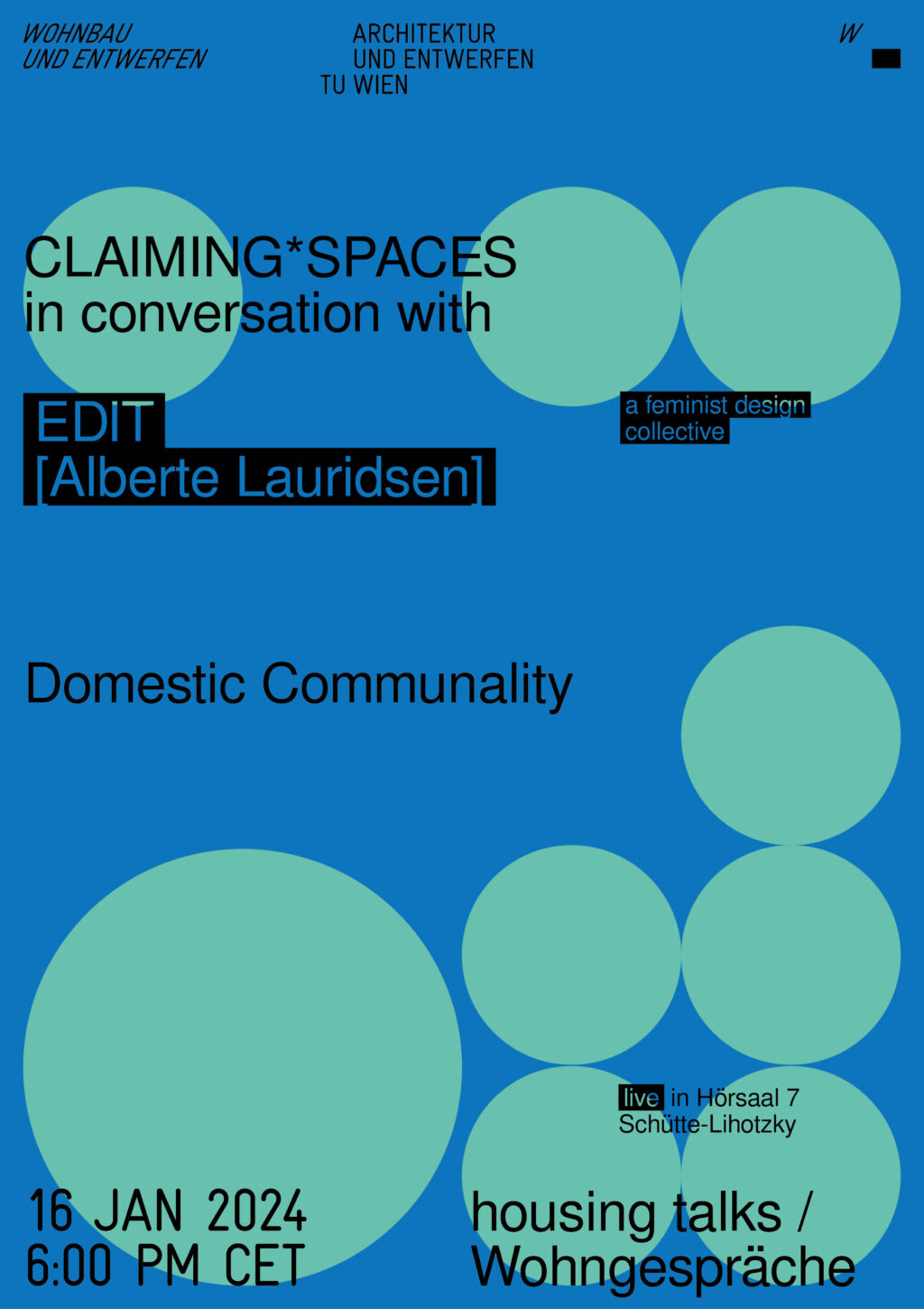
JAN 16, 2024
18:00
HOUSING TALKS:
EDIT [ALBERTE LAURIDSEN]
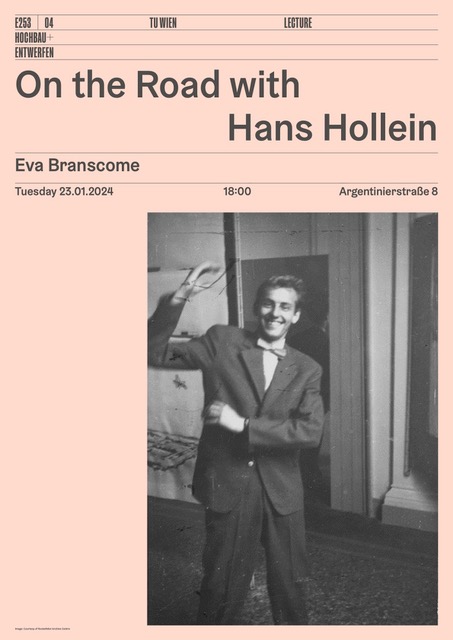
JAN 23, 2024
18:00
LECTURE:
Eva Branscome
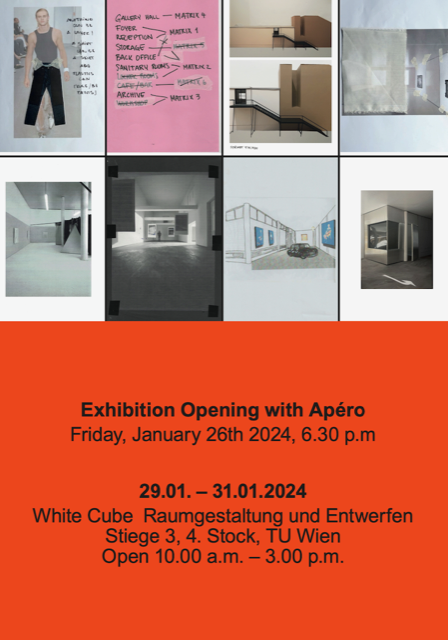
JAN 26, 2024
18:30
EXHIBITION:
DISPLAY & EXHIBIT CASE STUDY HELMUT LANG
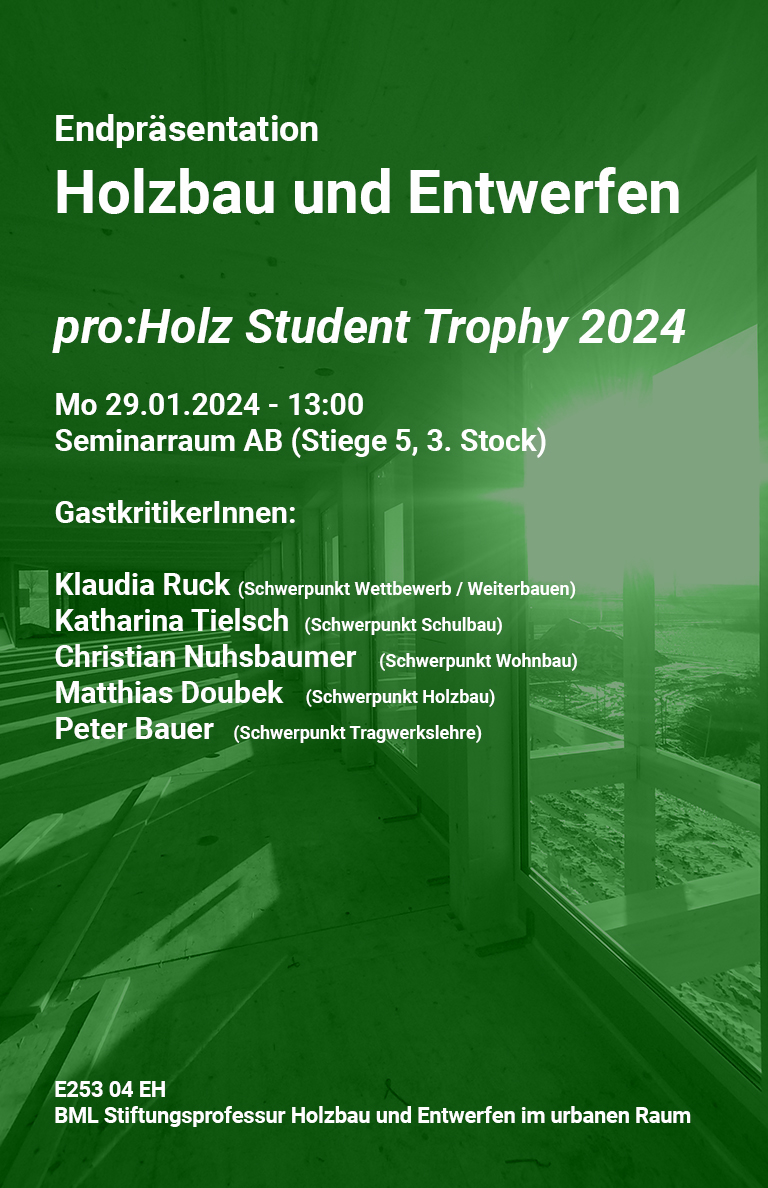
JAN 29, 2024
13:00
PRESENTATION & DISCUSSION:
proHolz Student Trophy 24
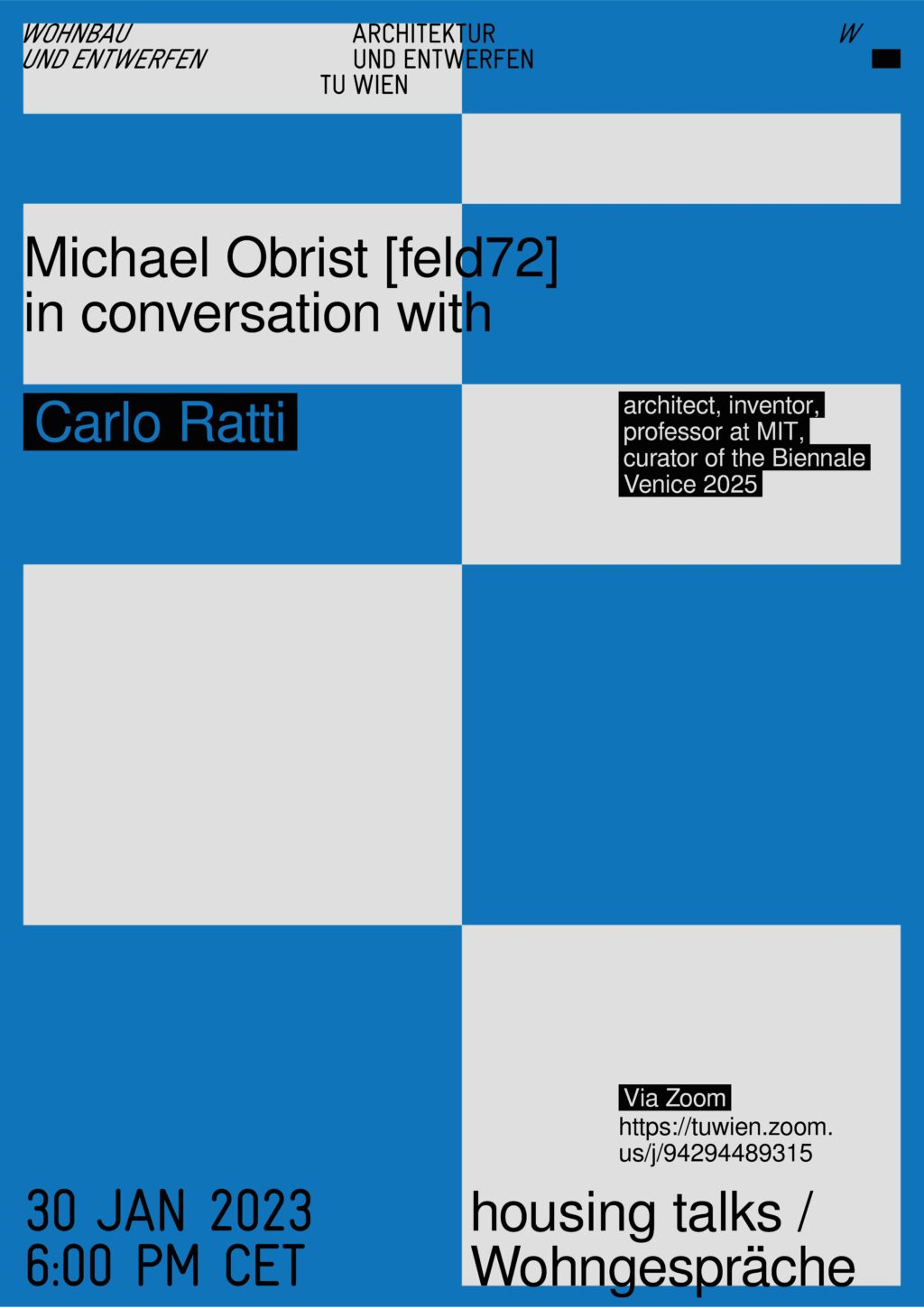
JAN 30, 2024
18:00
HOUSING TALKS: CARLO RATTI
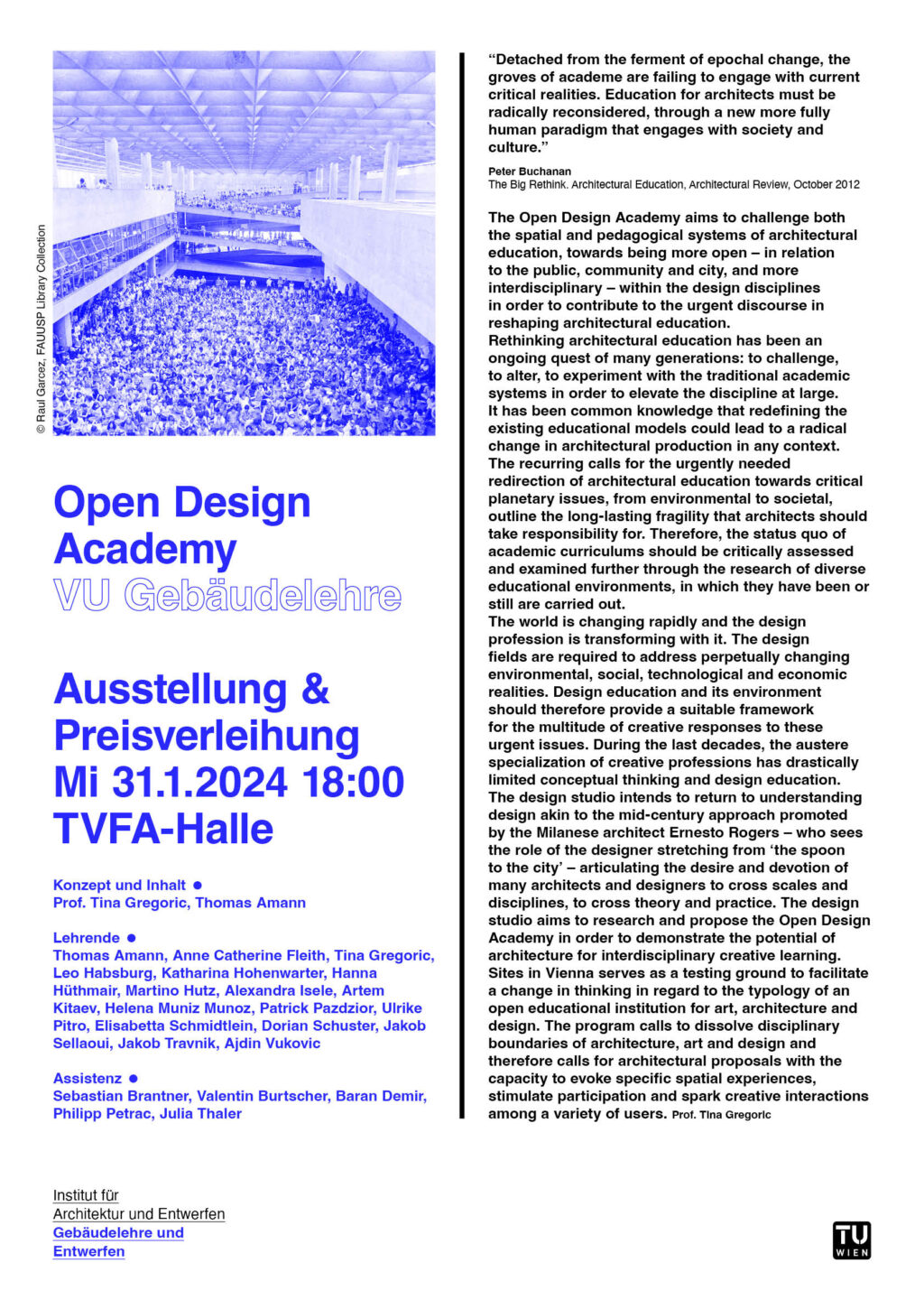
JAN 31, 2024
18:00
EXHIBITION:
OPEN DESIGN ACADEMY
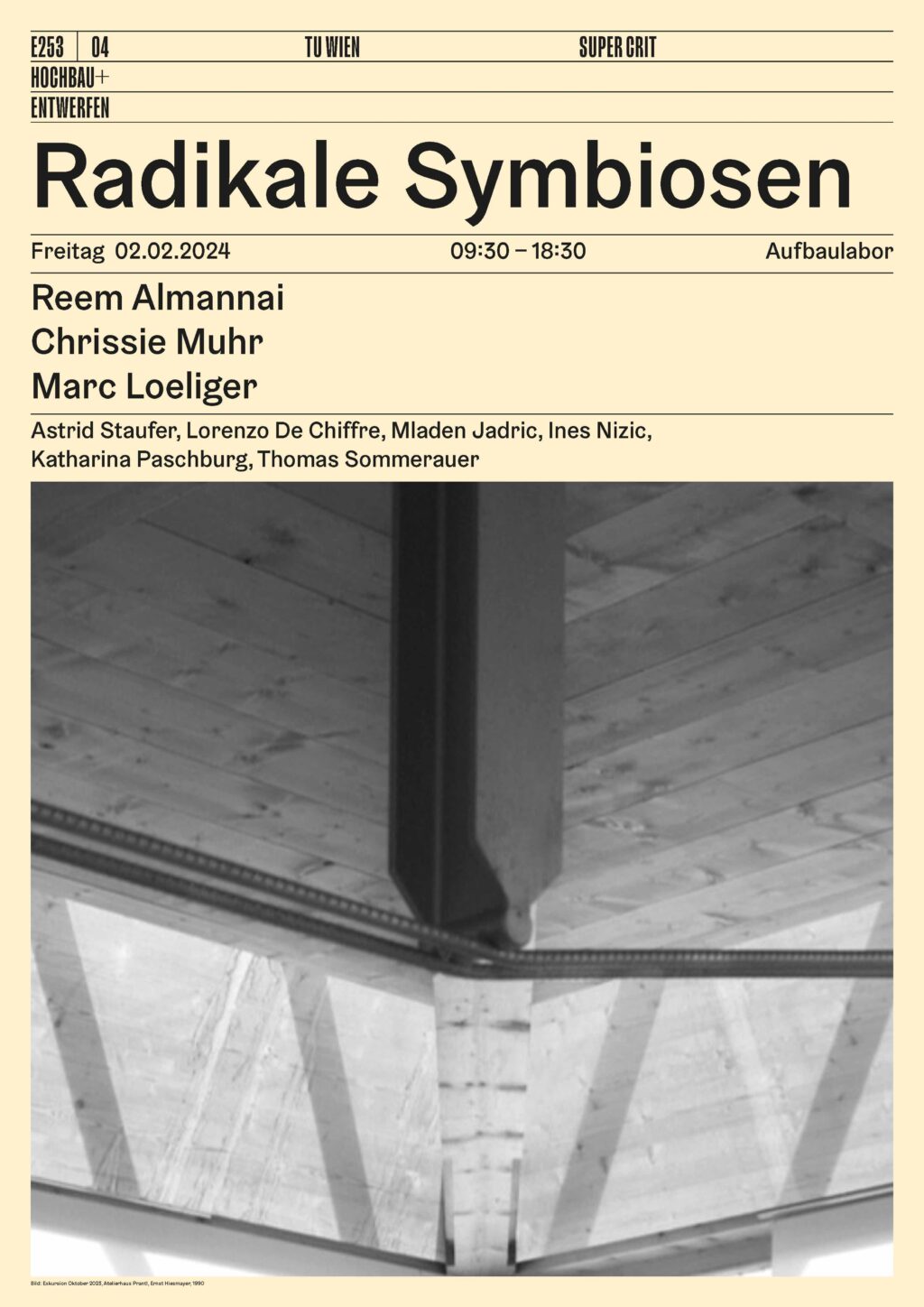
FEB 2, 2024
09:30
SUPERCRIT, EXHIBITION & DISCUSSION:
RADIKALE SYMBIOSEN
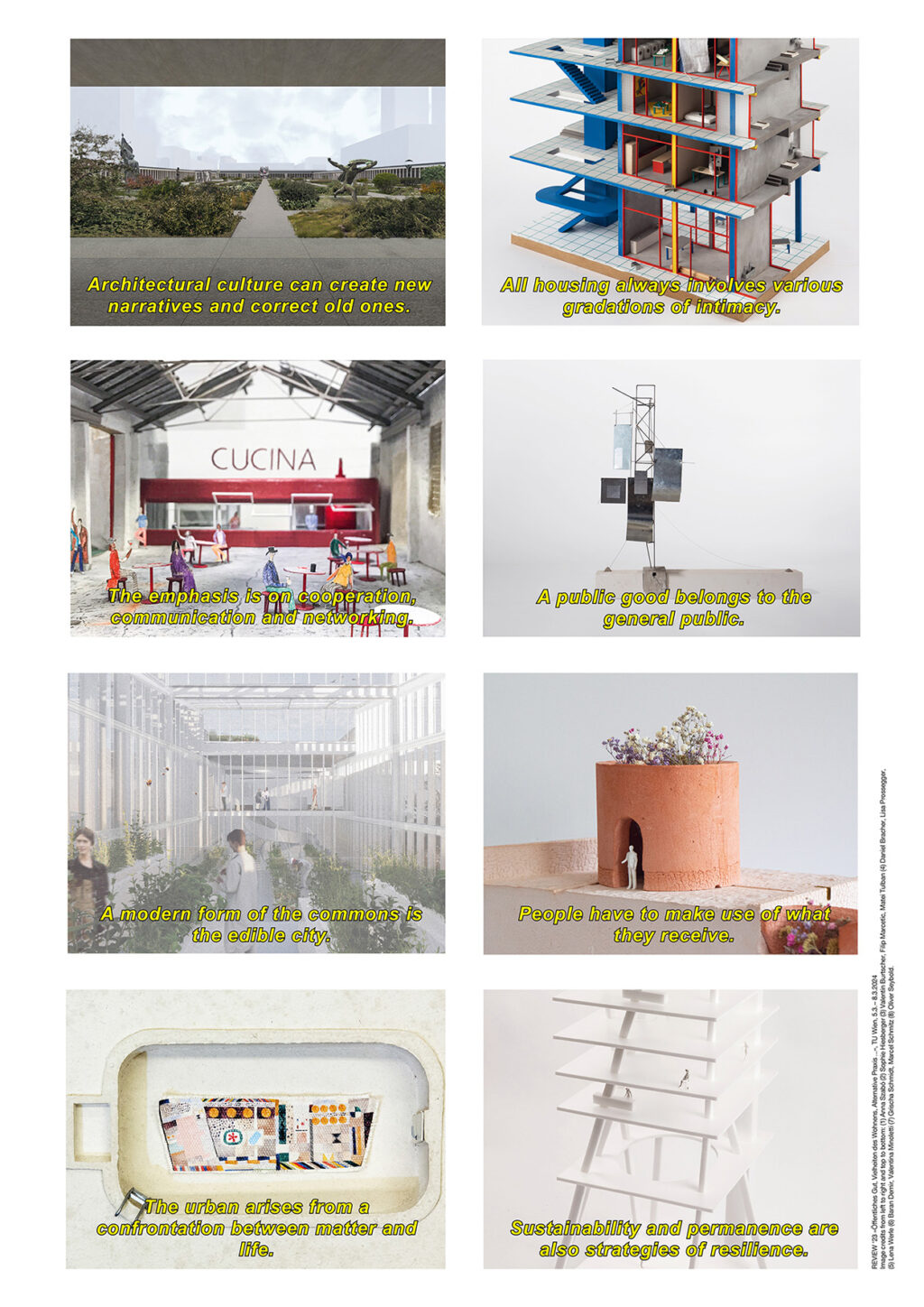
MAR 4, 2024
18:30
EXHIBITION:
REVIEW’23
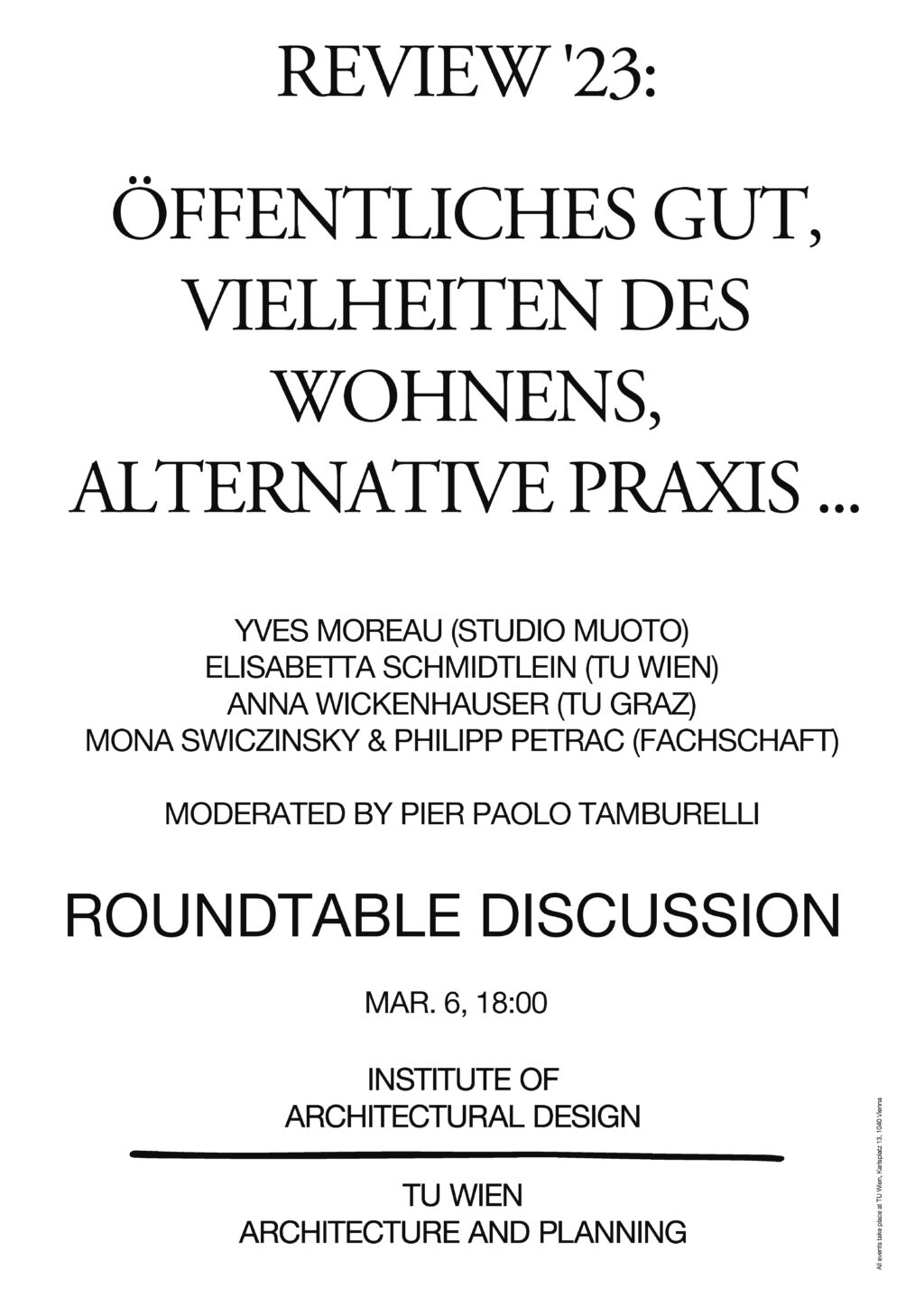
MAR 6, 2024
18:00
ROUNDTABLE DISCUSSION:
REVIEW’23
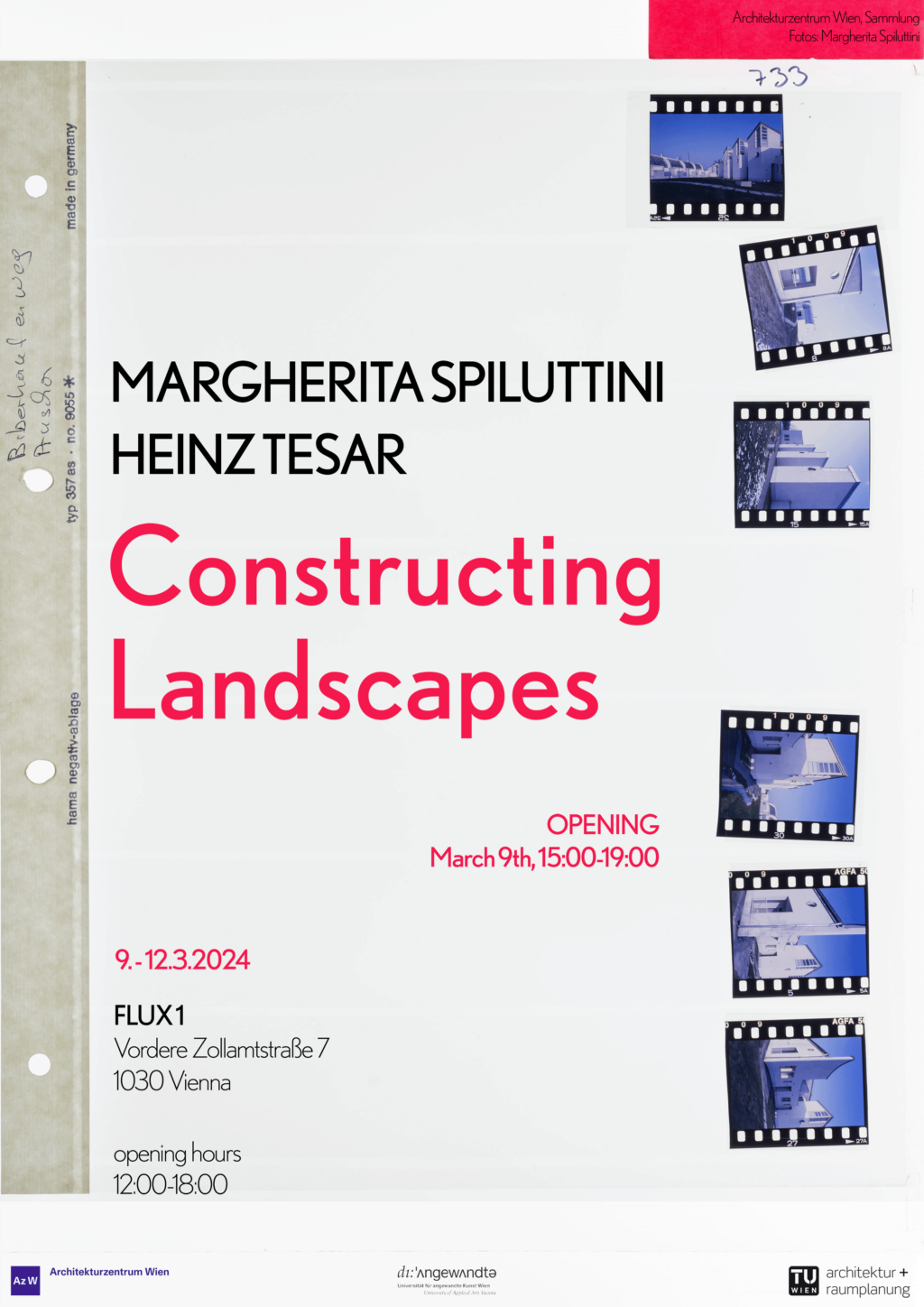
MAR 9, 2024
15:00
EXHIBITION:
CONSTRUCTING LANDSCAPES – Margherita Spiluttini & Heinz Tesar
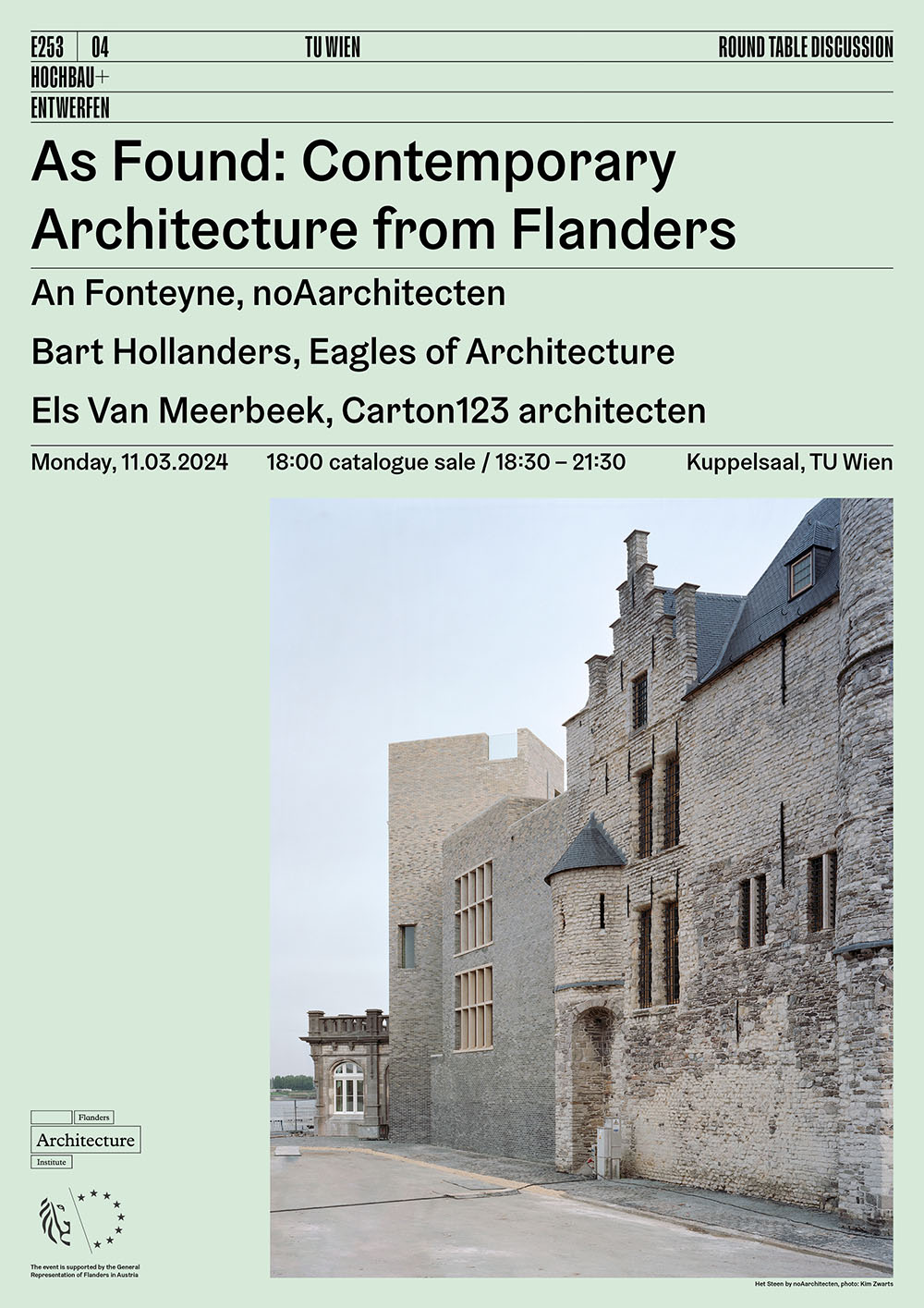
MAR 11, 2024
18:00
DISCUSSION:
An Fonteyne, Bart Hollanders, Els Van Meerbeek
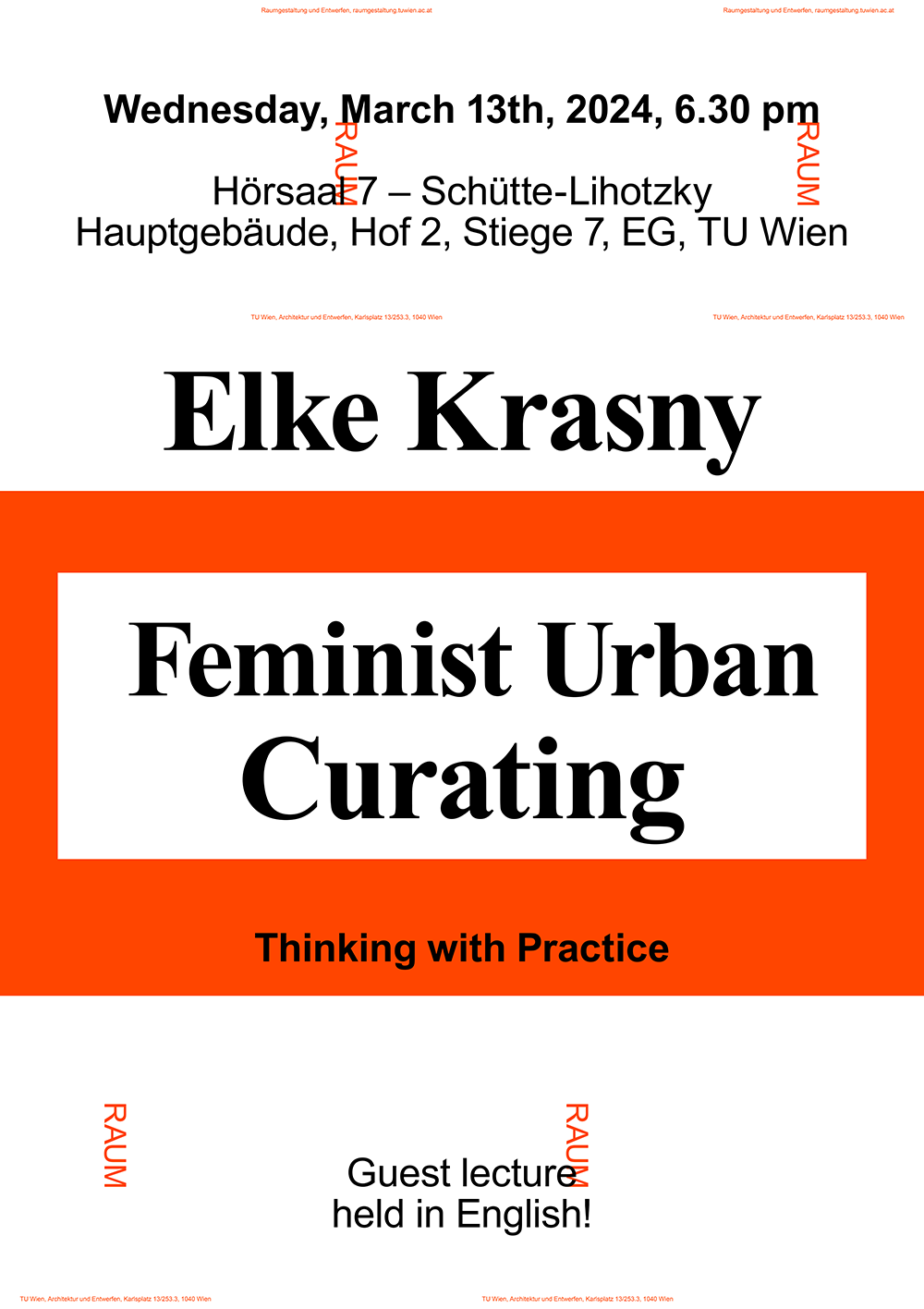
MAR 13, 2024
18:30
LECTURE:
ELKE KRASNY
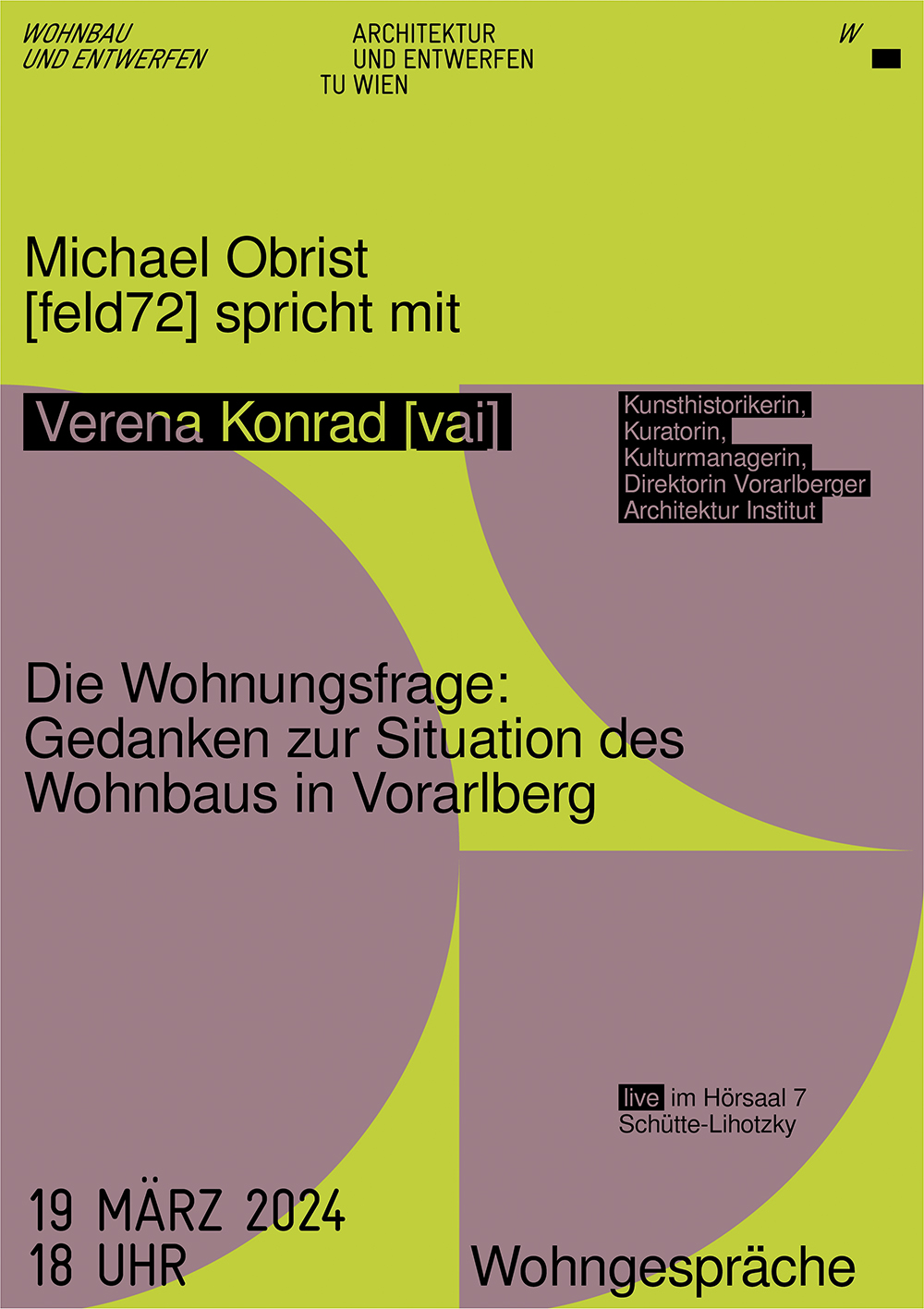
MAR 19, 2024
18:00
HOUSING TALKS:
VERENA KONRAD [vai]
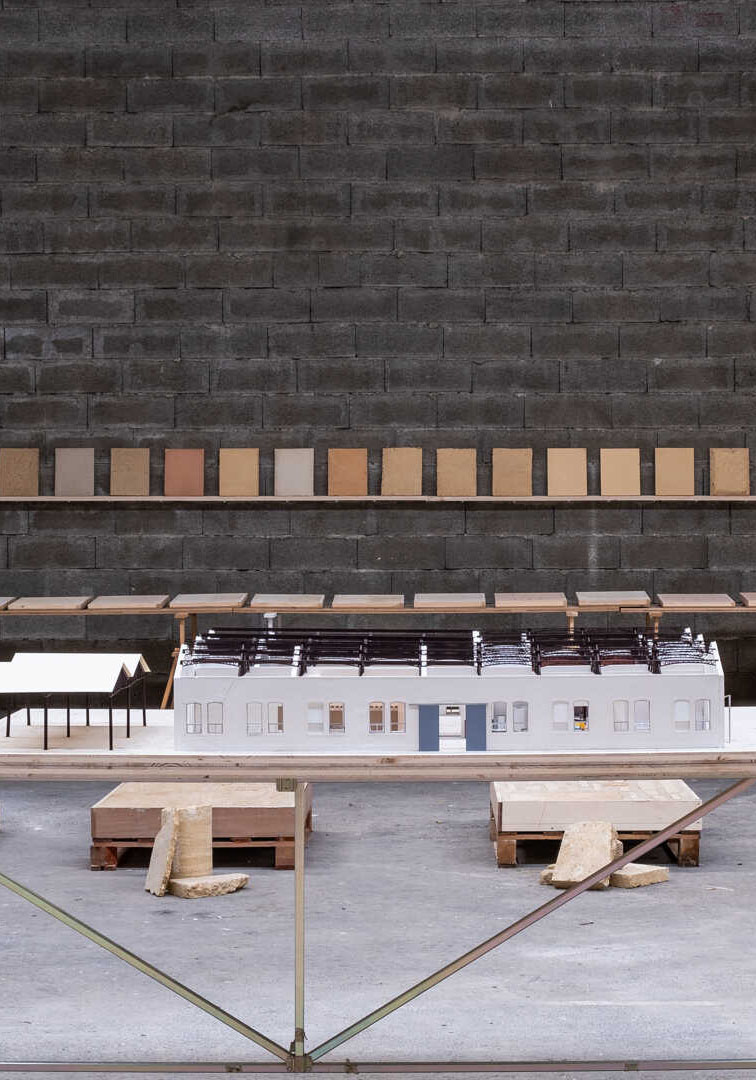
APR 8, 2024
17:00
OPENING EVENT & LECTURE:
BIOFABRIQUE VIENNA

APR 10, 2024
18:30
LECTURE:
HERMANN CZECH
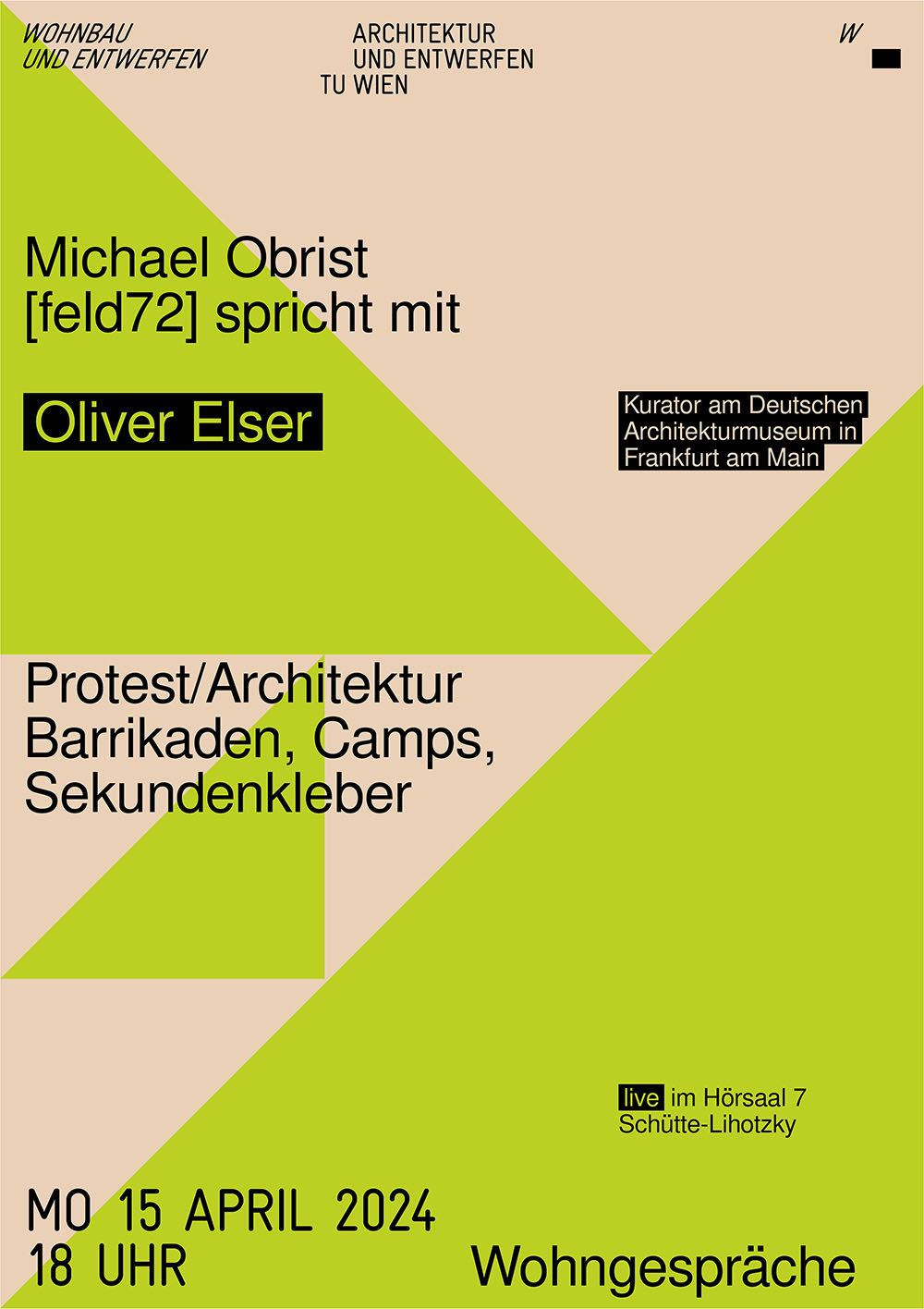
APR 15, 2024
18:00
HOUSING TALKS:
OLIVER ELSER
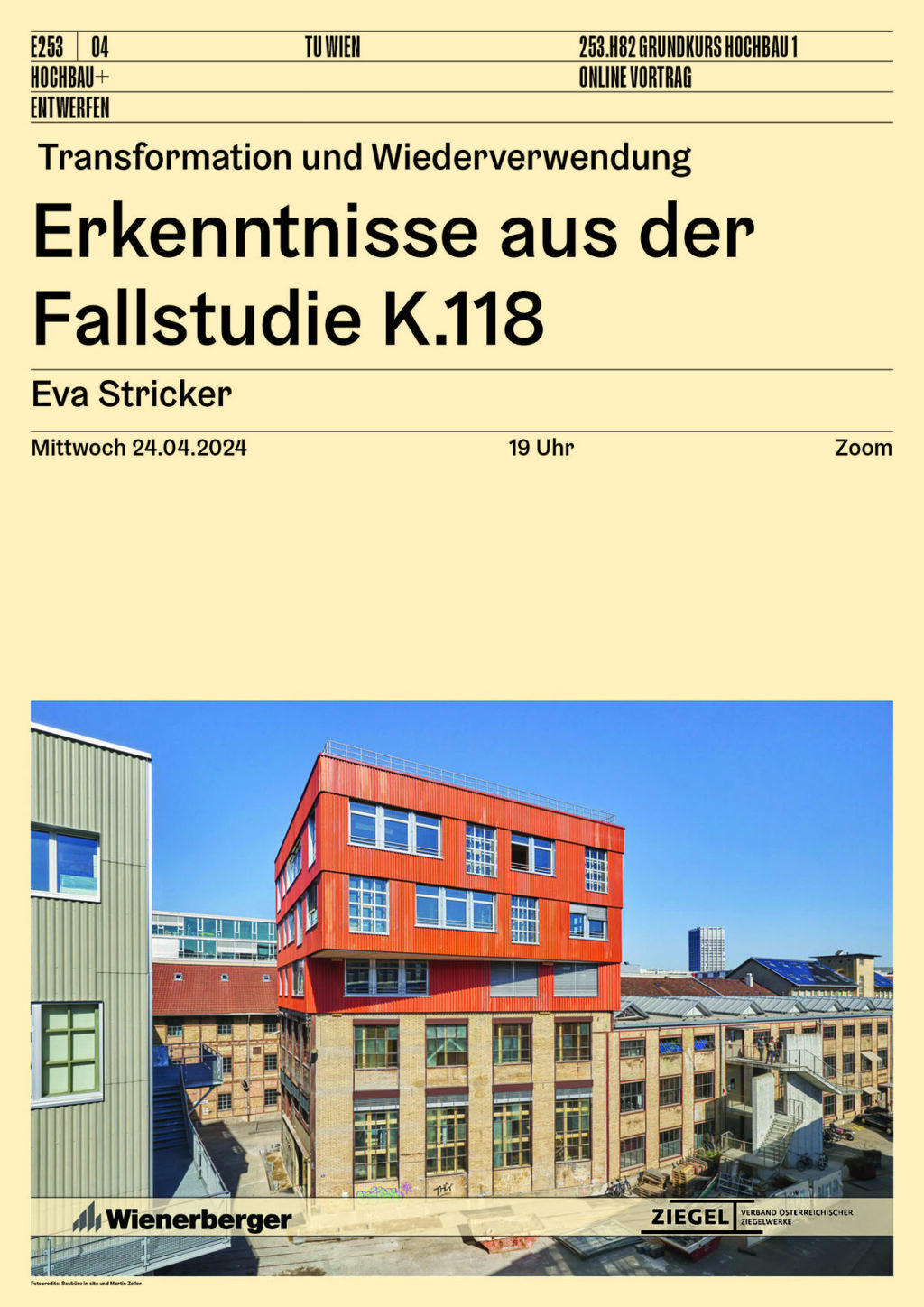
APR 24, 2024
19:00
LECTURE:
EVA STRICKER
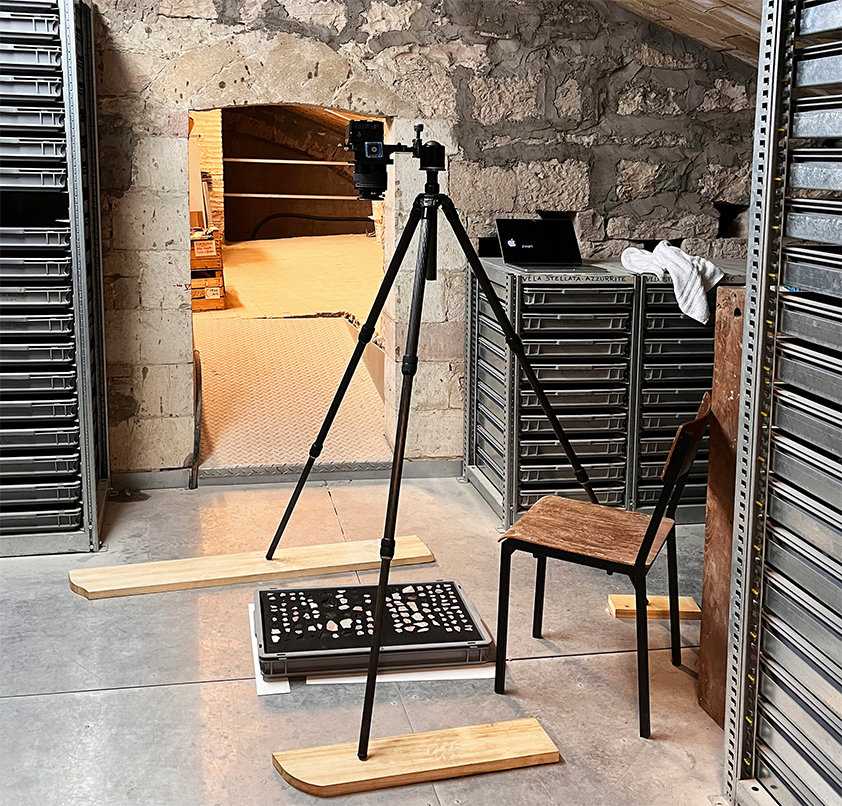
MAY 2, 2024
18:00
LECTURE:
BAS PRINCEN
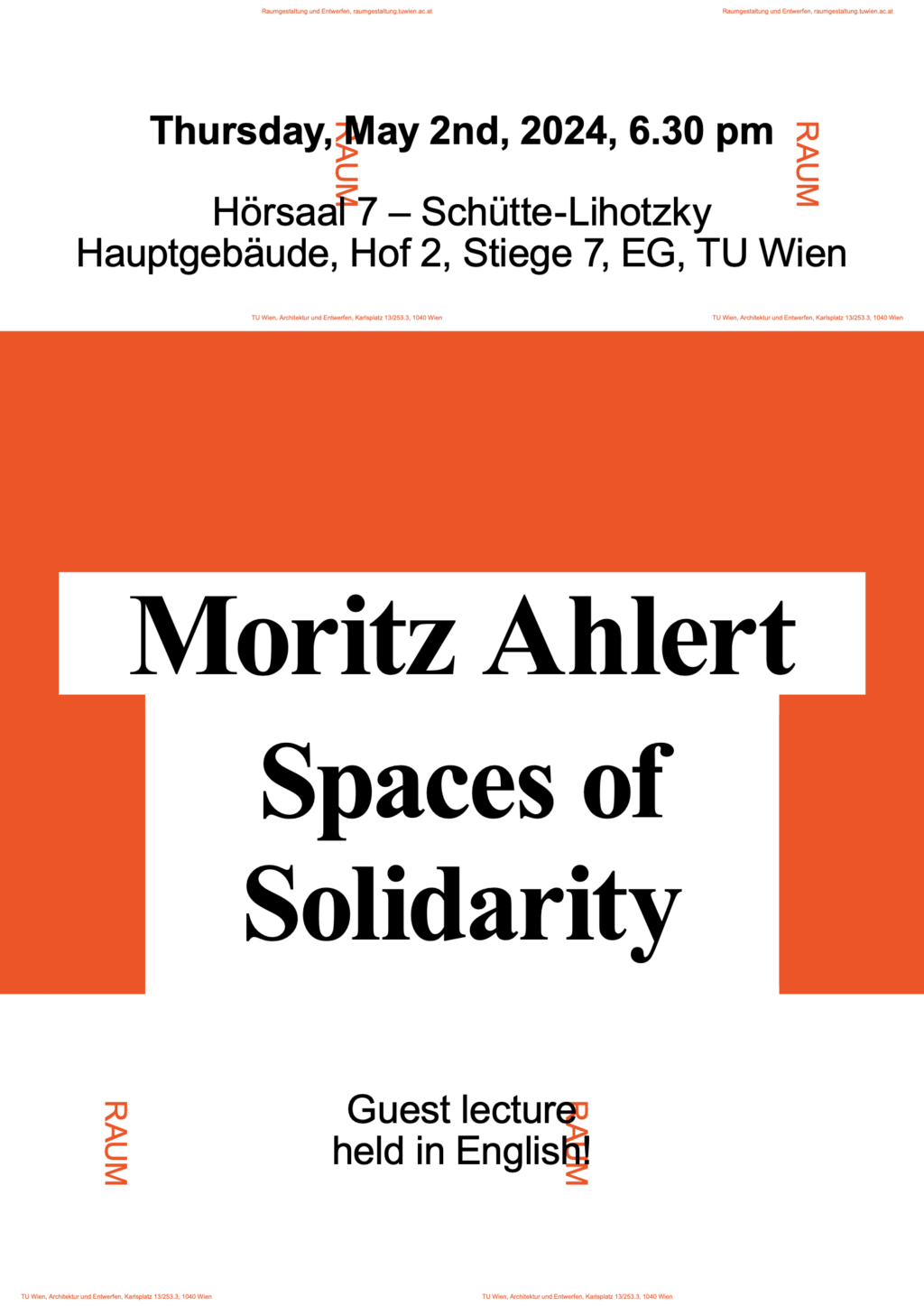
MAY 2, 2024
18:30
LECTURE:
MORITZ AHLERT
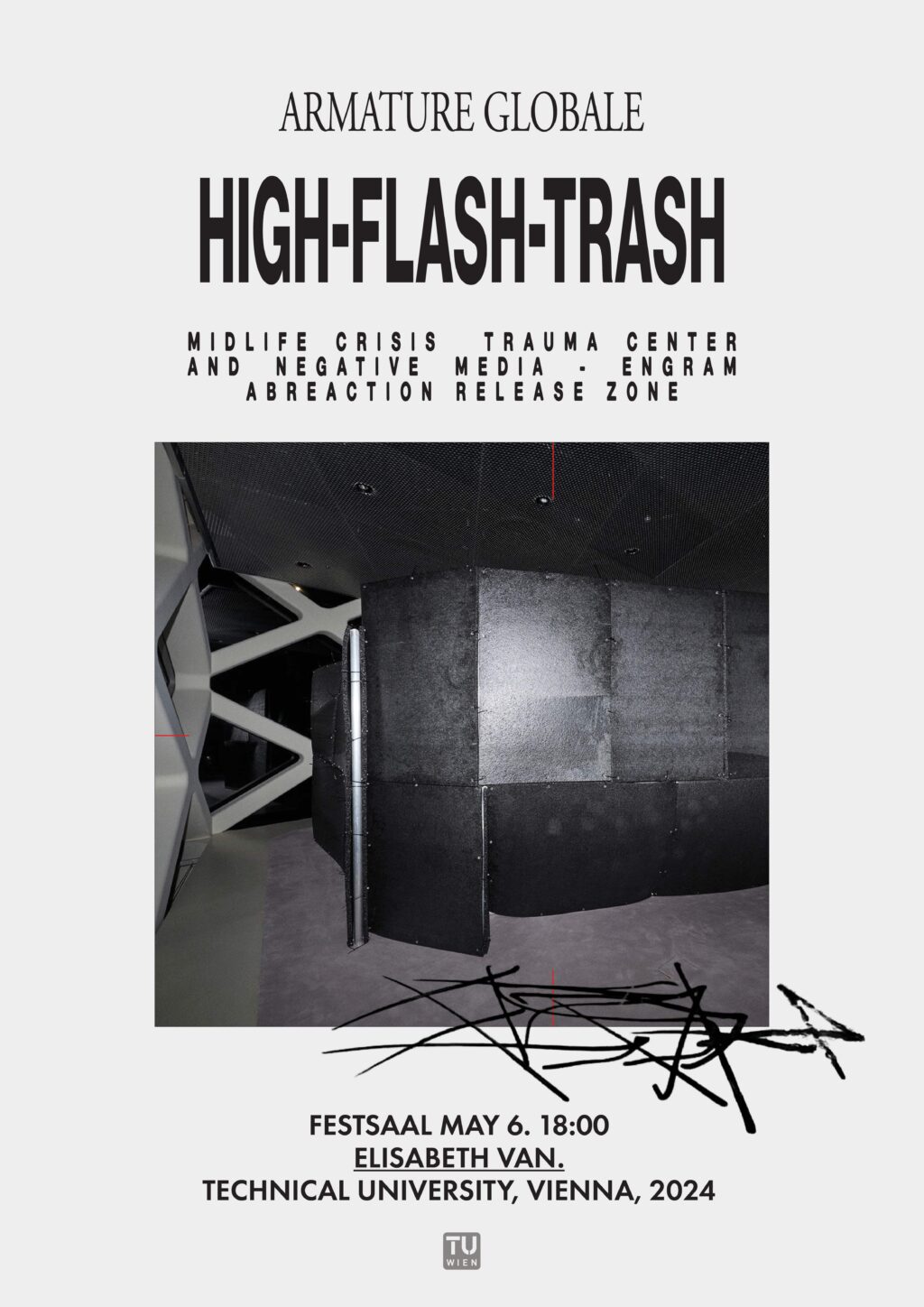
MAY 6, 2024
18:00
LECTURE:
LUIGI ALBERTO CIPPINI
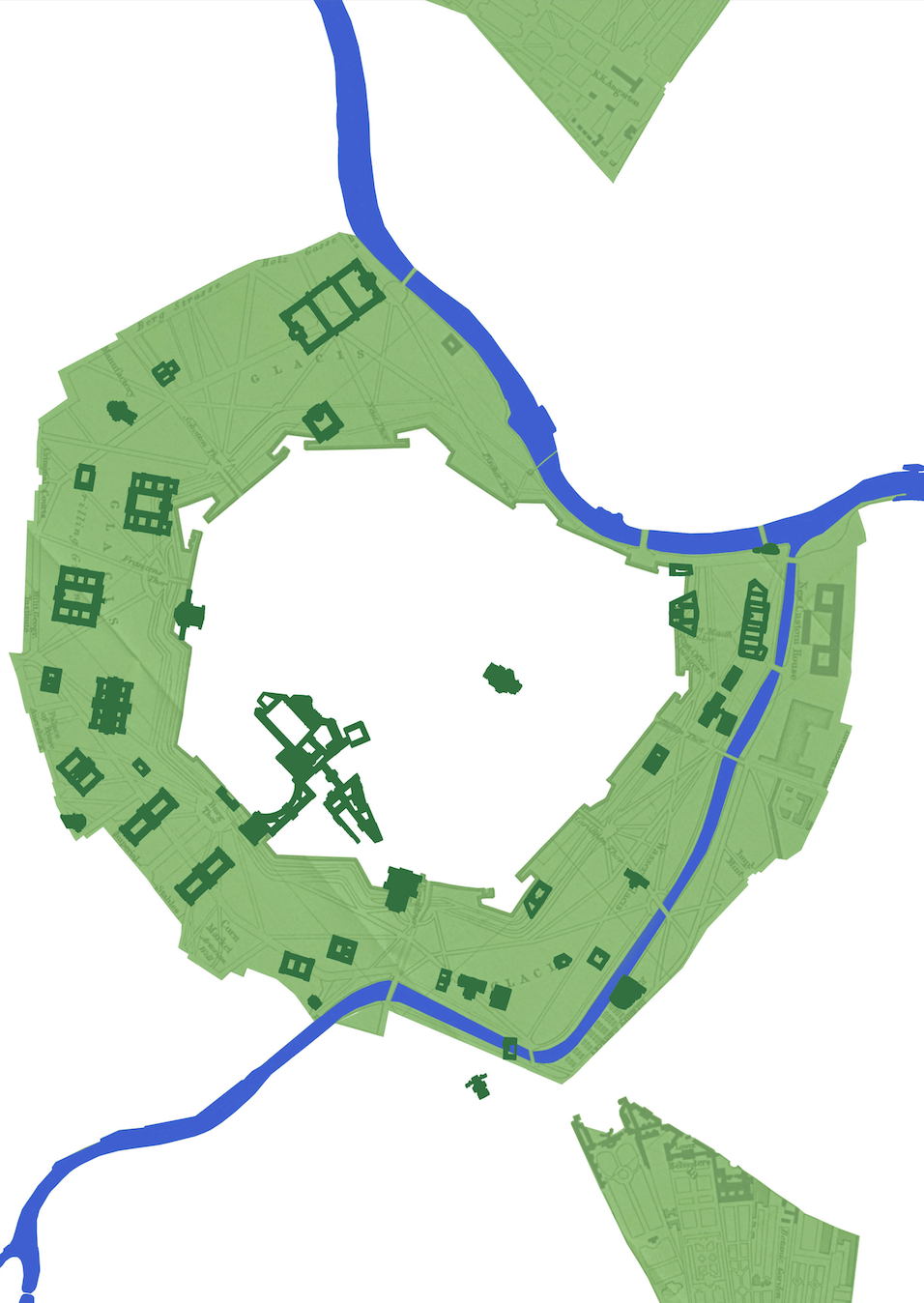
MAY 8, 2024
09:00
EXHIBITION:
EIN NEUES HAUS DER BOTANIK
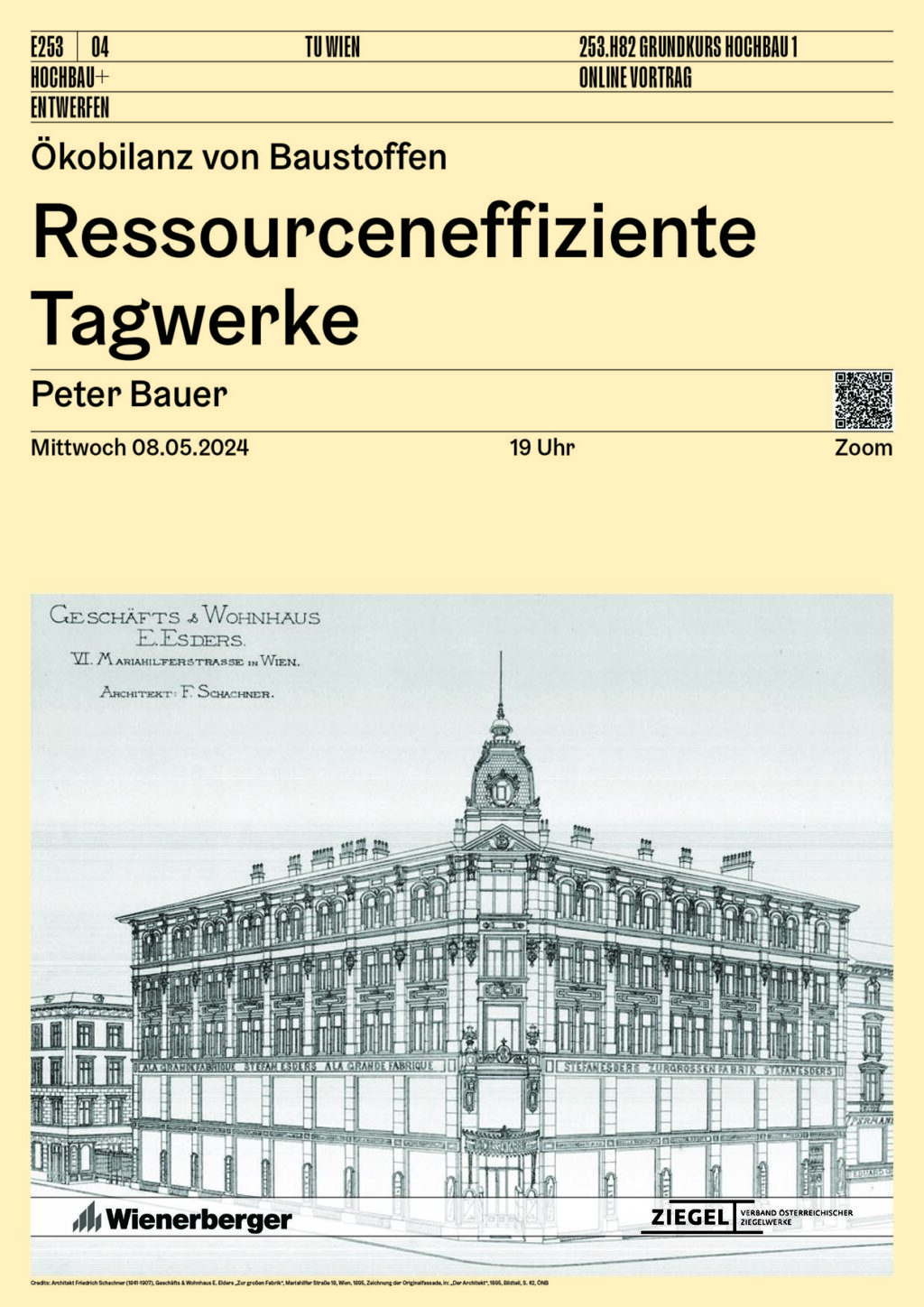
MAY 8, 2024
19:00
LECTURE:
PETER BAUER

MAY 16, 2024
19:00
LECTURE:
UMBERTO NAPOLITANO
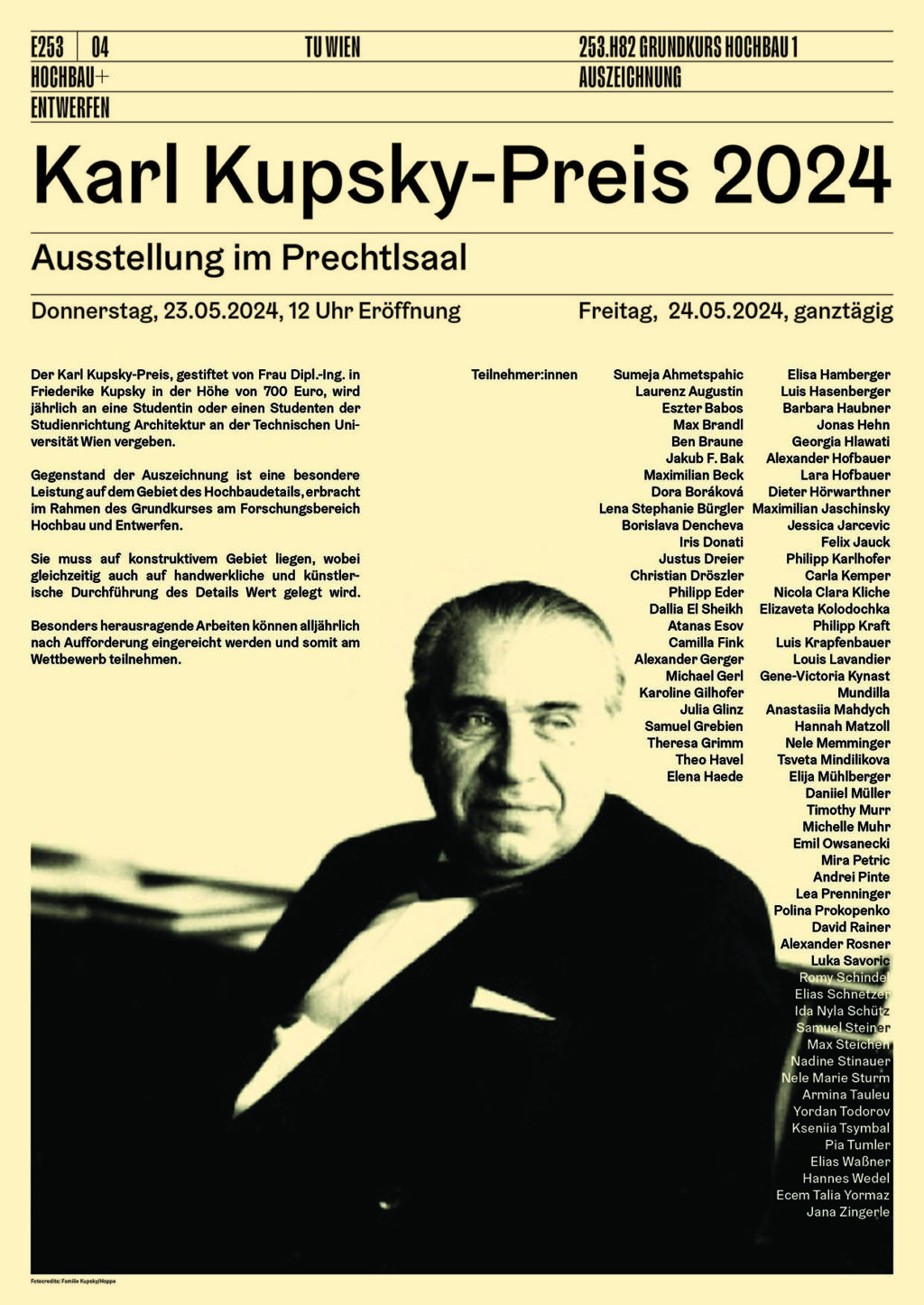
MAY 23, 2024
12:15
EXHIBITION:
KARL KUPSKY-PREIS 2024

MAY 23, 2024
19:00
LECTURE:
FLORENCE LIPSKY
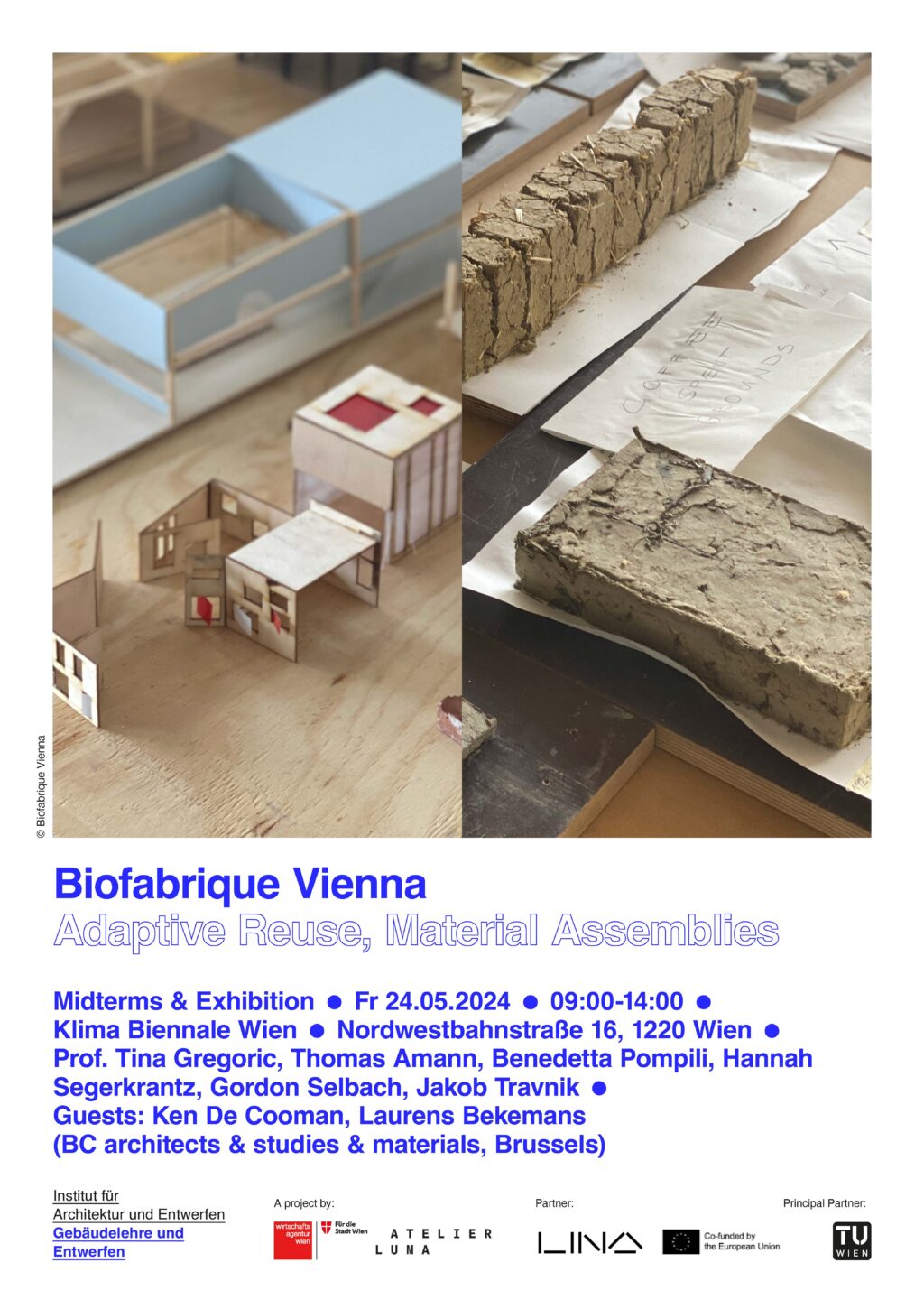
MAY 24, 2024
09:00
Exhibition:
Biofabrique Vienna
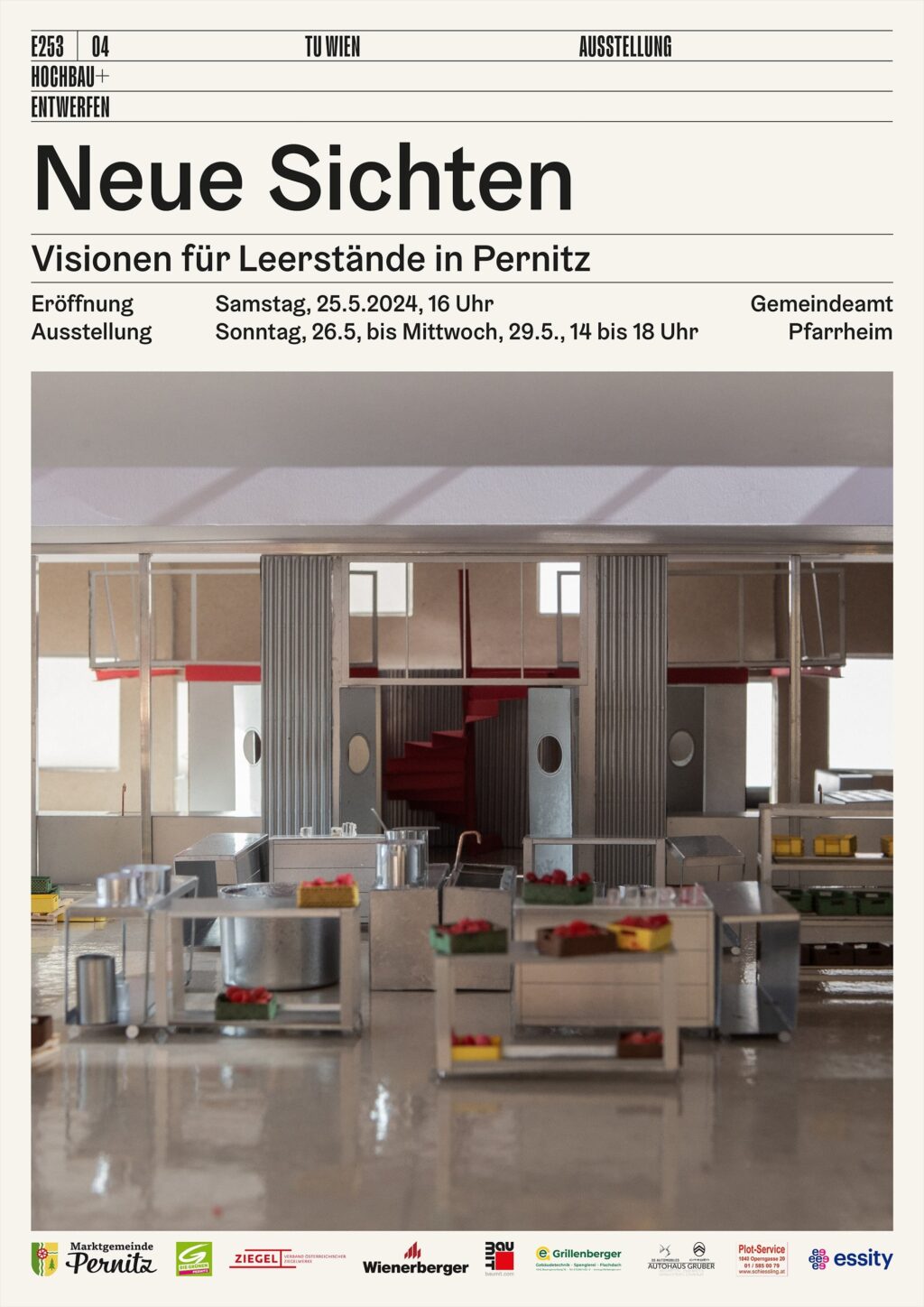
MAY 25, 2024
16:00
EXHIBITION OPENING:
NEUE SICHTEN
MAY 28, 2024
18:00
HOUSING TALKS:
FEDERICO CAMERIN
JUN 5, 2024
18:00
LECTURE:
SASHA PIRKER
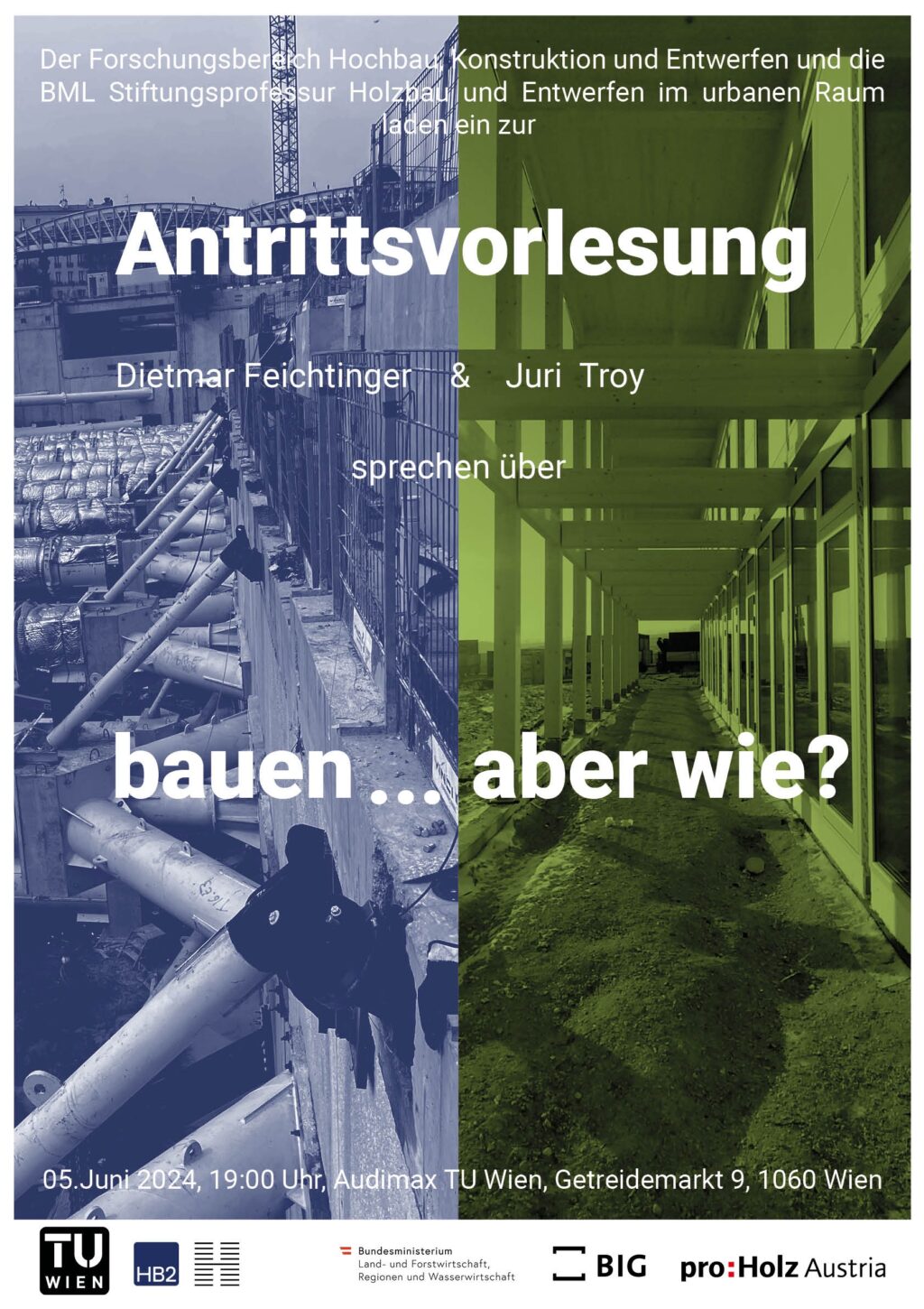
JUN 5, 2024
19:00
INAUGURAL LECTURE:
DIETMAR FEICHTINGER & JURI TROY
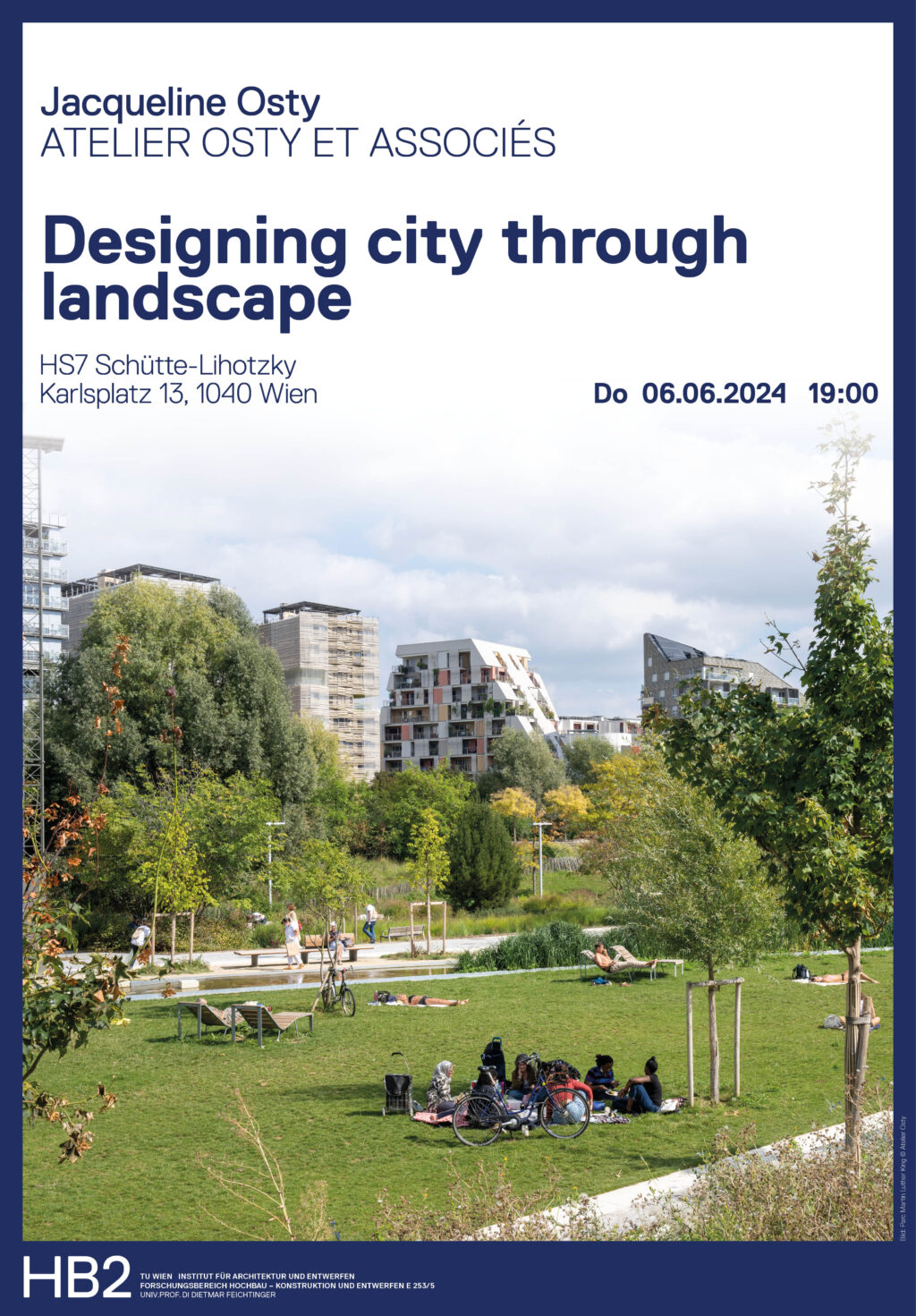
JUN 6, 2024
19:00
LECTURE:
JACQUELINE OSTY
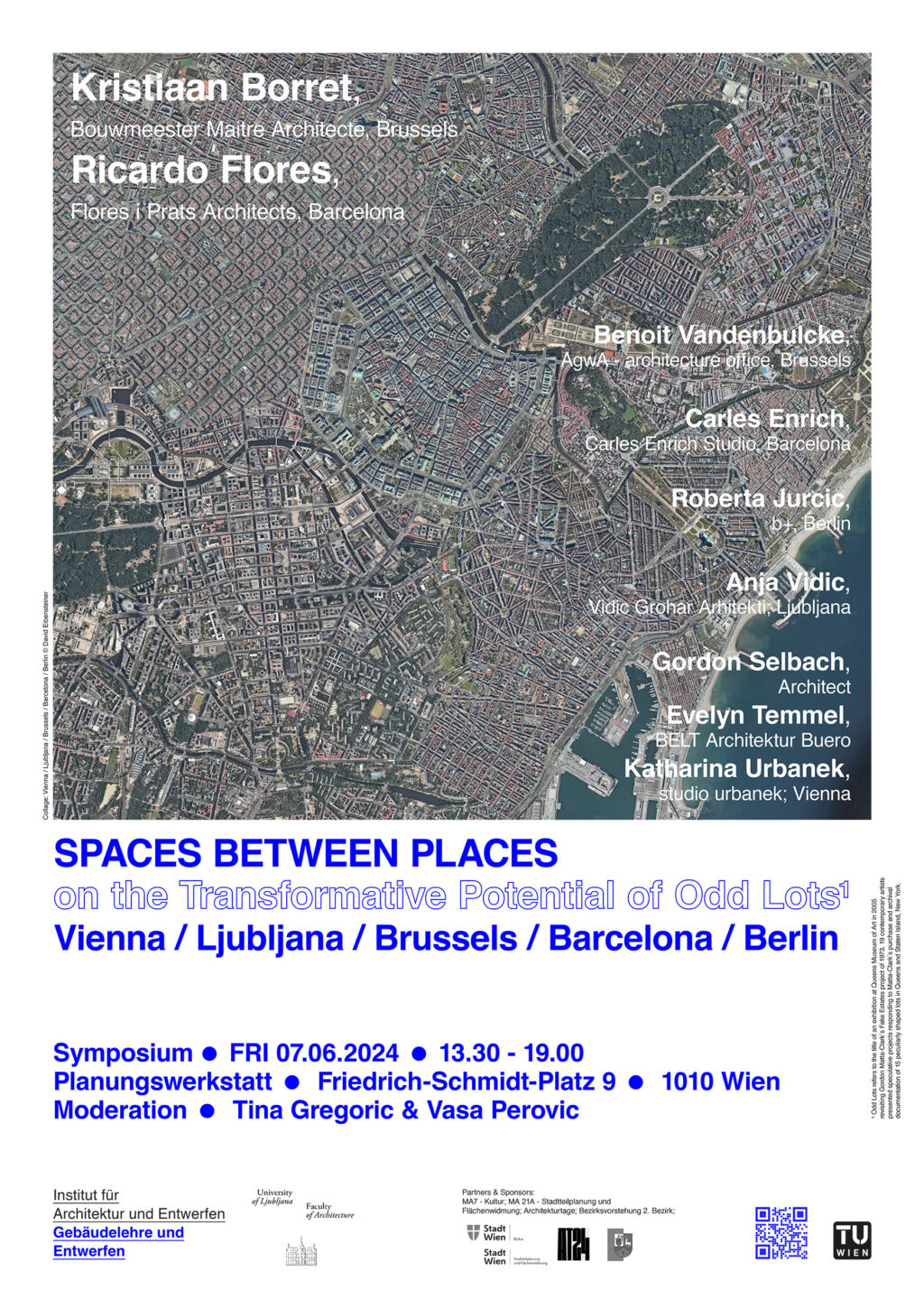
JUN 7, 2024
13:30
SYMPOSIUM & EXHIBITION:
SPACES BETWEEN PLACES
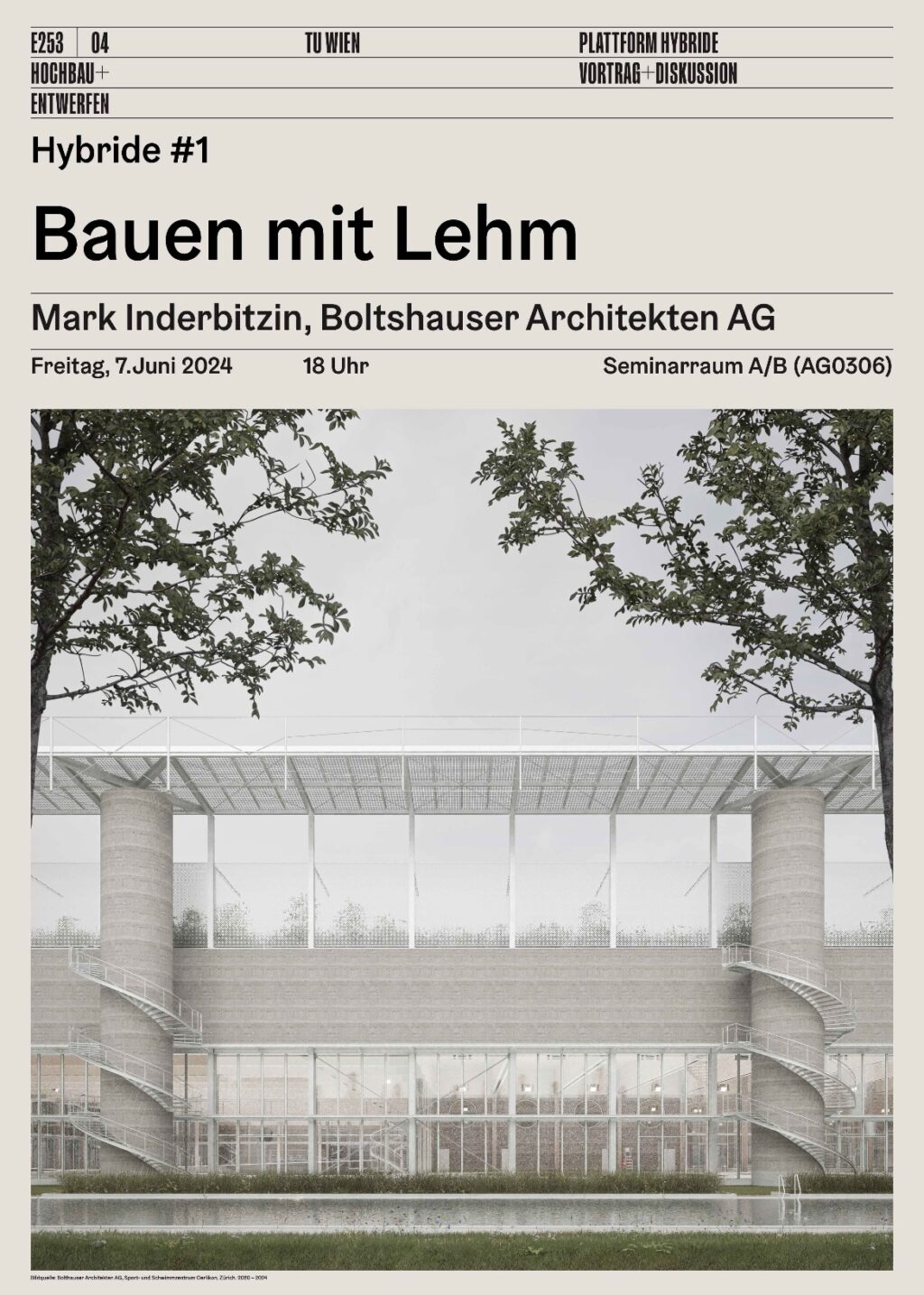
JUN 7, 2024
18:00
LECTURE & DISCUSSION:
MARK INDERBITZIN
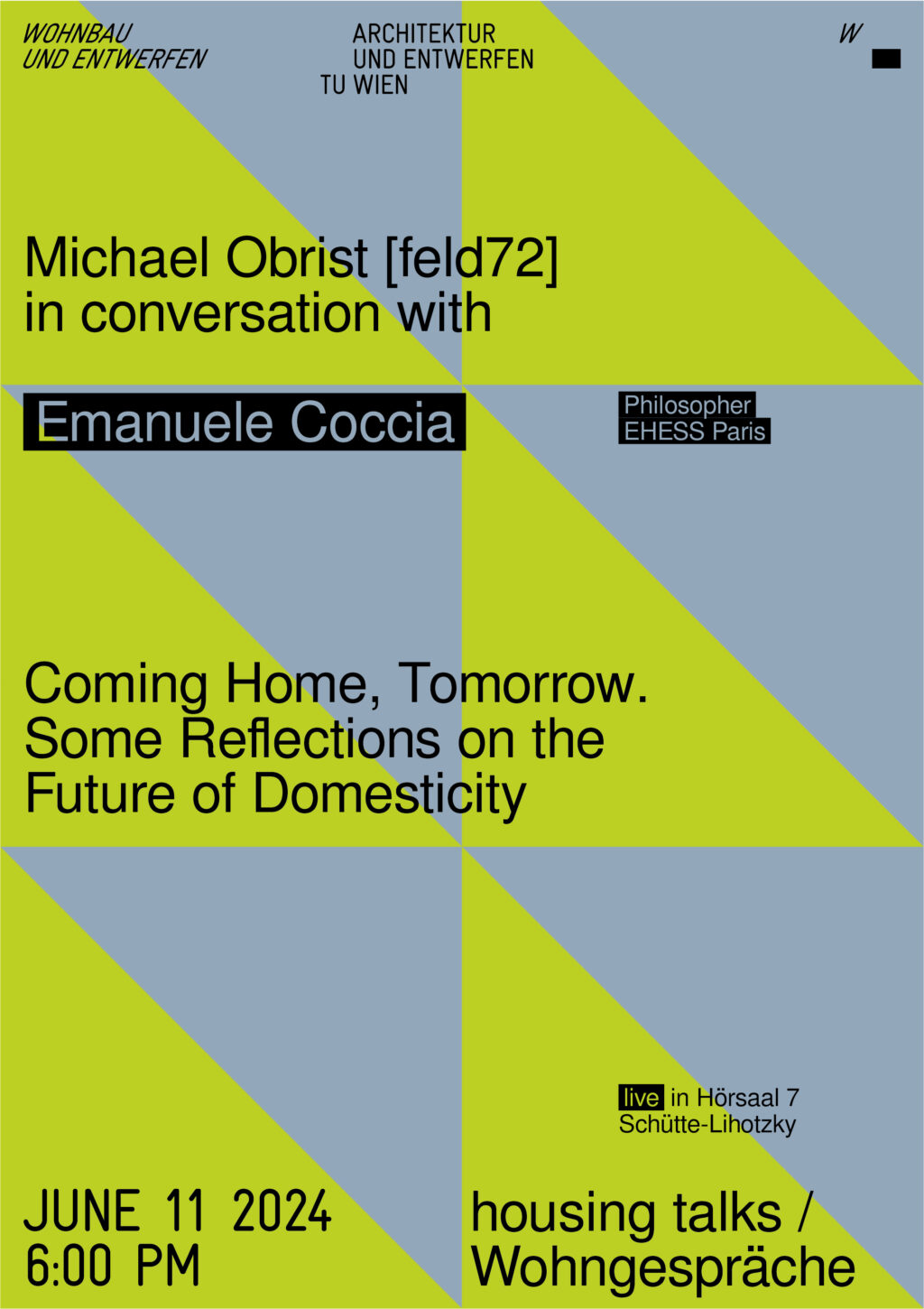
JUN 11, 2024
18:00
HOUSING TALKS: EMANUELE COCCIA
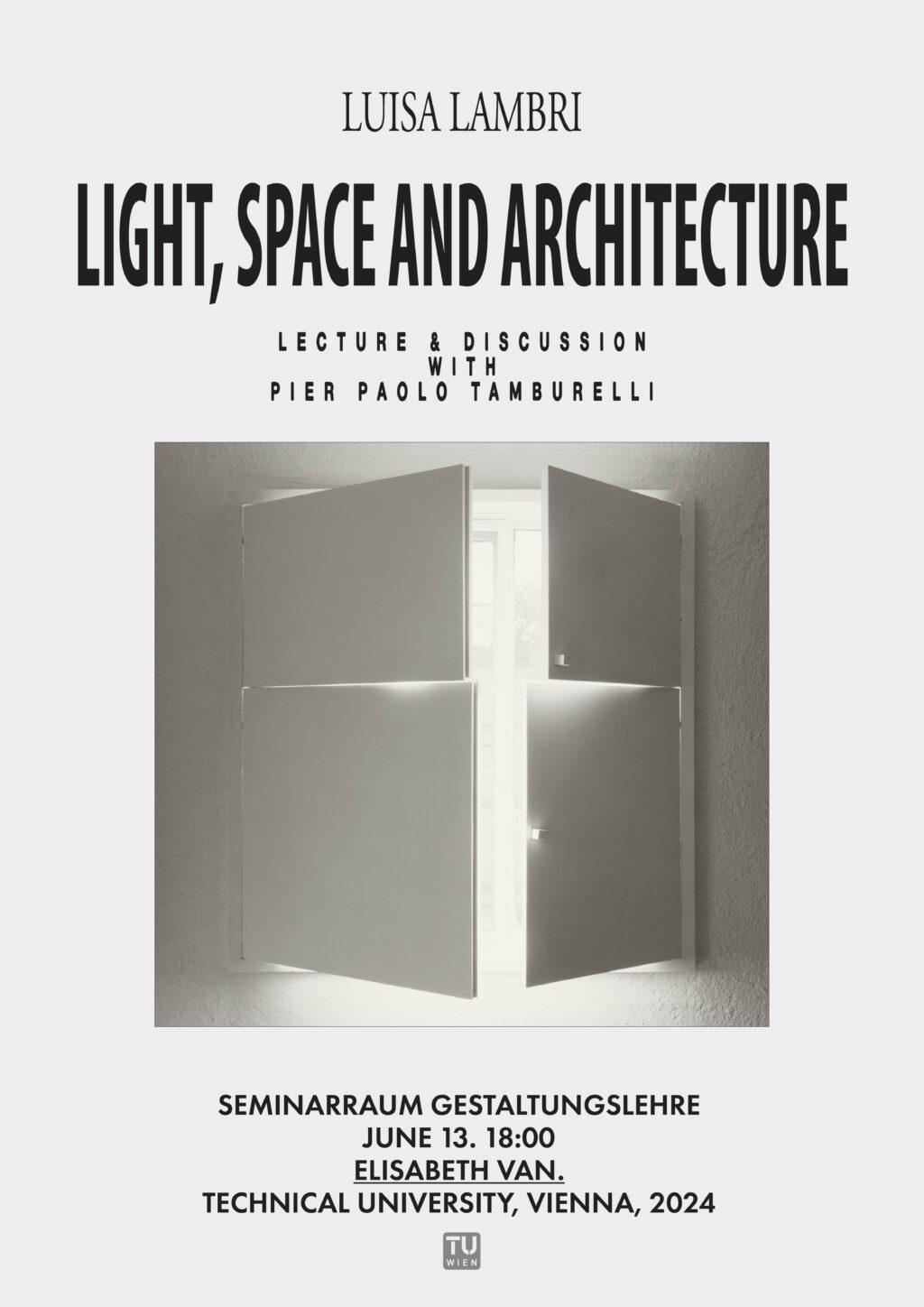
JUN 13, 2024
18:00
LECTURE & DISCUSSION:
LUISA LAMBRI
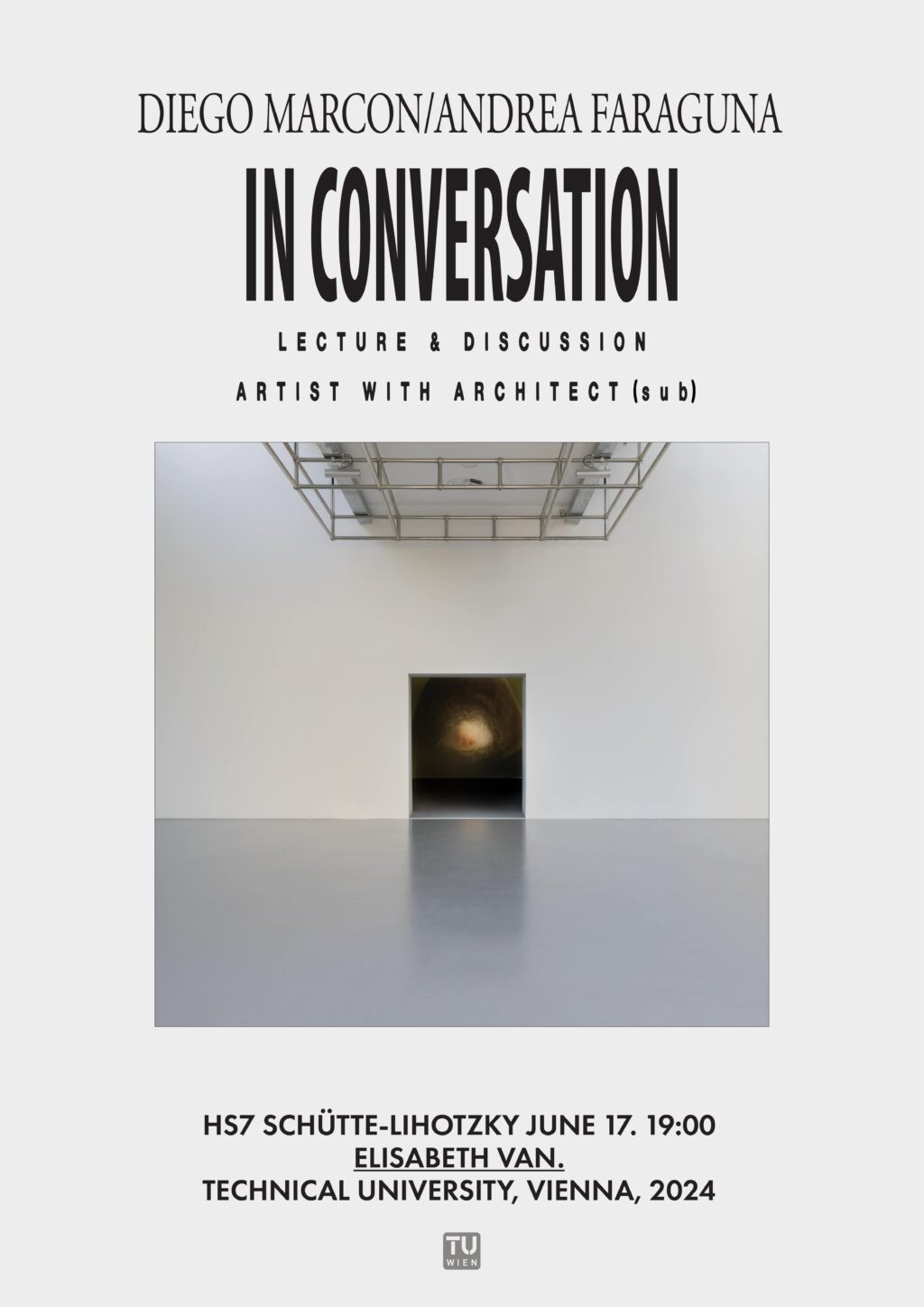
JUN 17, 2024
19:00
LECTURE & DISCUSSION:
DIEGO MARCON
ANDREA FARAGUNA
JUN 18, 2024
18:00
HOUSING TALKS: LISZ HIRN
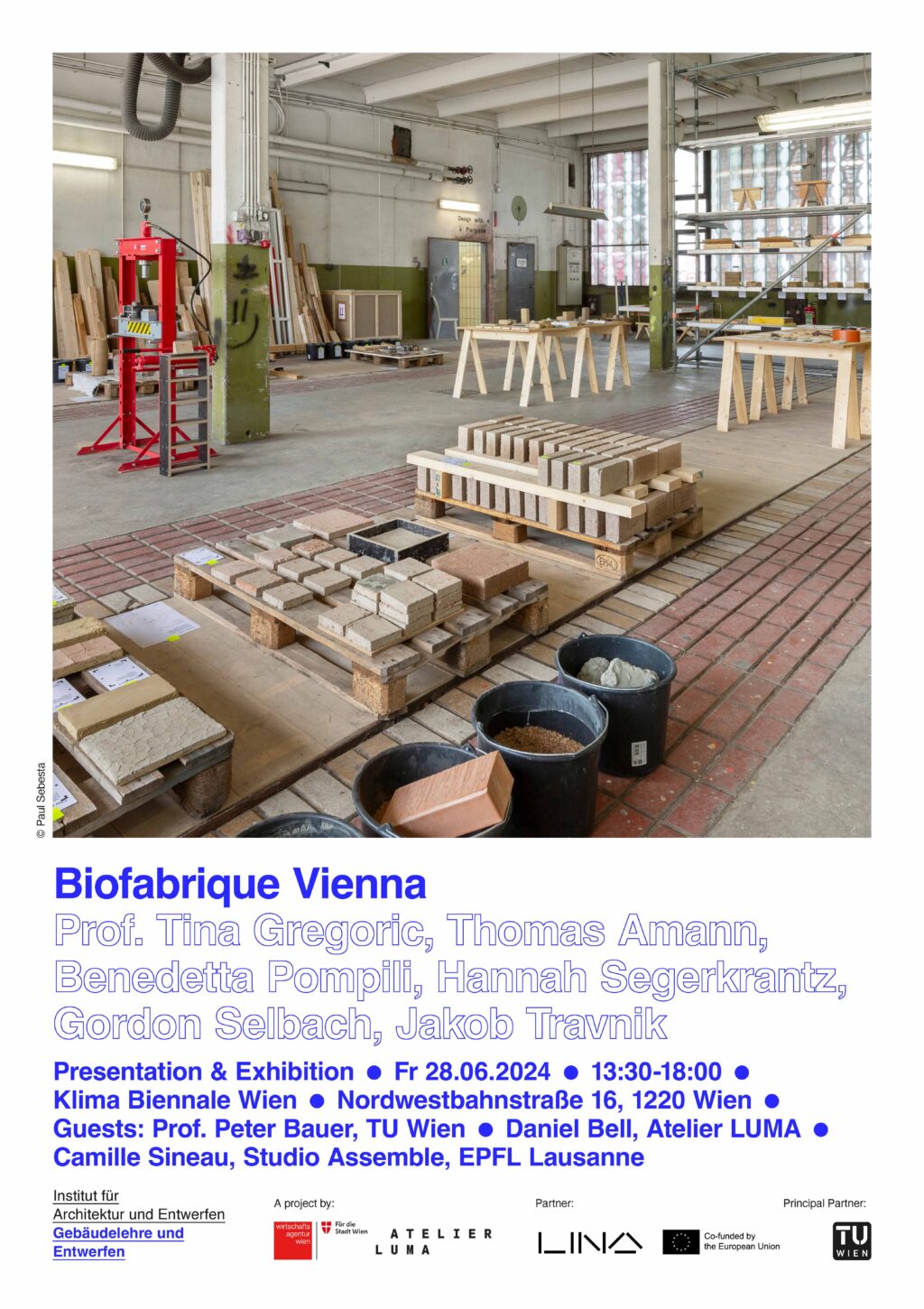
JUN 28, 2024
13:30
EXHIBITION:
BIOFABRIQUE VIENNA
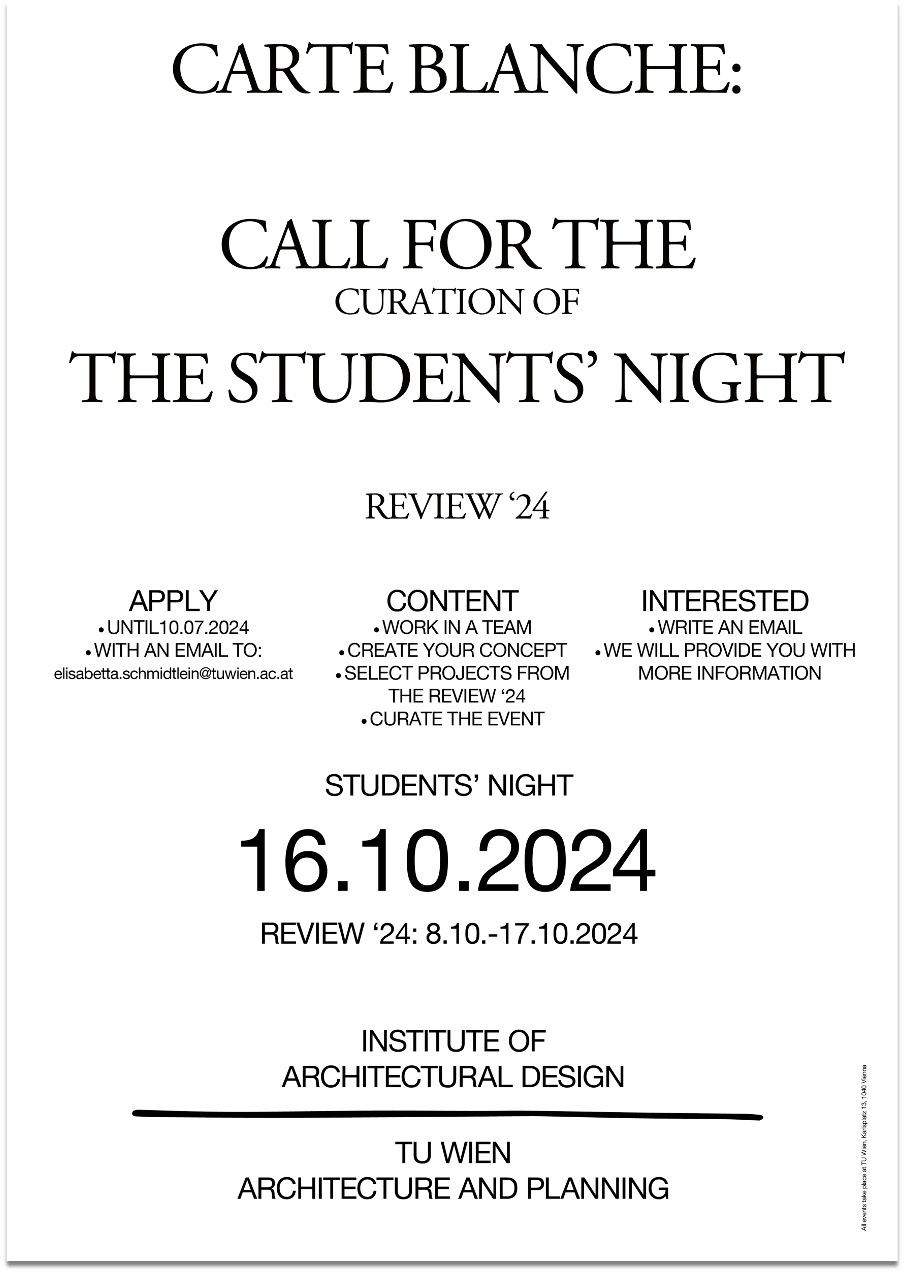
JUL 10, 2024
17:00
CALL:
CURATION OF THE STUDENT'S NIGHT
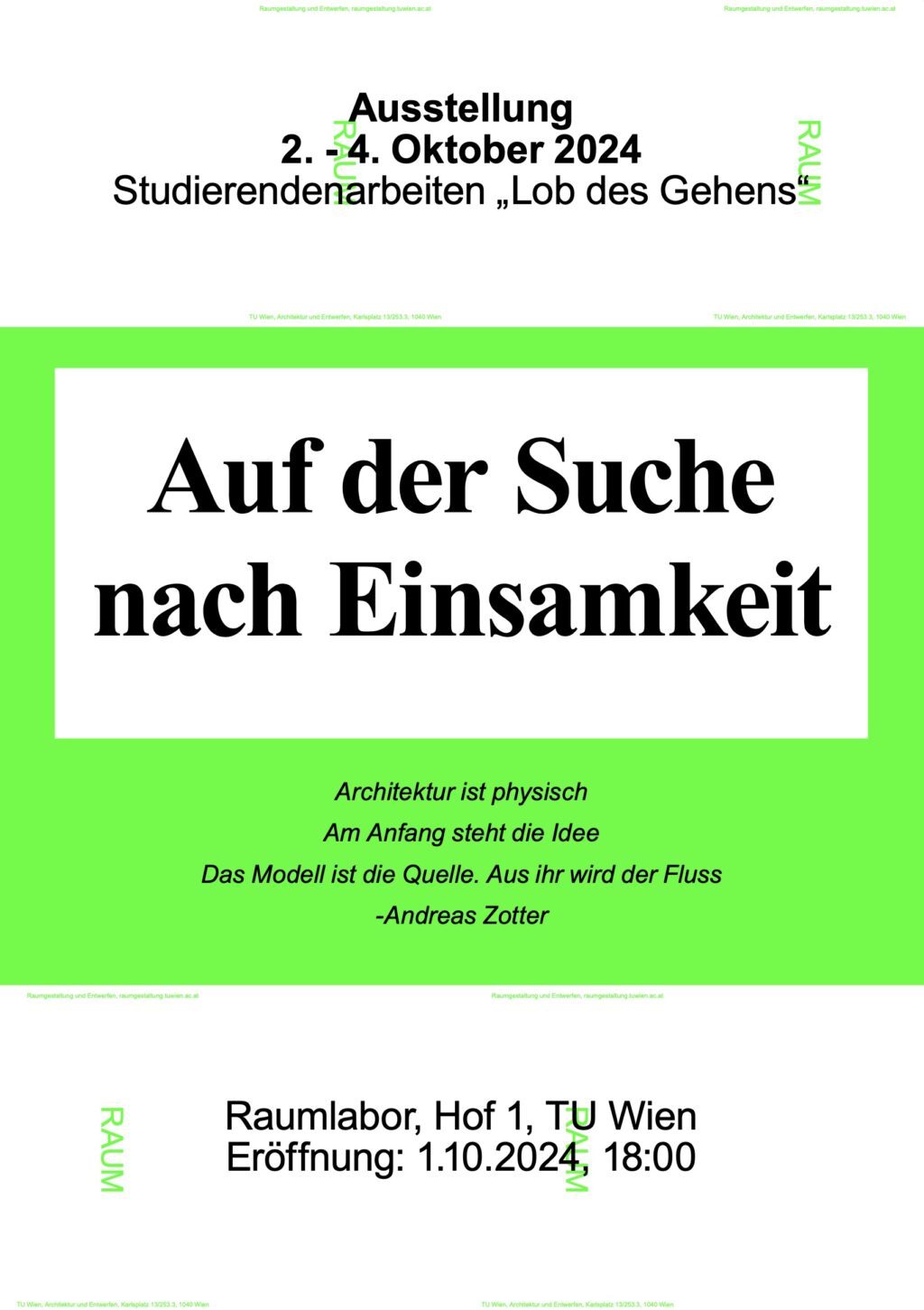
OCT 1, 2024
18:00
EXHIBITION:
AUF DER SUCHE NACH EINSAMKEIT
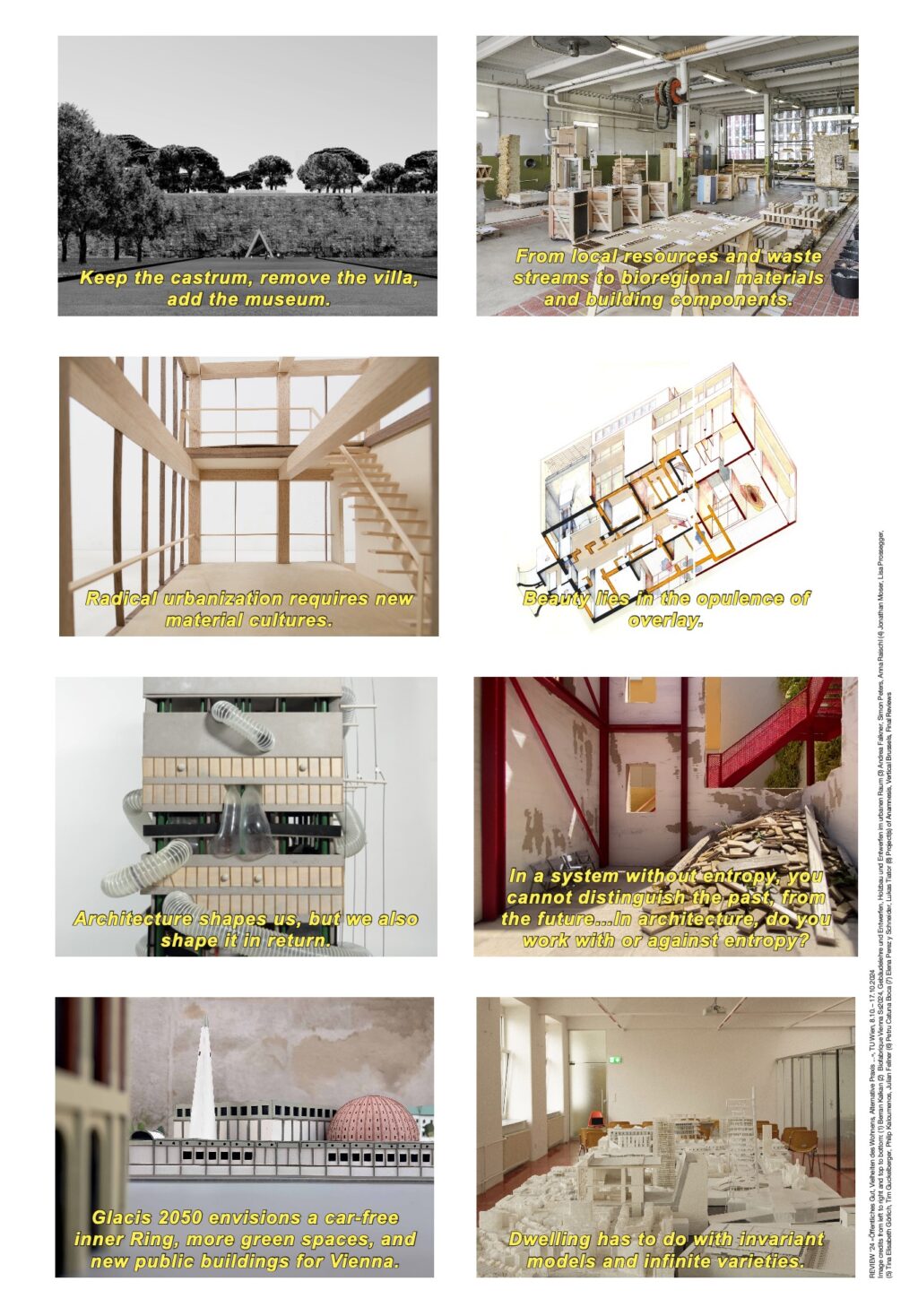
OCT 8, 2024
18:00
EXHIBITION:
REVIEW’24
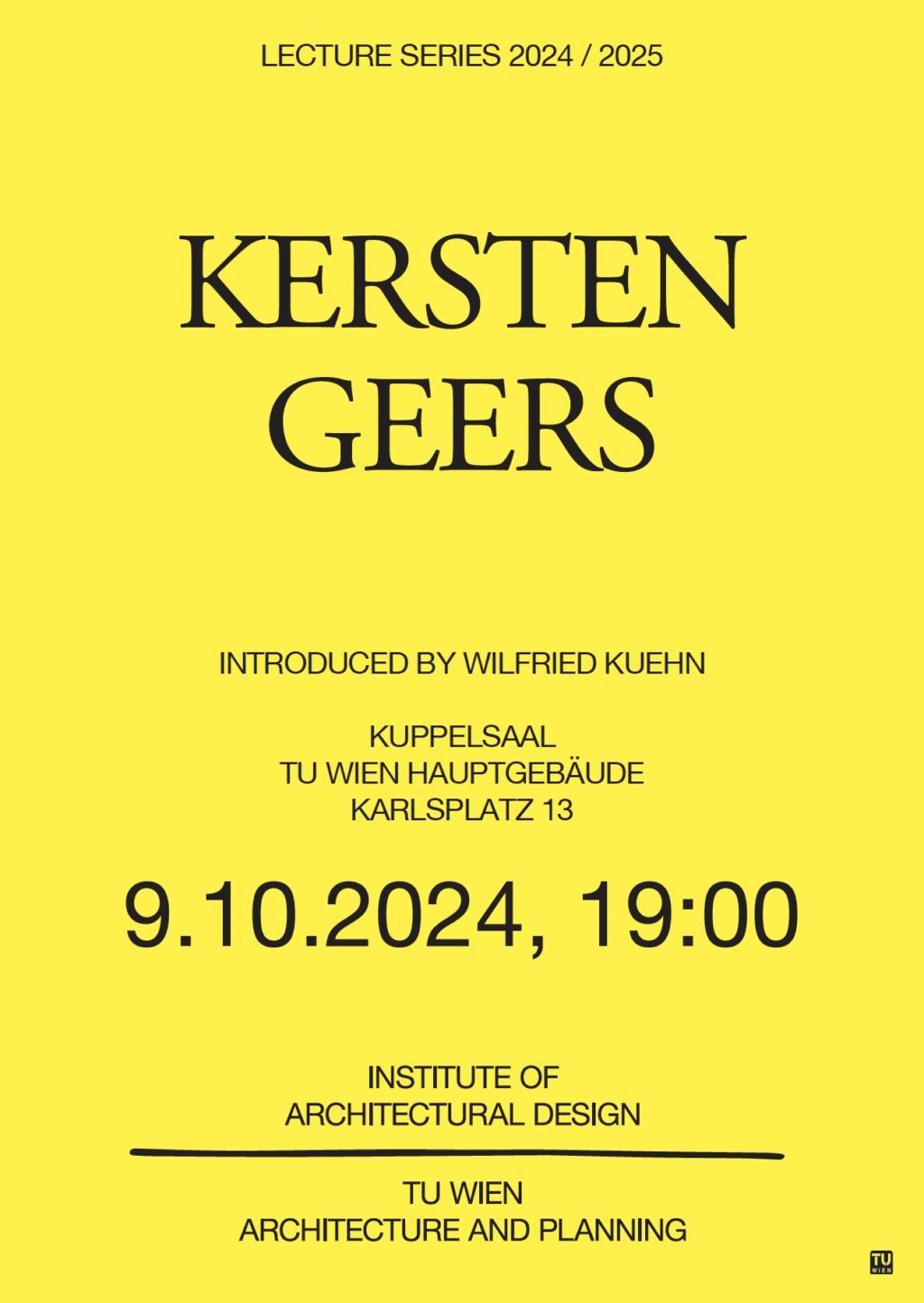
OCT 9, 2024
19:00
LECTURE: Kersten Geers
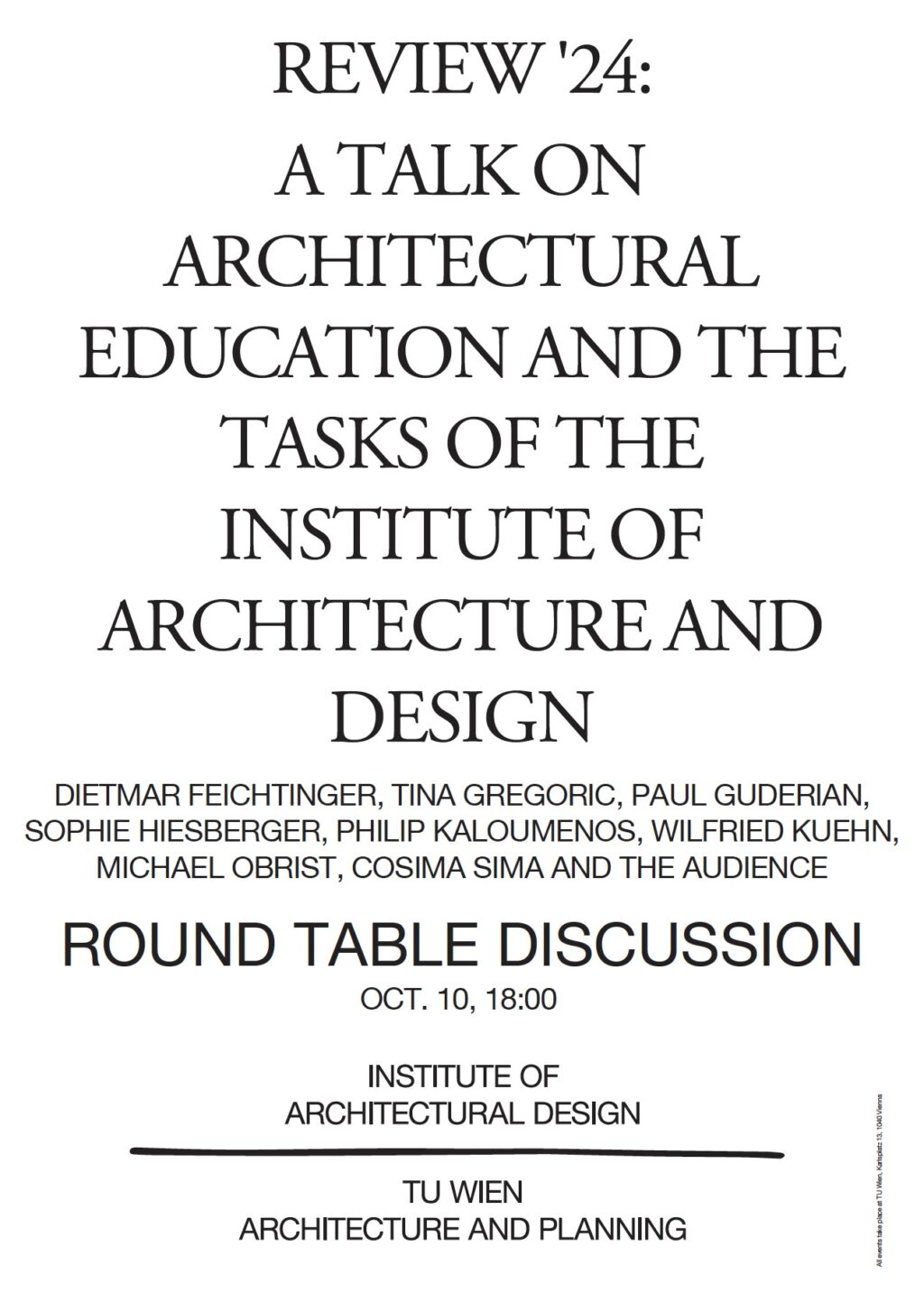
OCT 10, 2024
18:00
ROUND TABLE DISCUSSION:
REVIEW ’24
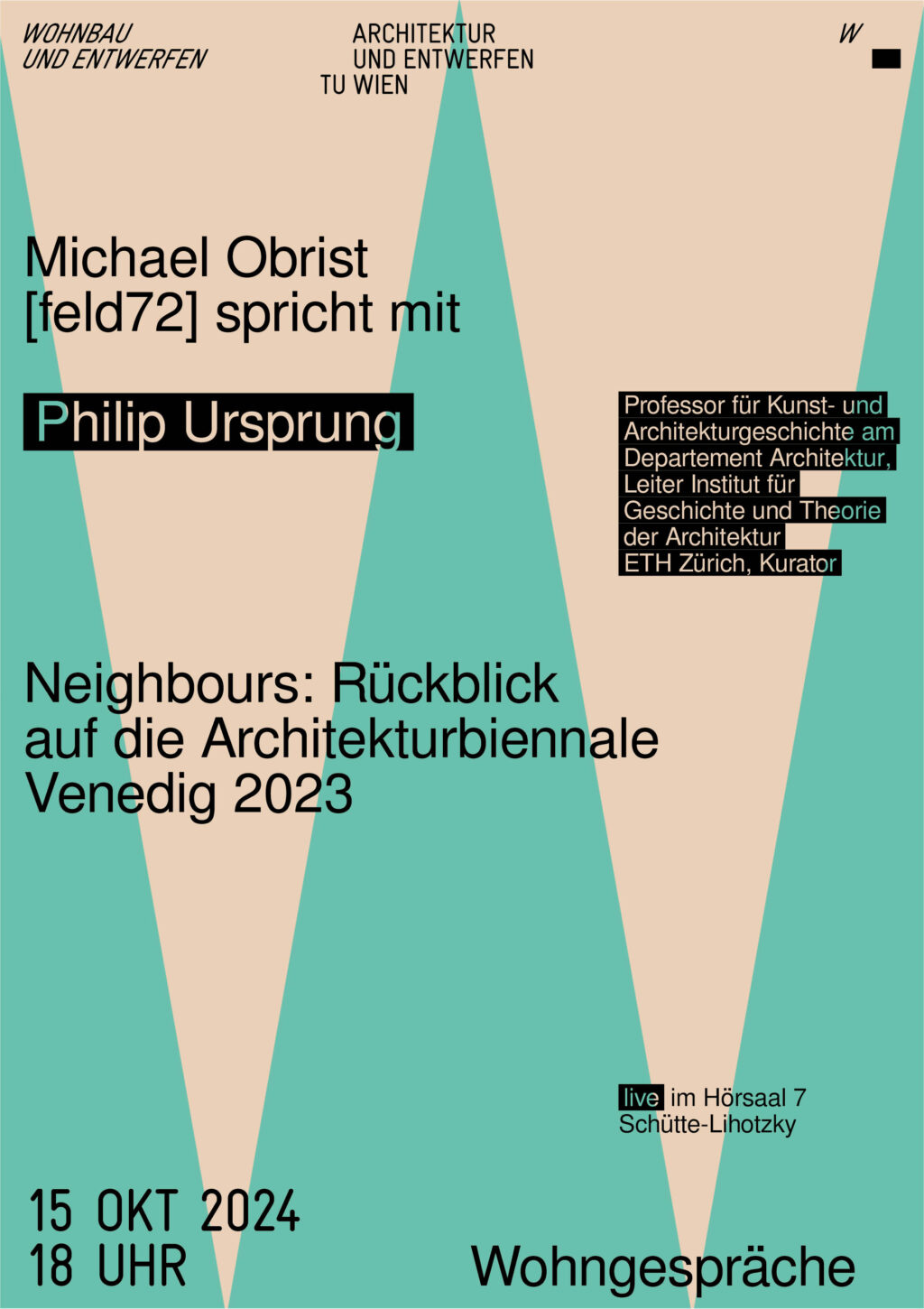
OCT 15, 2024
18:00
HOUSING TALKS:
PHILIP URSPRUNG
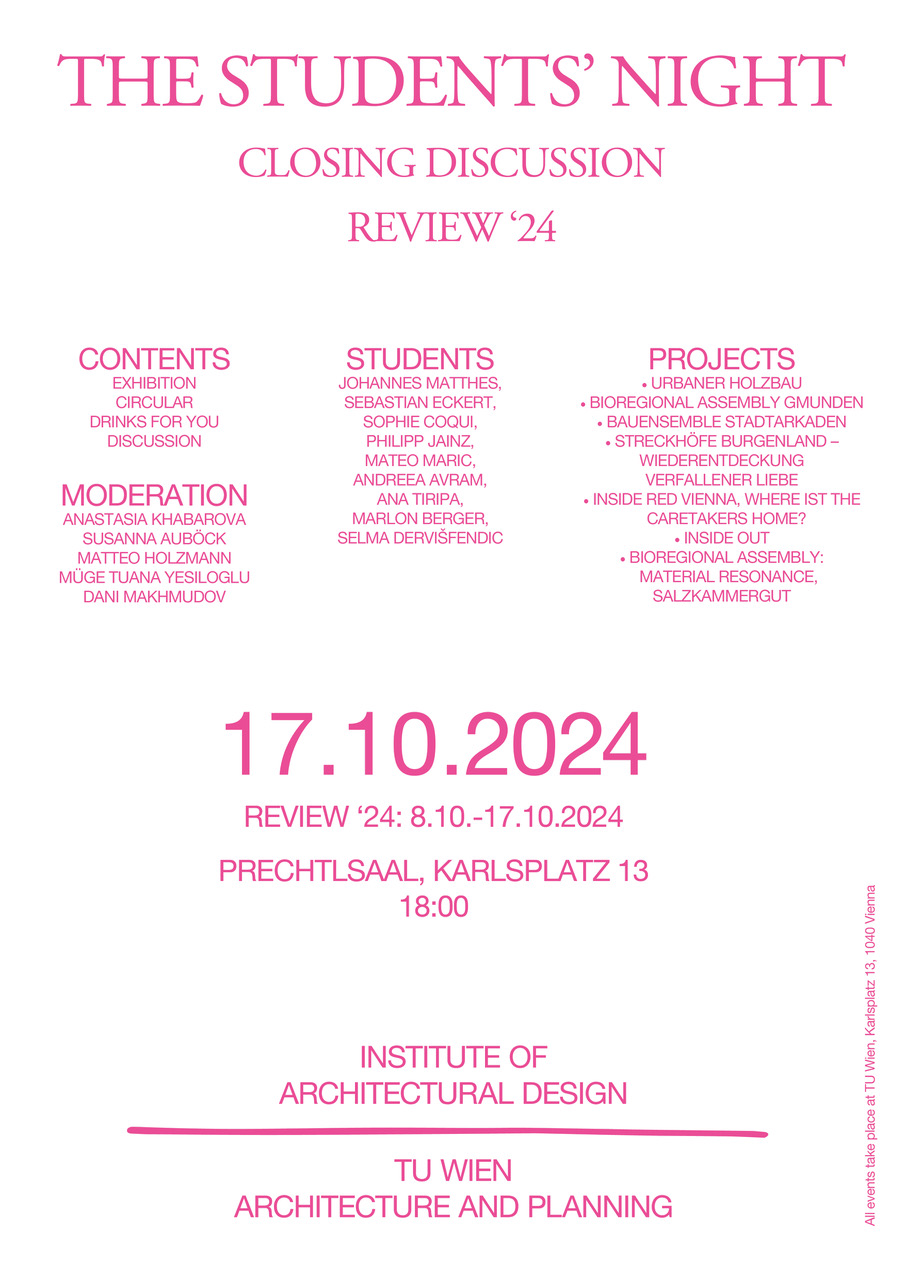
OCT 17, 2024
18:00
CLOSING DISCUSSION:
THE STUDENT'S NIGHT REVIEW ’24
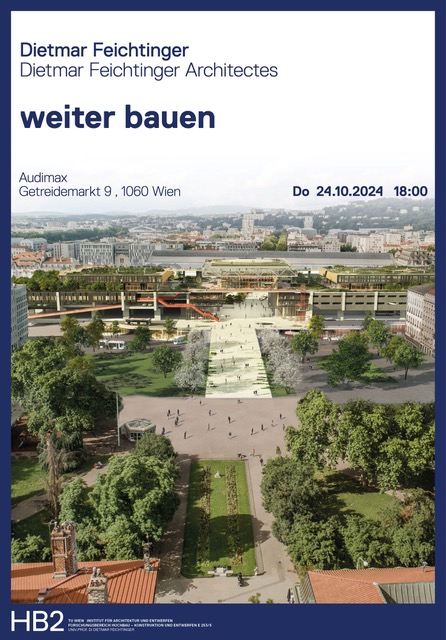
OCT 24, 2024
18:00
LECTURE:
DIETMAR FEICHTINGER
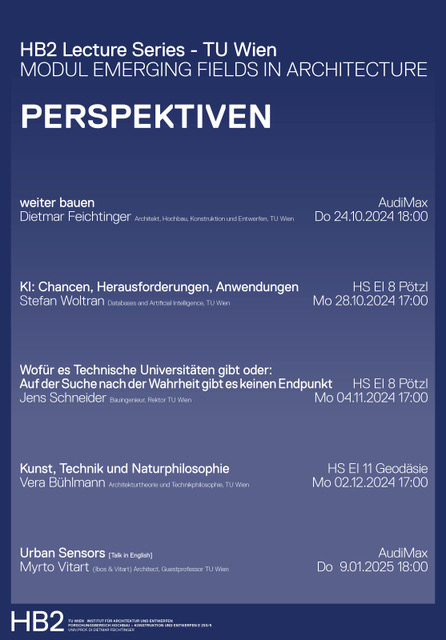
OCT 24, 2024
18:00
LECTURE SERIES:
PERSPEKTIVEN
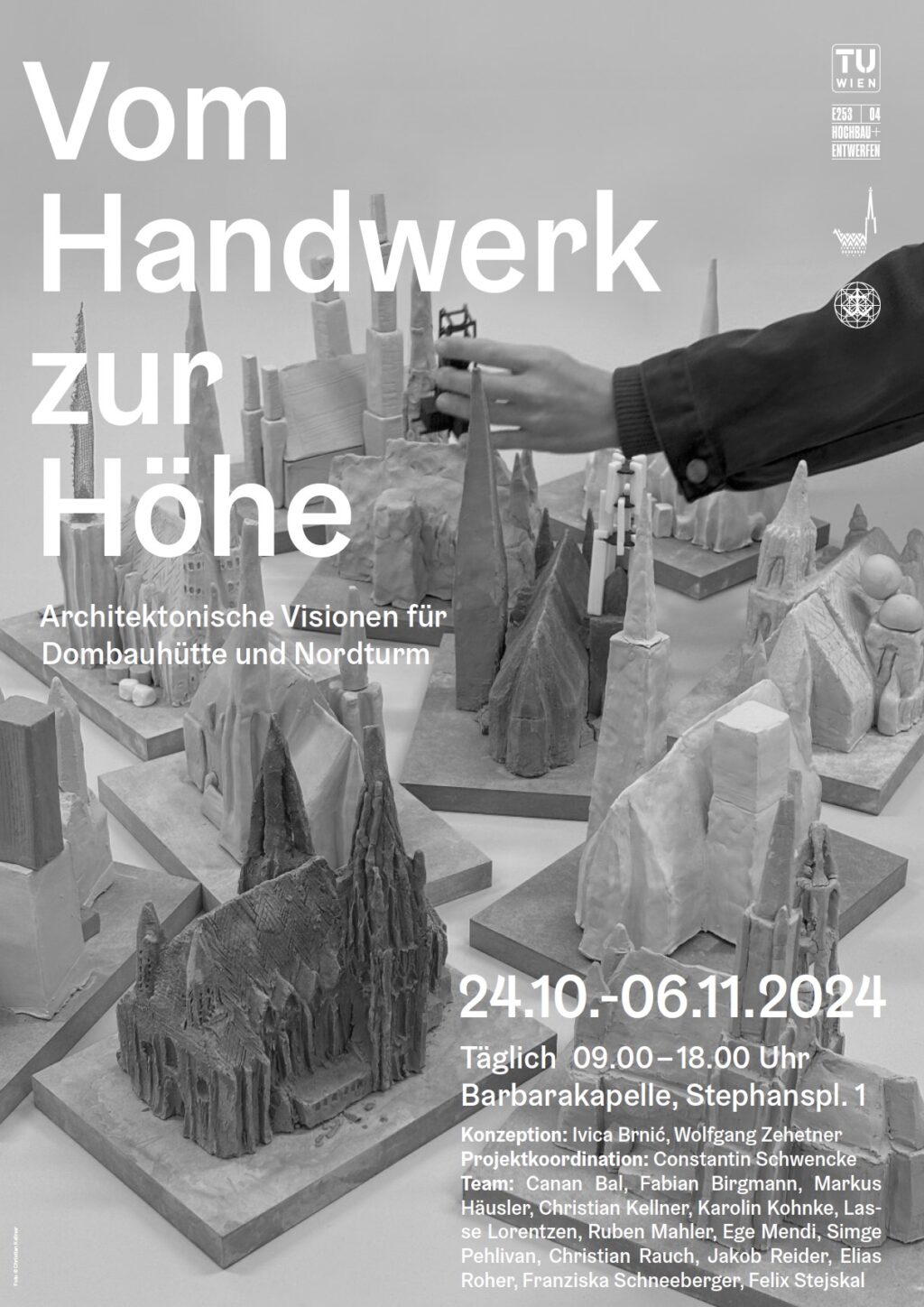
OCT 24, 2024
19:00
EXHIBITION:
VOM HANDWERK ZUR HÖHE
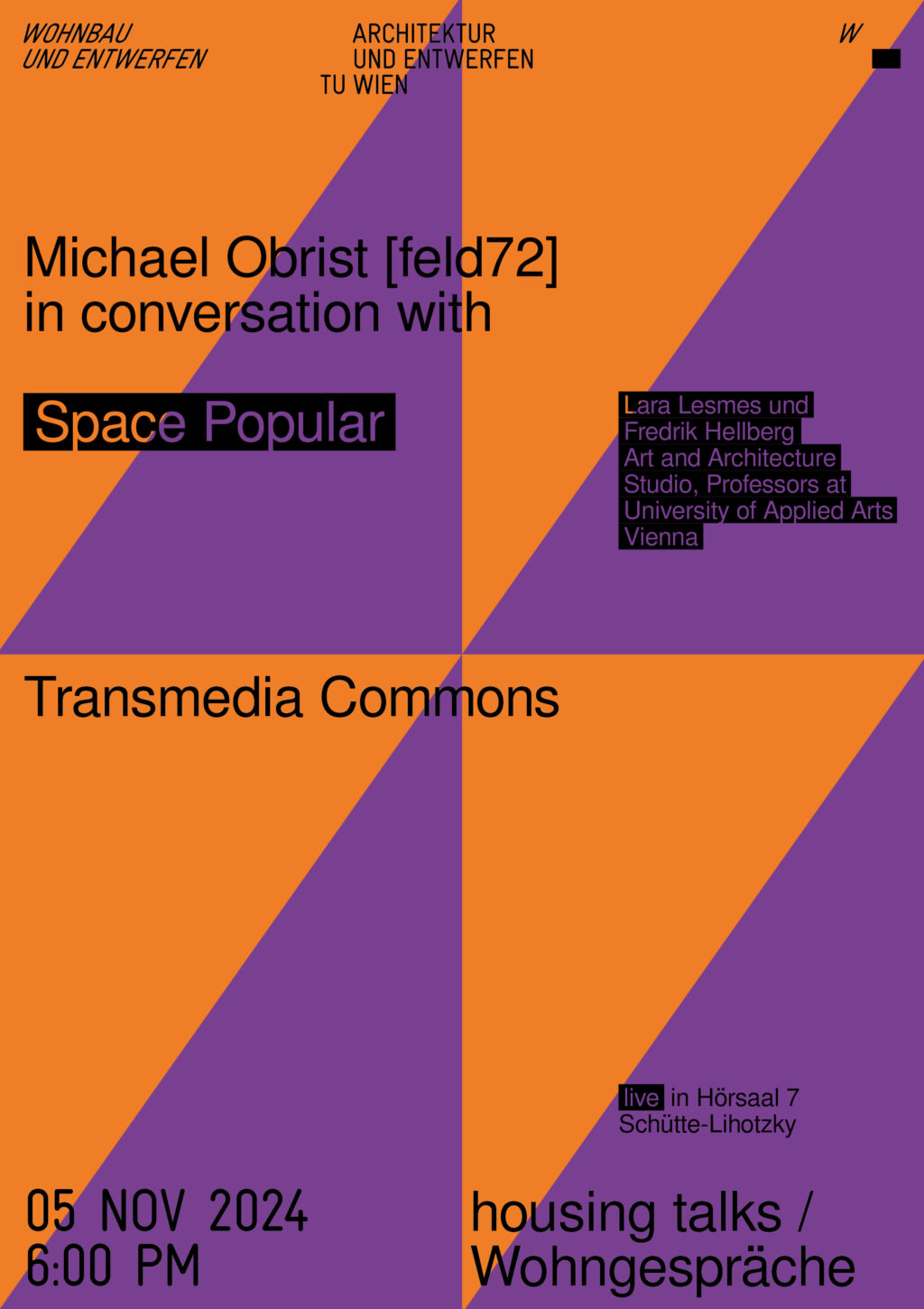
NOV 5, 2024
18:00
HOUSING TALKS:
SPACE POPULAR
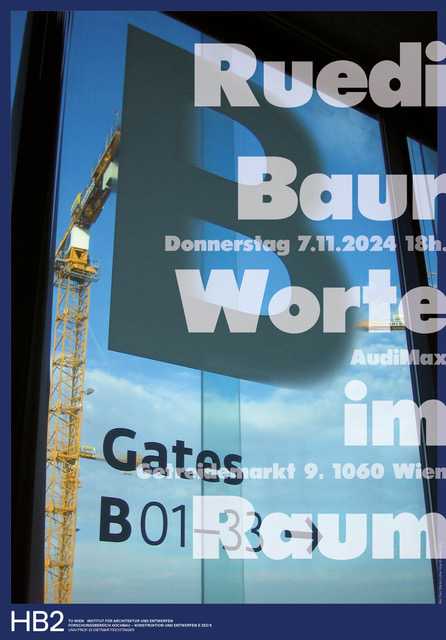
NOV 7, 2024
18:00
LECTURE:
RUEDI BAUR
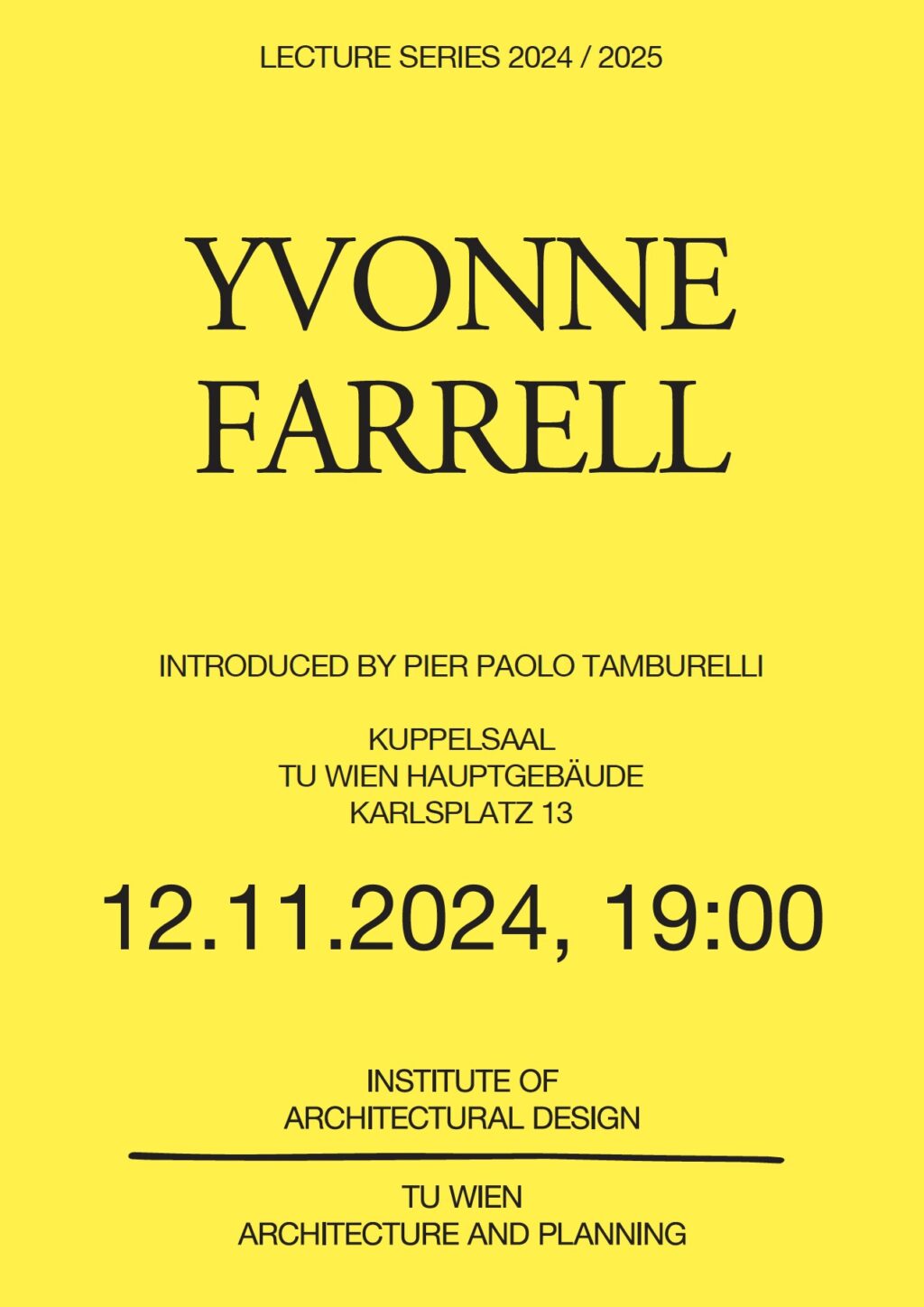
NOV 12, 2024
19:00
LECTURE: Yvonne Farrell
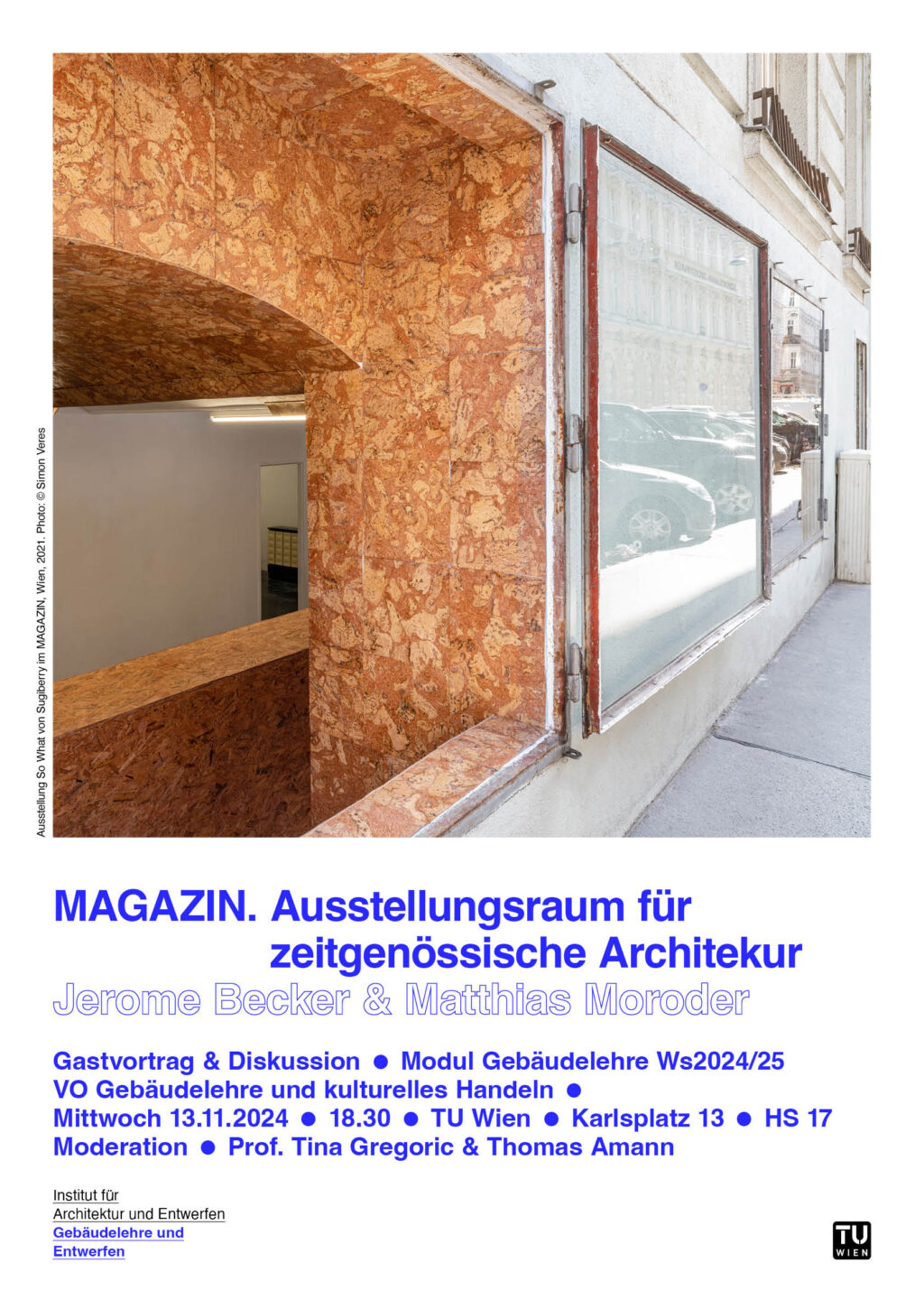
NOV 13, 2024
18:30
LECTURE:
JEROME BECKER & MATTHIAS MORODER
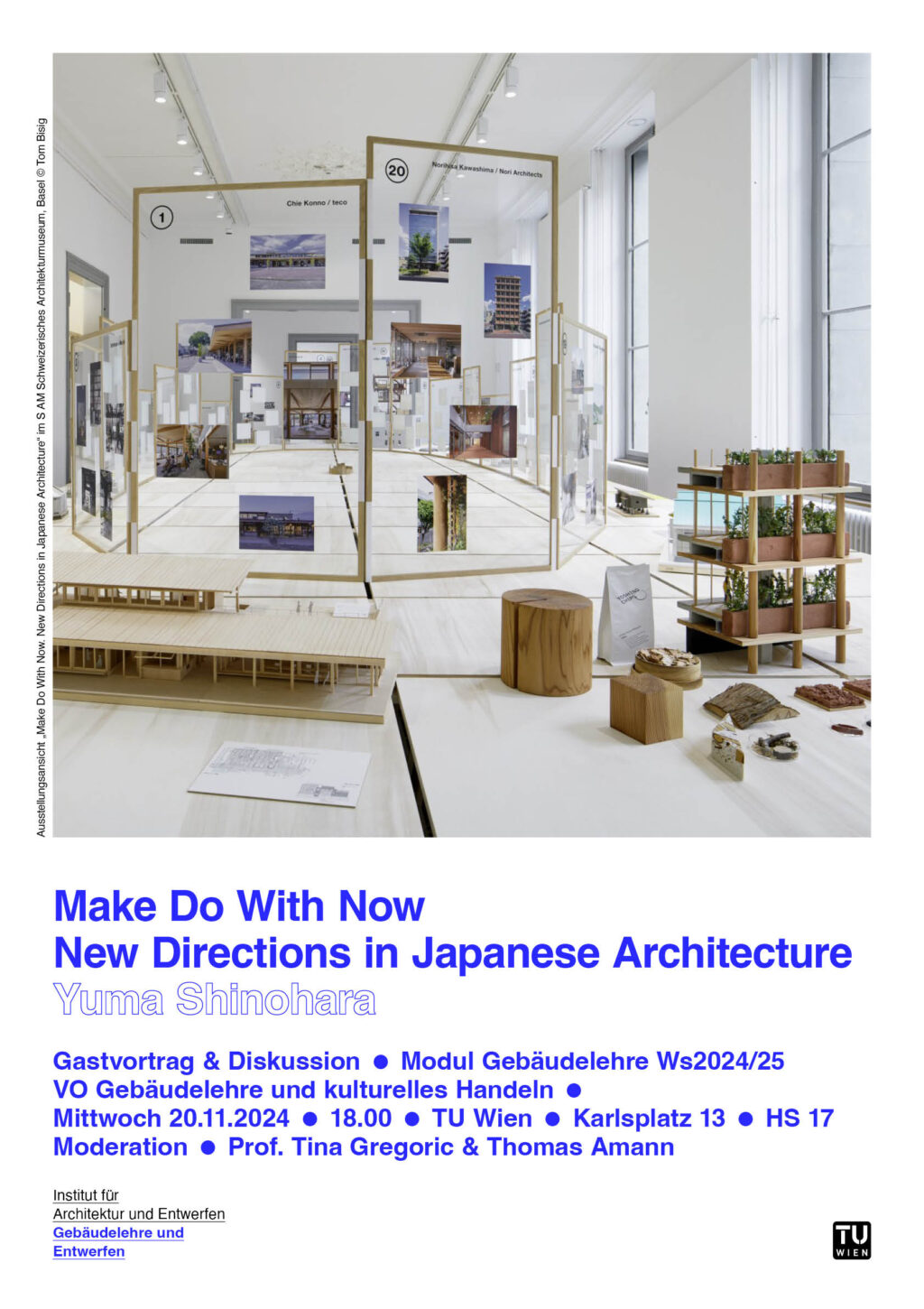
NOV 20, 2024
18:00
LECTURE:
YUMA SHINOHARA
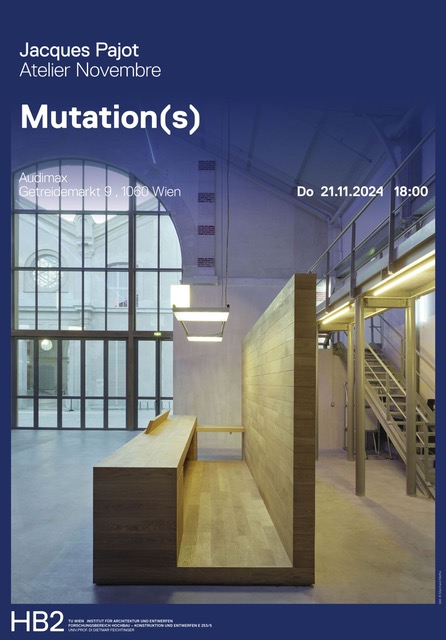
NOV 21, 2024
18:00
LECTURE:
JACQUES PAJOT
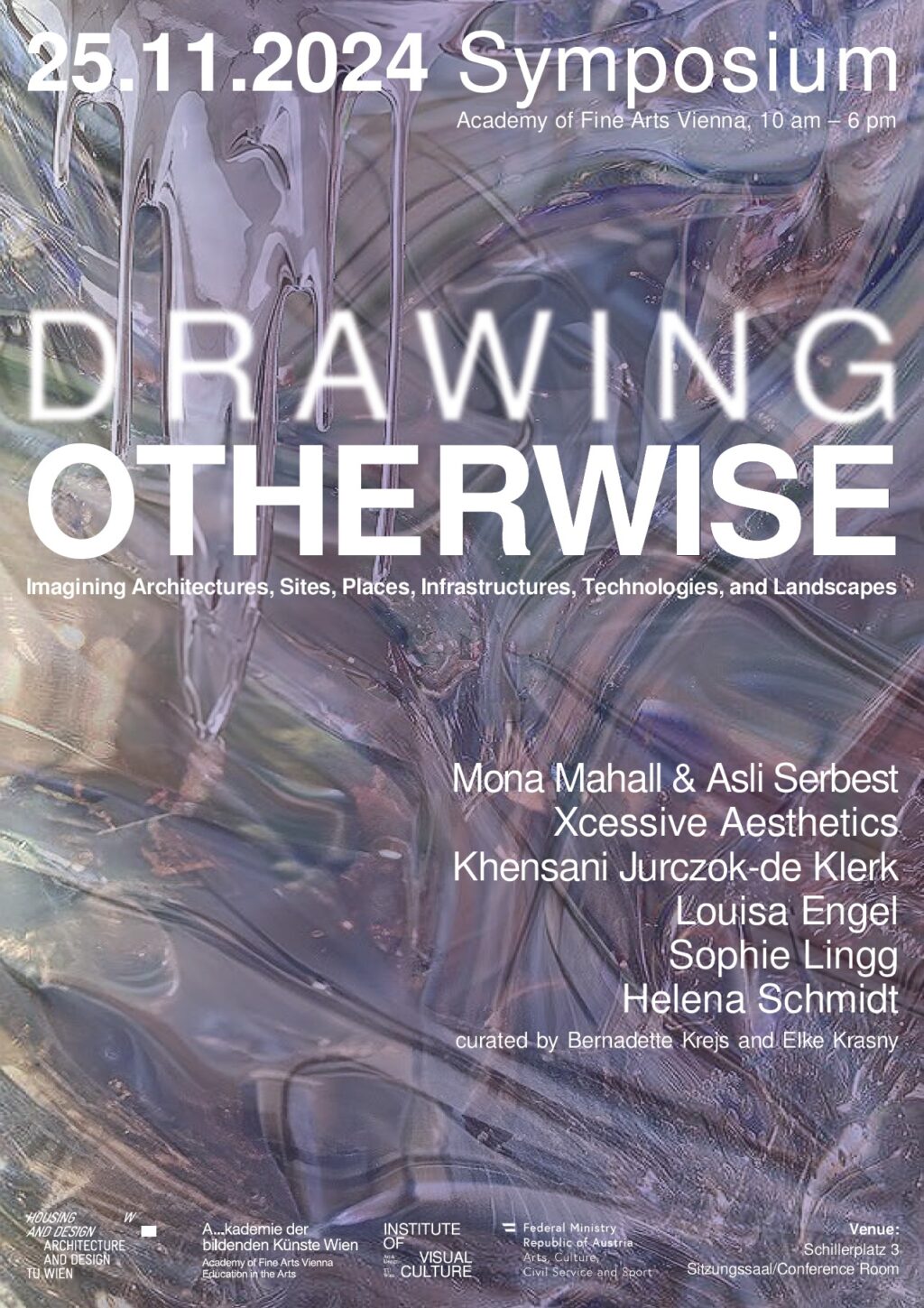
NOV 25, 2024
10:00
SYMPOSIUM:
DRAWING OTHERWISE
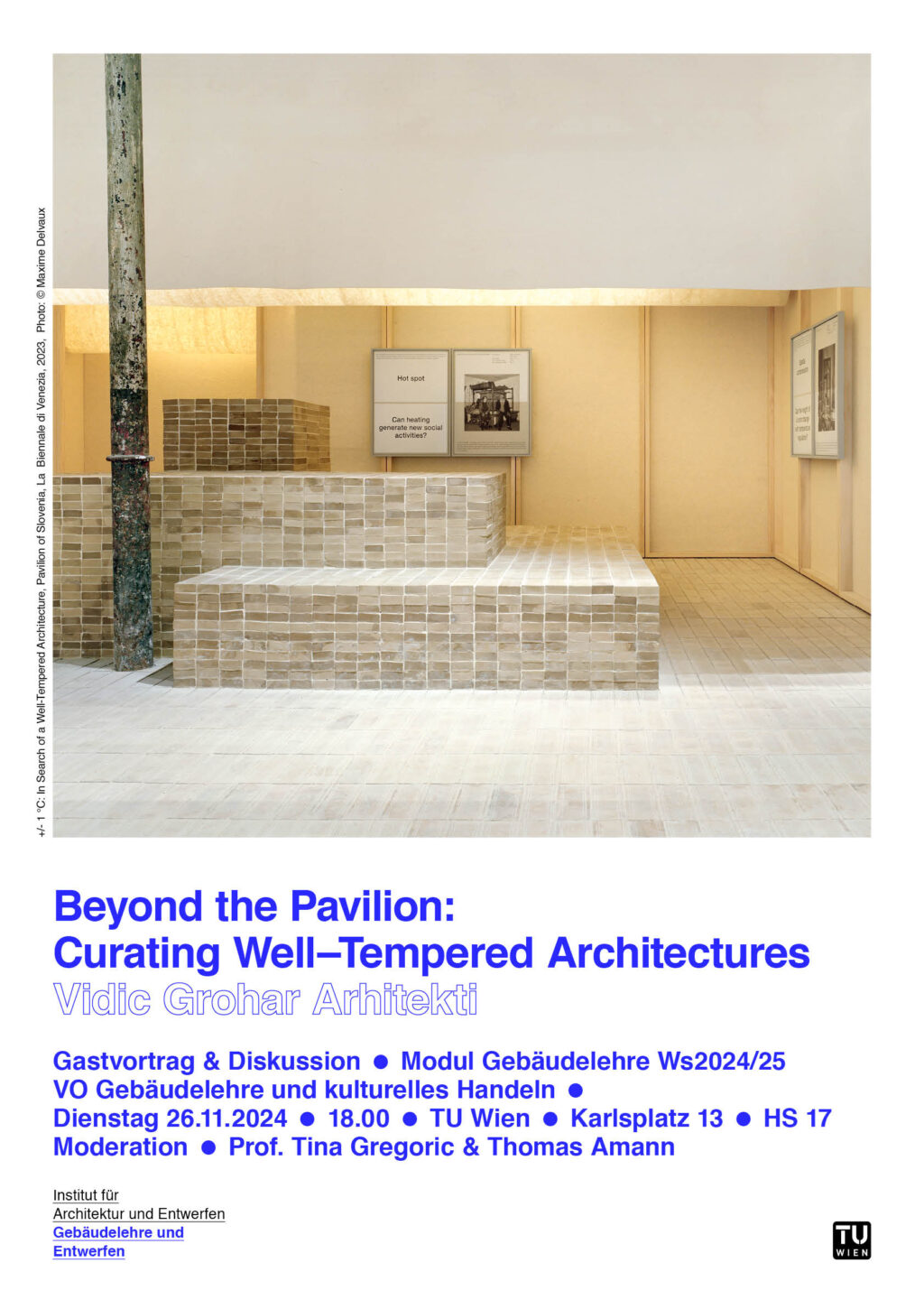
NOV 26, 2024
18:00
LECTURE:
VIDIC GROHAR ARHITEKTI
NOV 26, 2024
18:00
HOUSING TALKS:
ASTRID SMITHAM & NICHOLAS LOBO BRENNAN
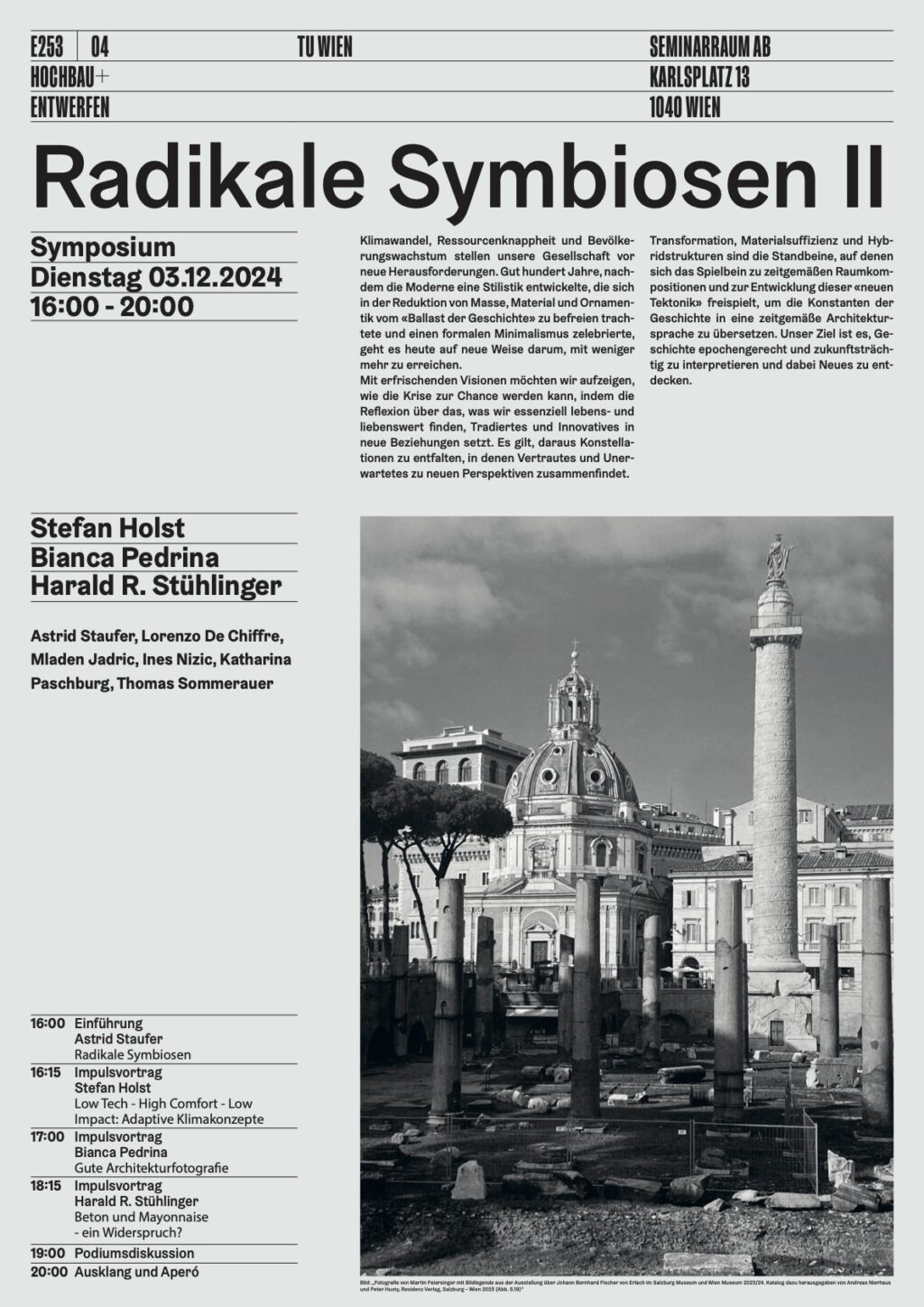
DEC 3, 2024
16:00
SYMPOSIUM:
RADIKALE SYMBIOSEN II
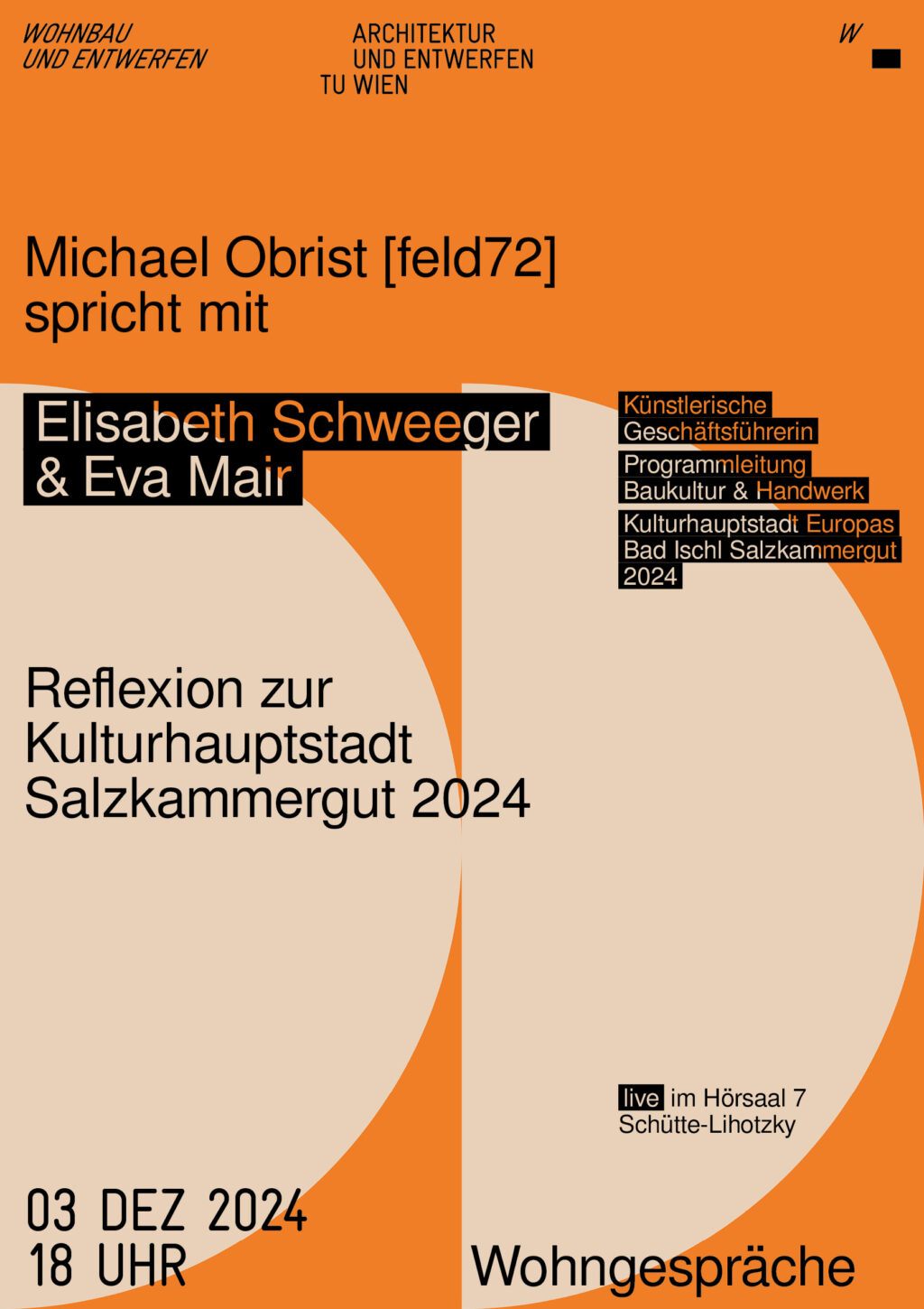
DEC 3, 2024
18:00
HOUSING TALKS:
REFLEXION ZUR KULTURHAUPTSTADT SALZKAMMERGUT 2024
DEC 11, 2024
19:00
LECTURE:
PASCALE DALIX
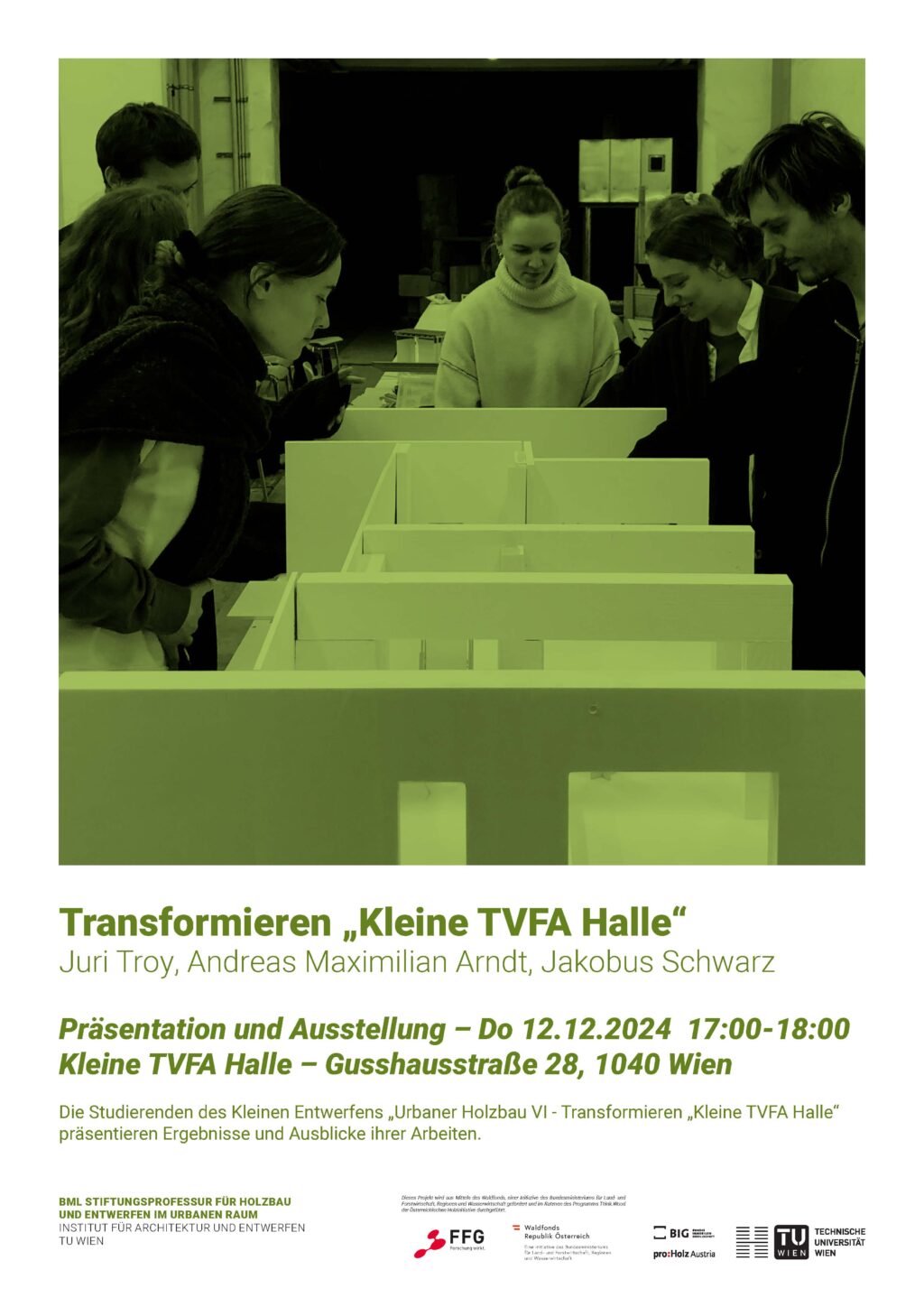
DEC 12, 2024
17:00
EXHIBITION:
TRANSFORMIEREN „KLEINE TVFA HALLE“
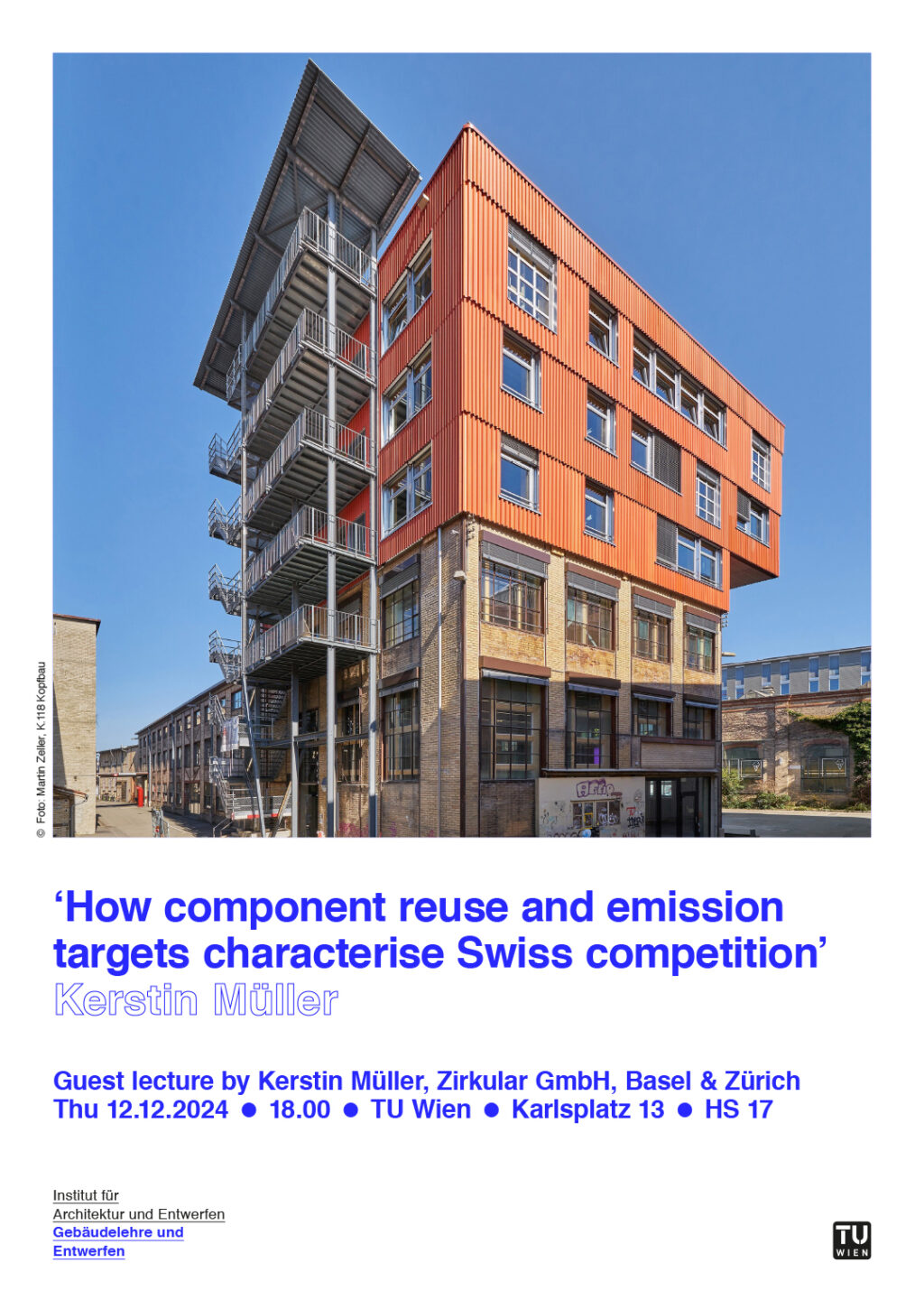
DEC 12, 2024
18:00
LECTURE:
KERSTIN MÜLLER
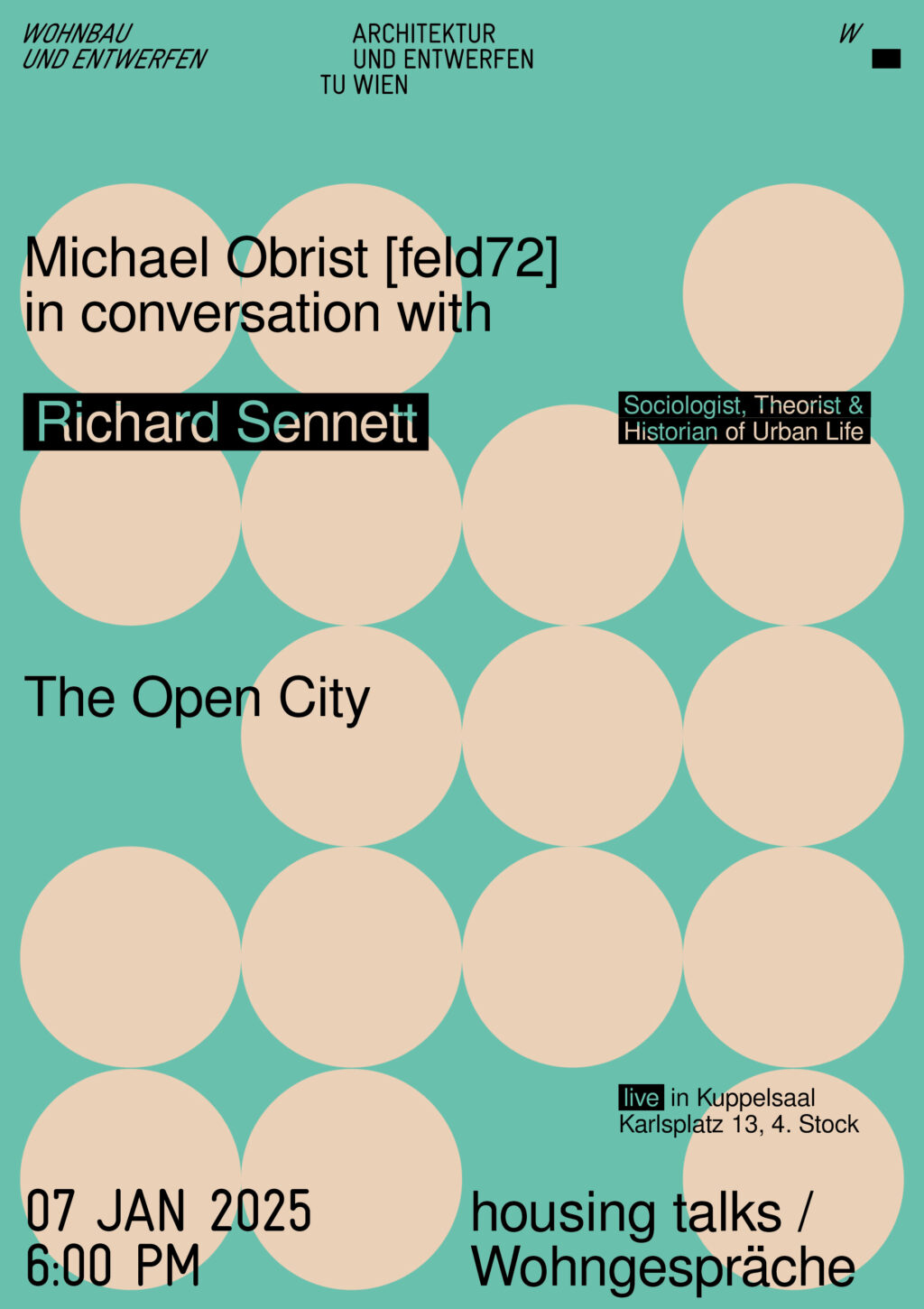
JAN 7, 2025
18:00
HOUSING TALKS:
RICHARD SENNETT
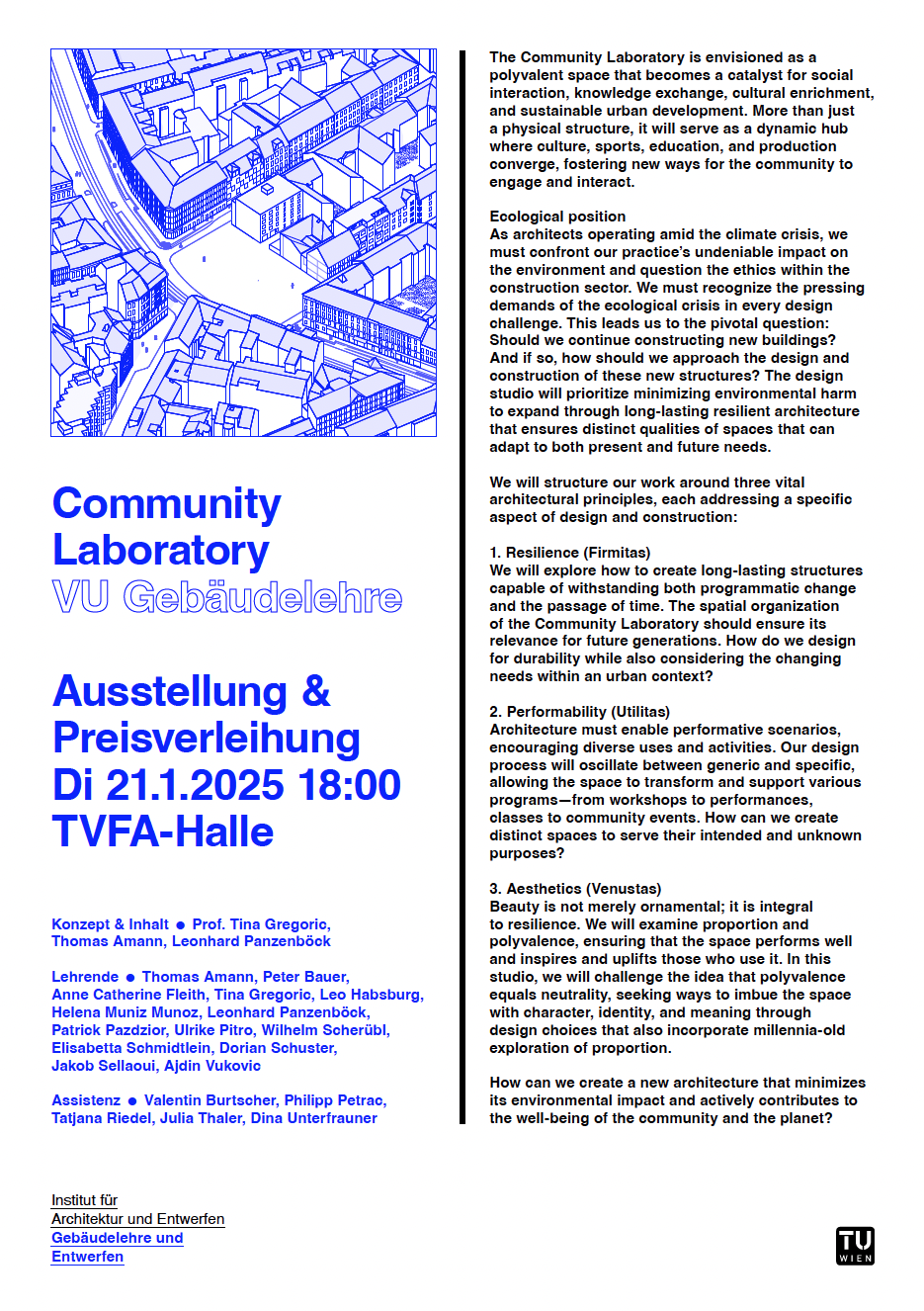
JAN 21, 2025
18:00
EXHIBITION:
COMMUNITY LABORATORY
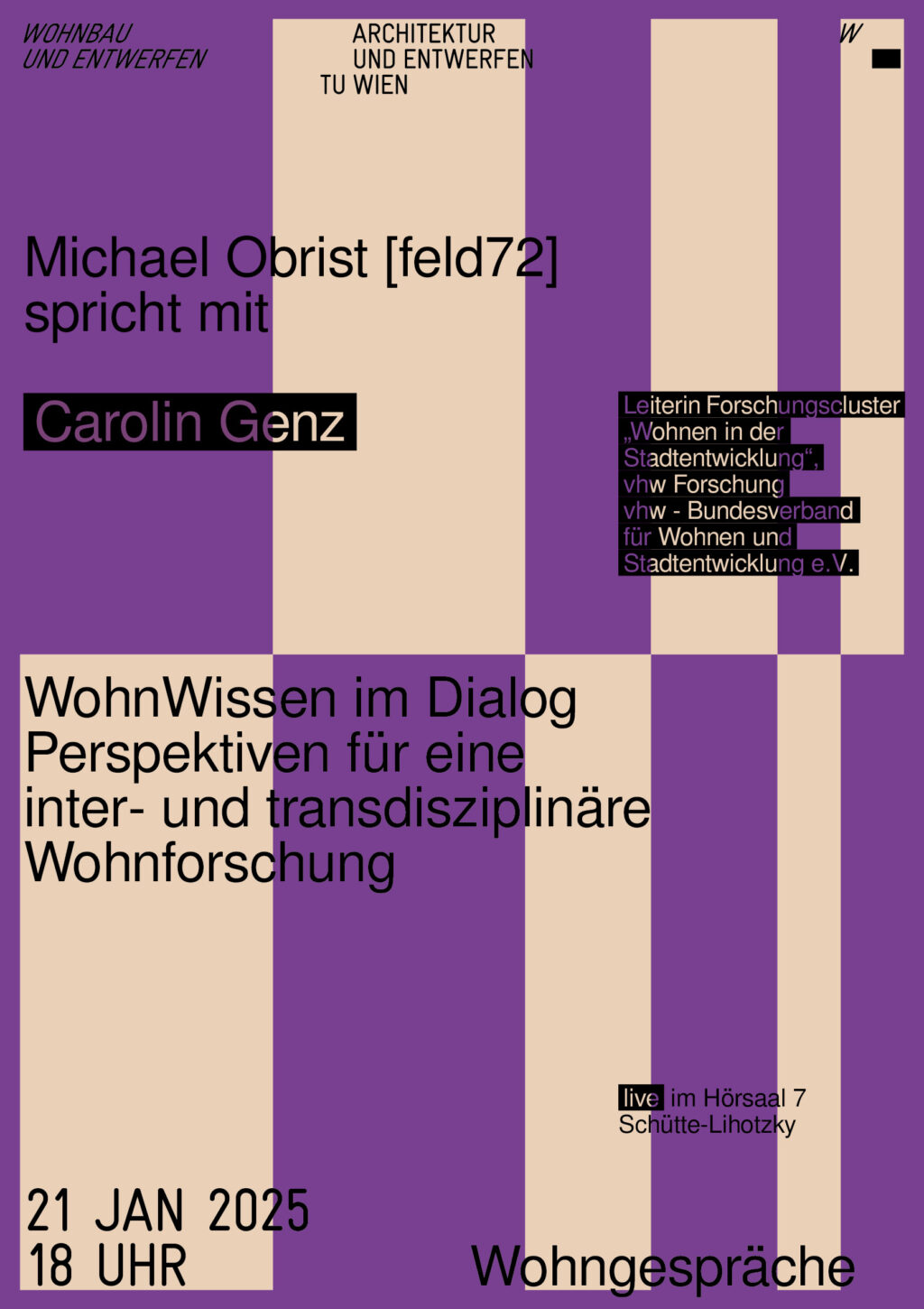
JAN 21, 2025
18:00
HOUSING TALKS:
CAROLING GENZ

JAN 21, 2025
19:00
SCREENING AND TALK:
BÊKA & LEMOINE
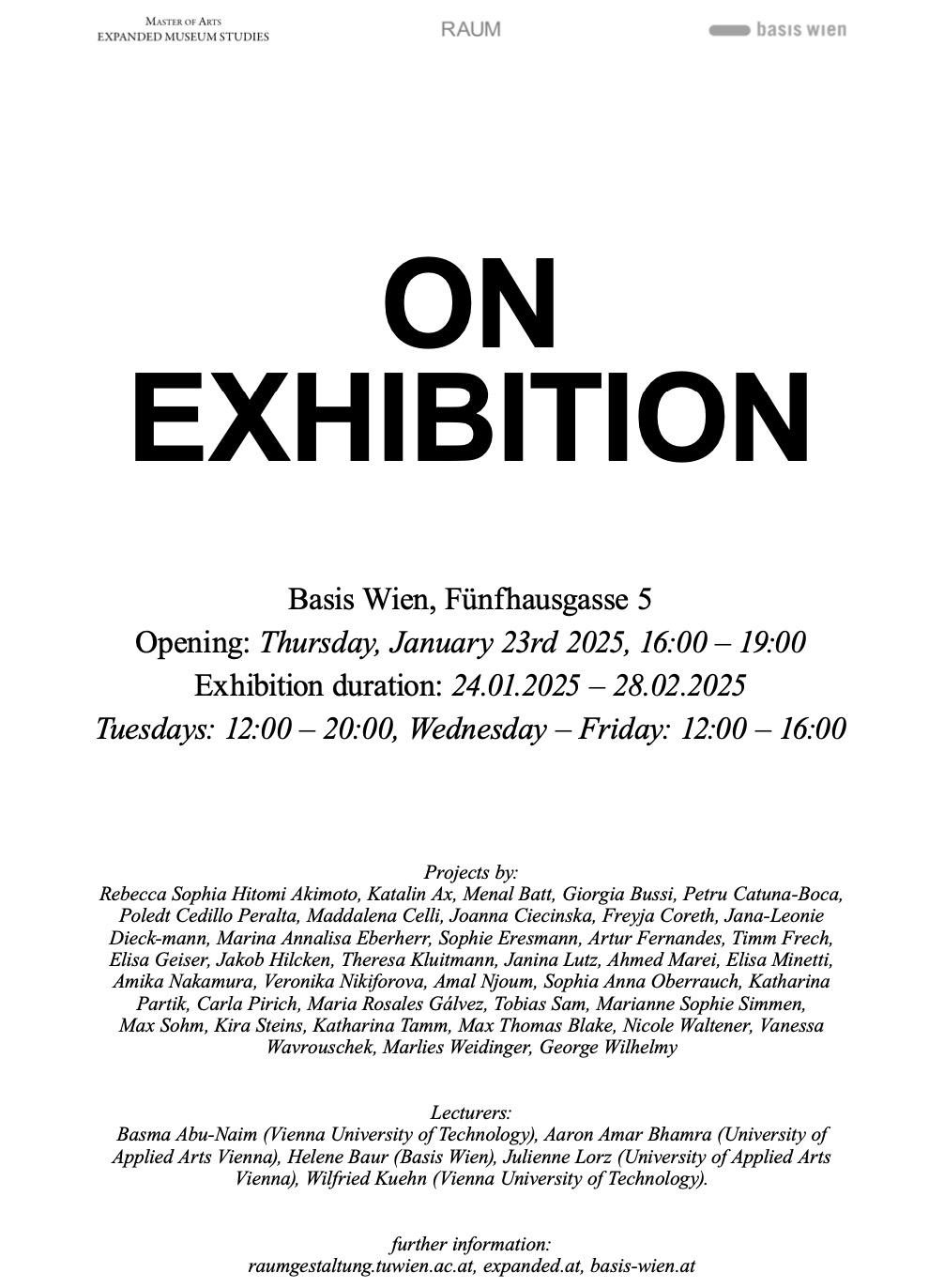
JAN 23, 2025
16:00
EXHIBITION:
ON EXHIBITION
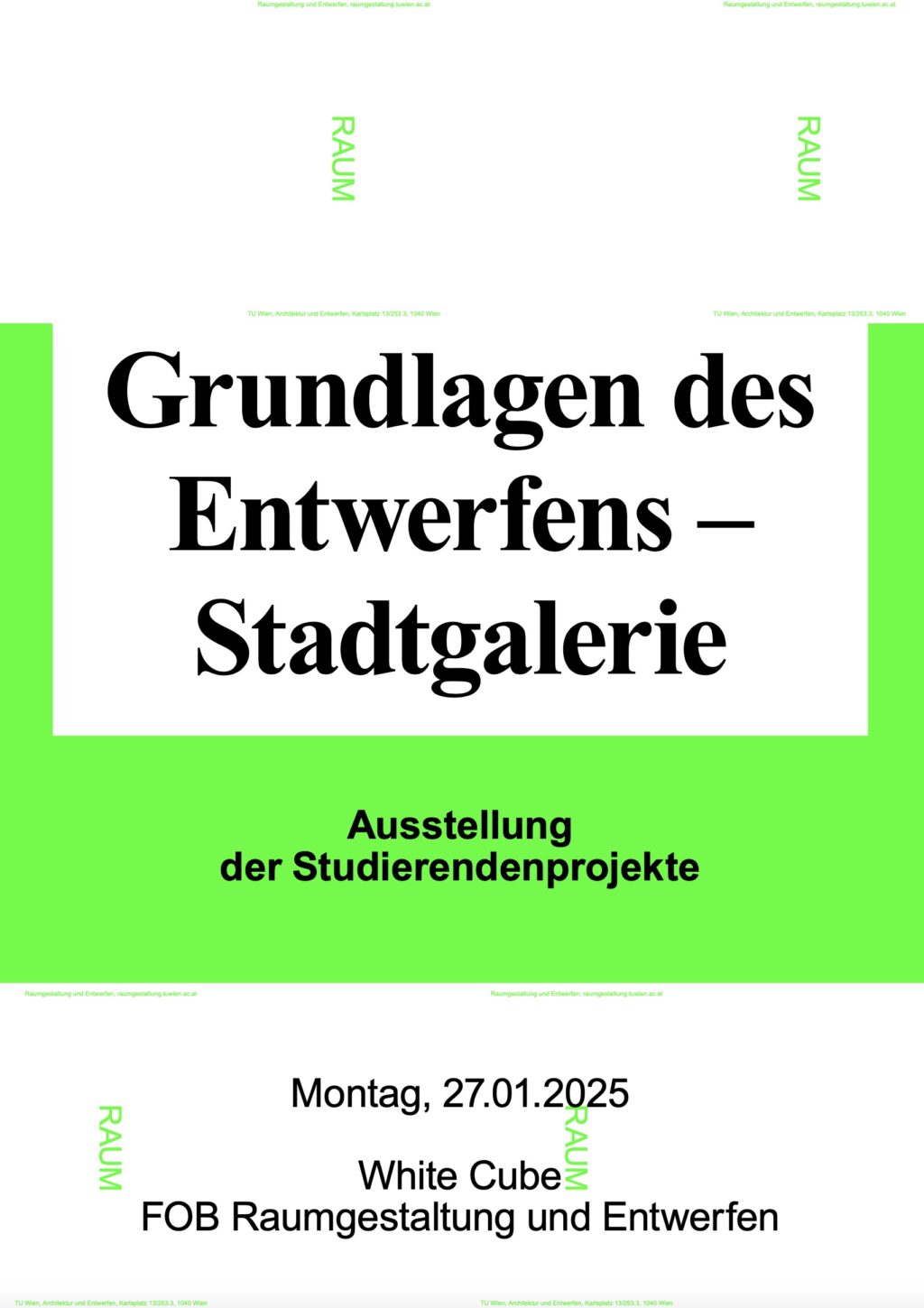
JAN 27, 2025
19:00
EXHIBITION:
STADTGALERIE
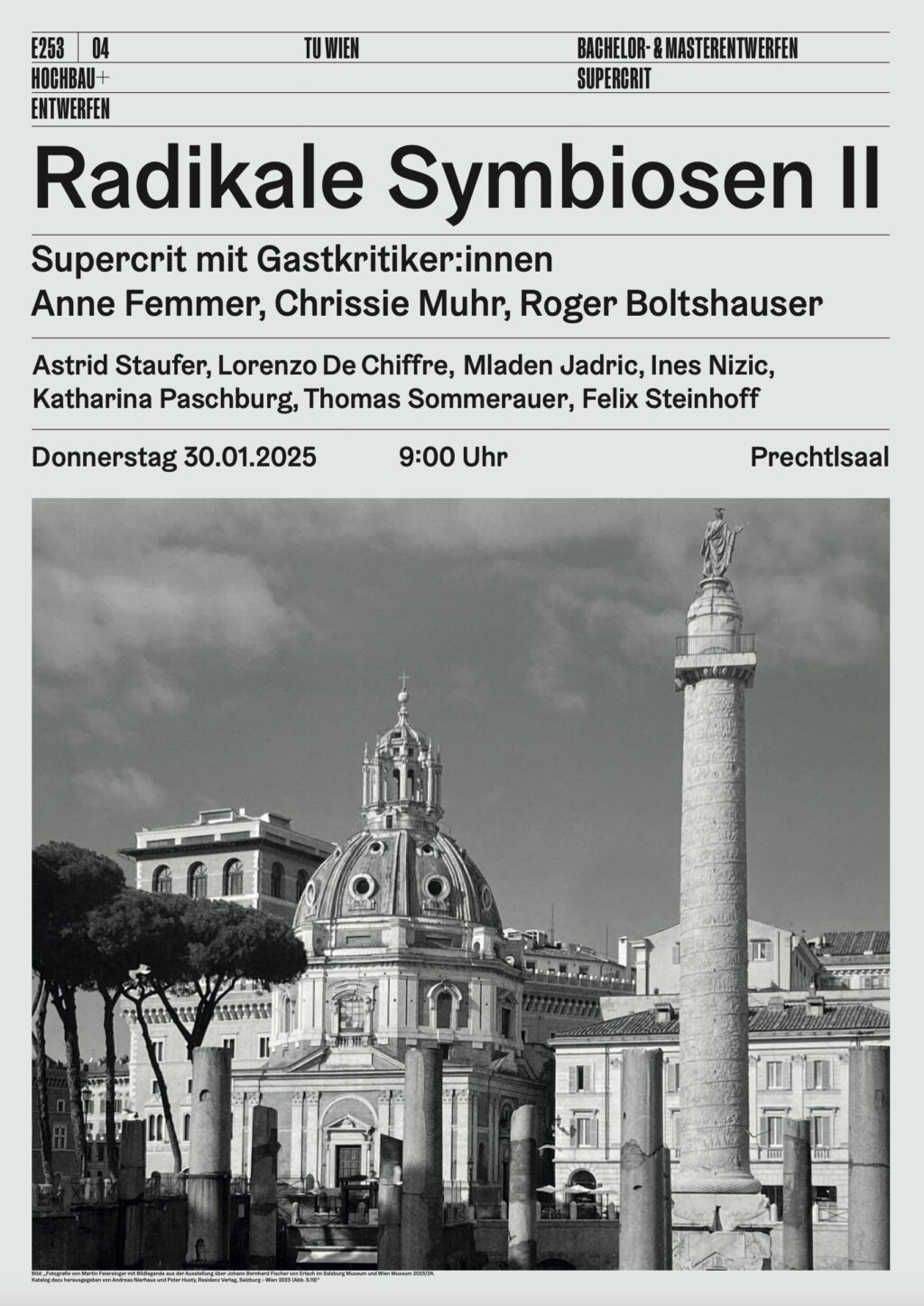
JAN 30, 2025
09:00
SUPERCRIT:
RADIKALE SYMBIOSEN II
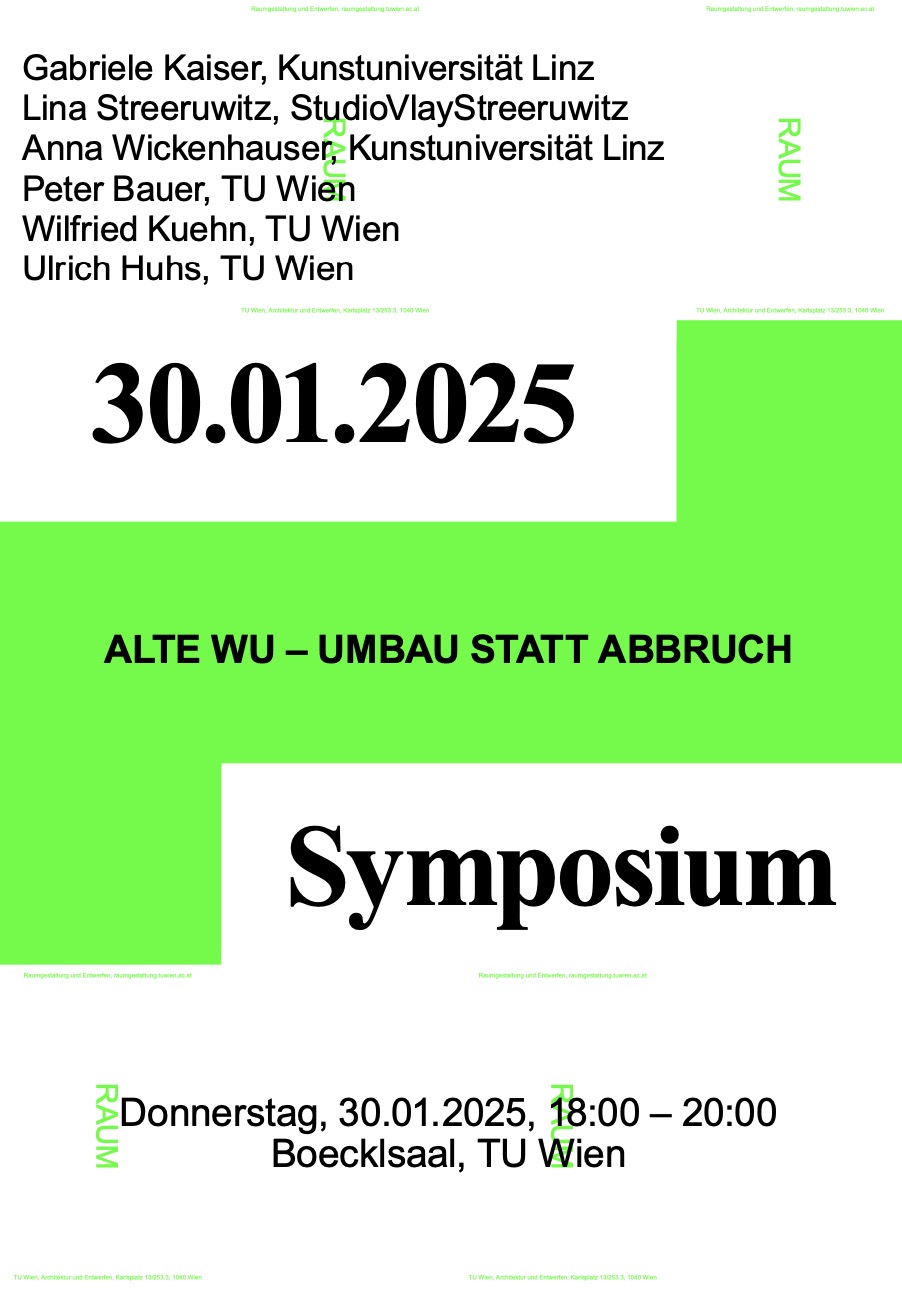
JAN 30, 2025
18:00
SYMPOSIUM:
ALTE WU – UMBAU STATT ABBRUCH
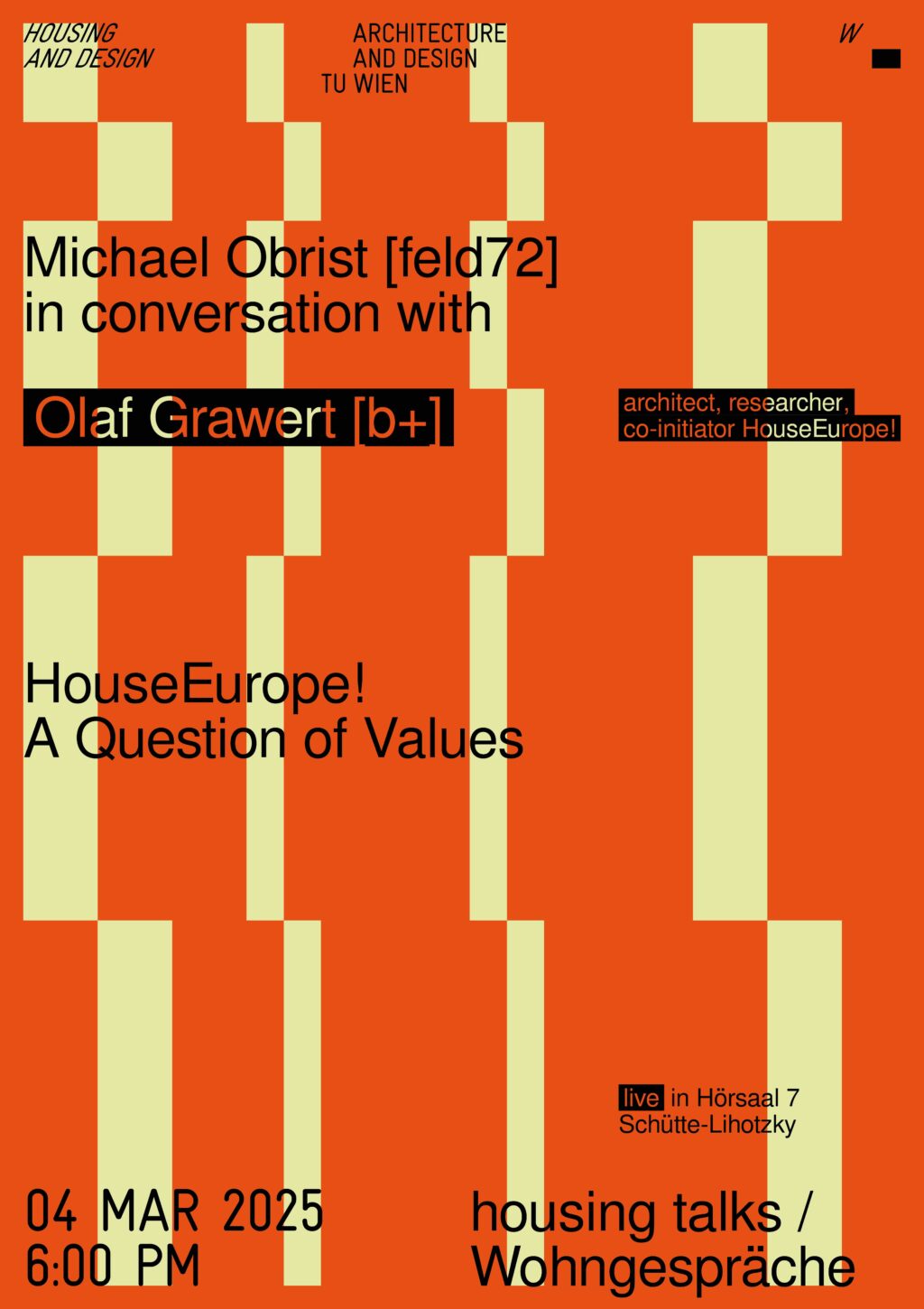
MAR 4, 2025
18:00
HOUSING TALKS:
OLAF GRAWERT
HOUSEEUROPE
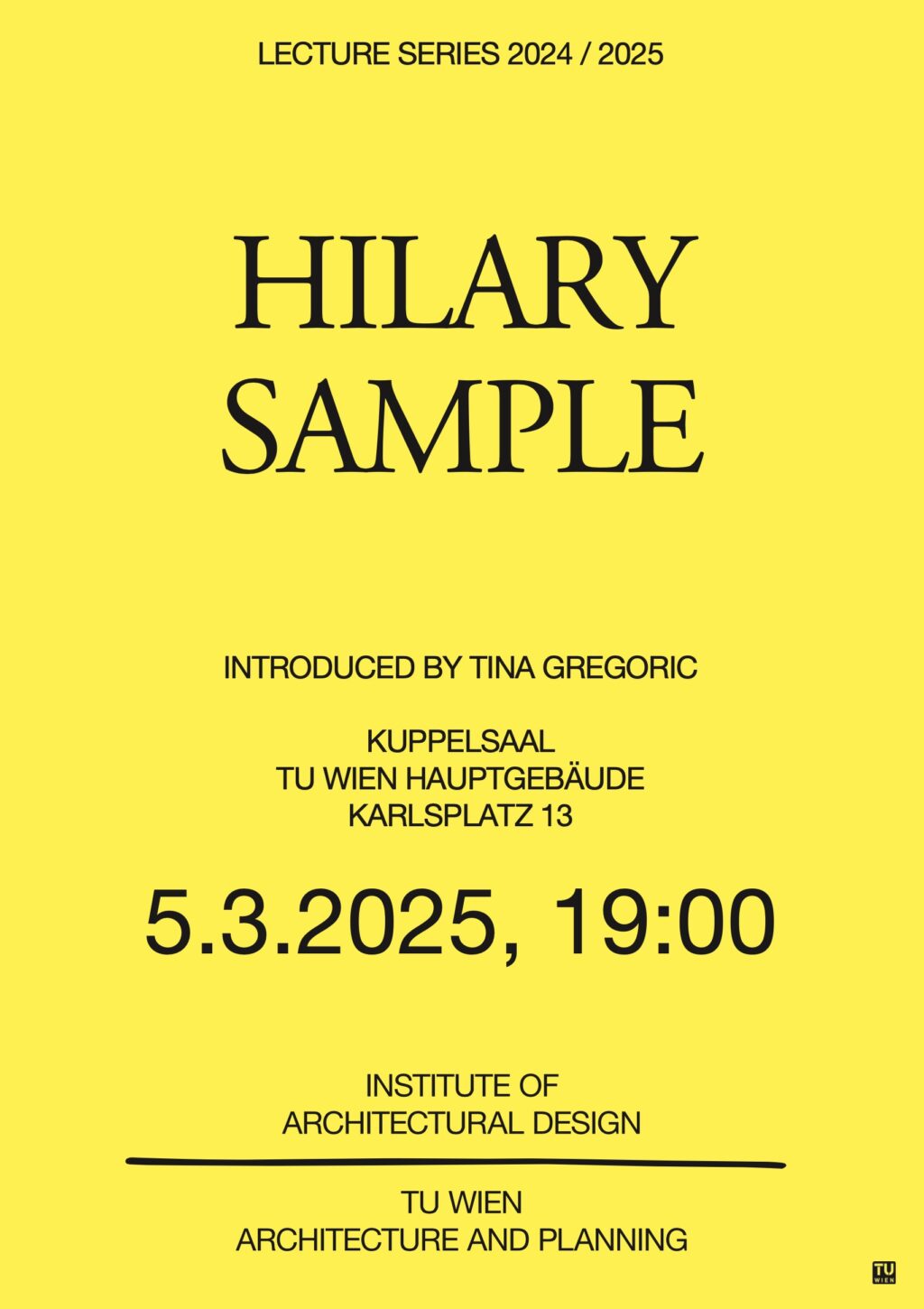
MAR 5, 2025
19:00
LECTURE: HILARY SAMPLE
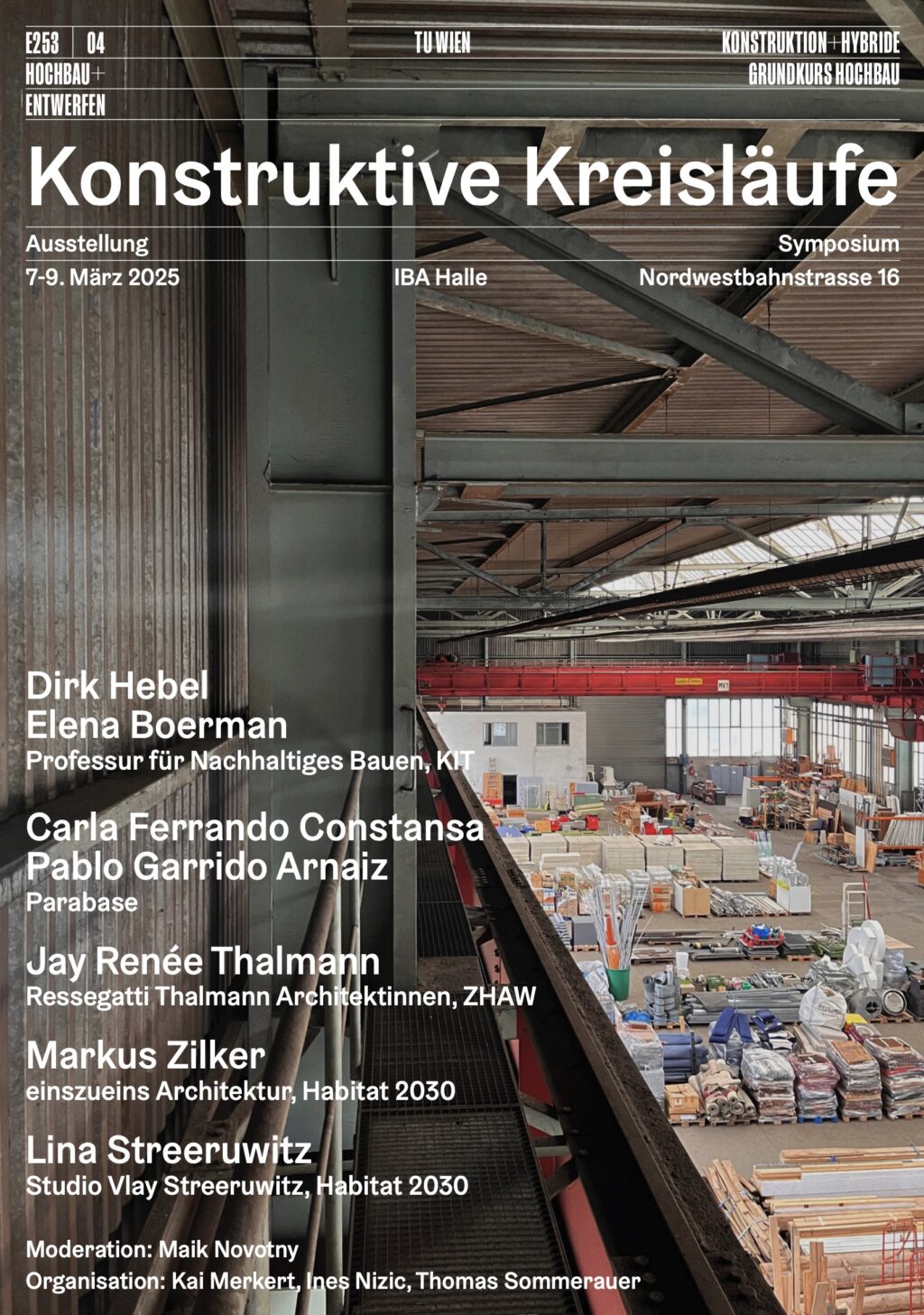
MAR 7, 2025
14:00
EXHIBITION & SYMPOSIUM: KONSTRUKTIVE KREISLÄUFE

MAR 19, 2025
18:00
Lecture:
Wolfdieter Dreibholz
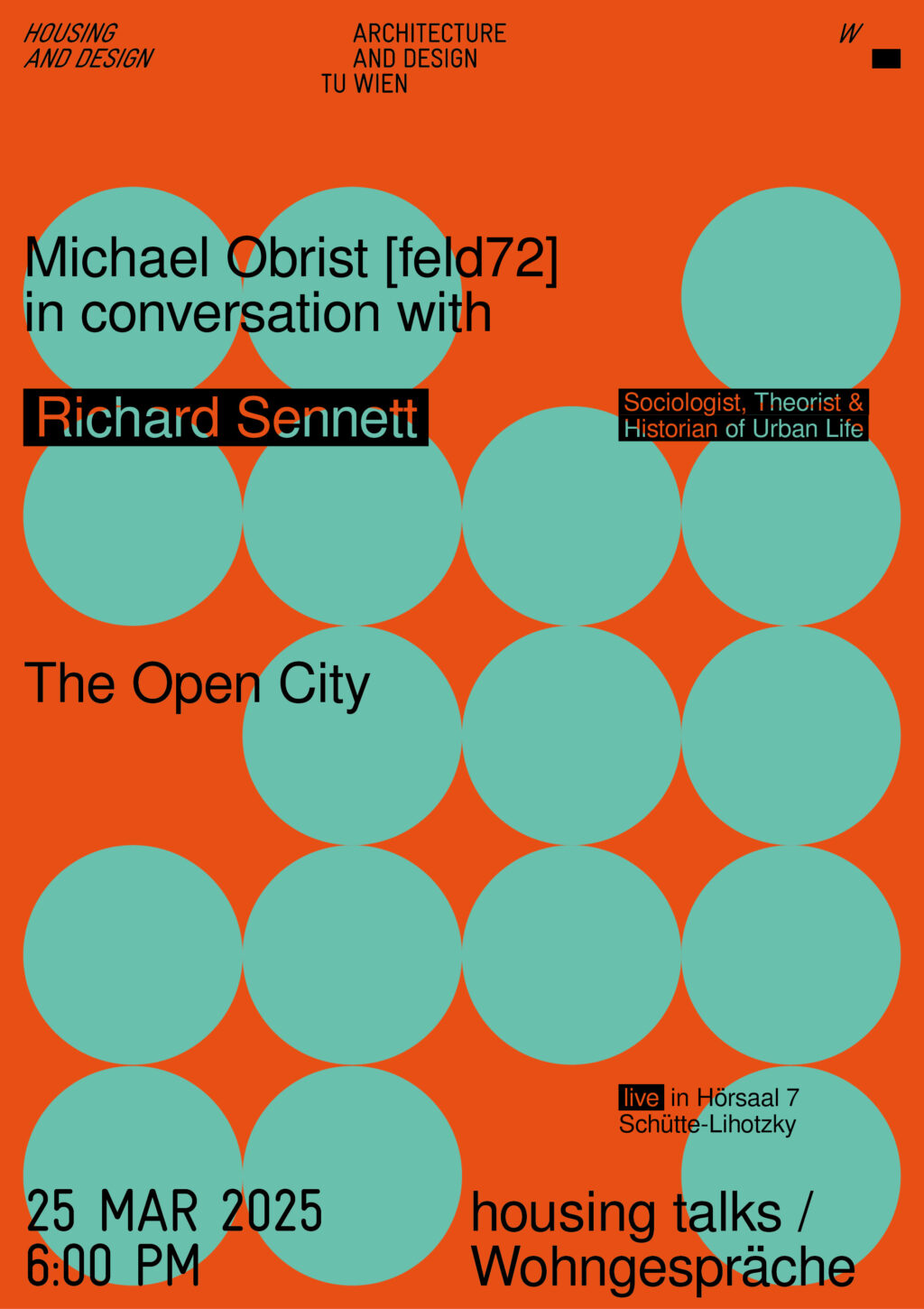
MAR 25, 2025
18:00
HOUSING TALKS:
RICHARD SENNETT

MAR 26, 2025
18:00
EXHIBITION:
WONDERS OF THE MODERN WORLD
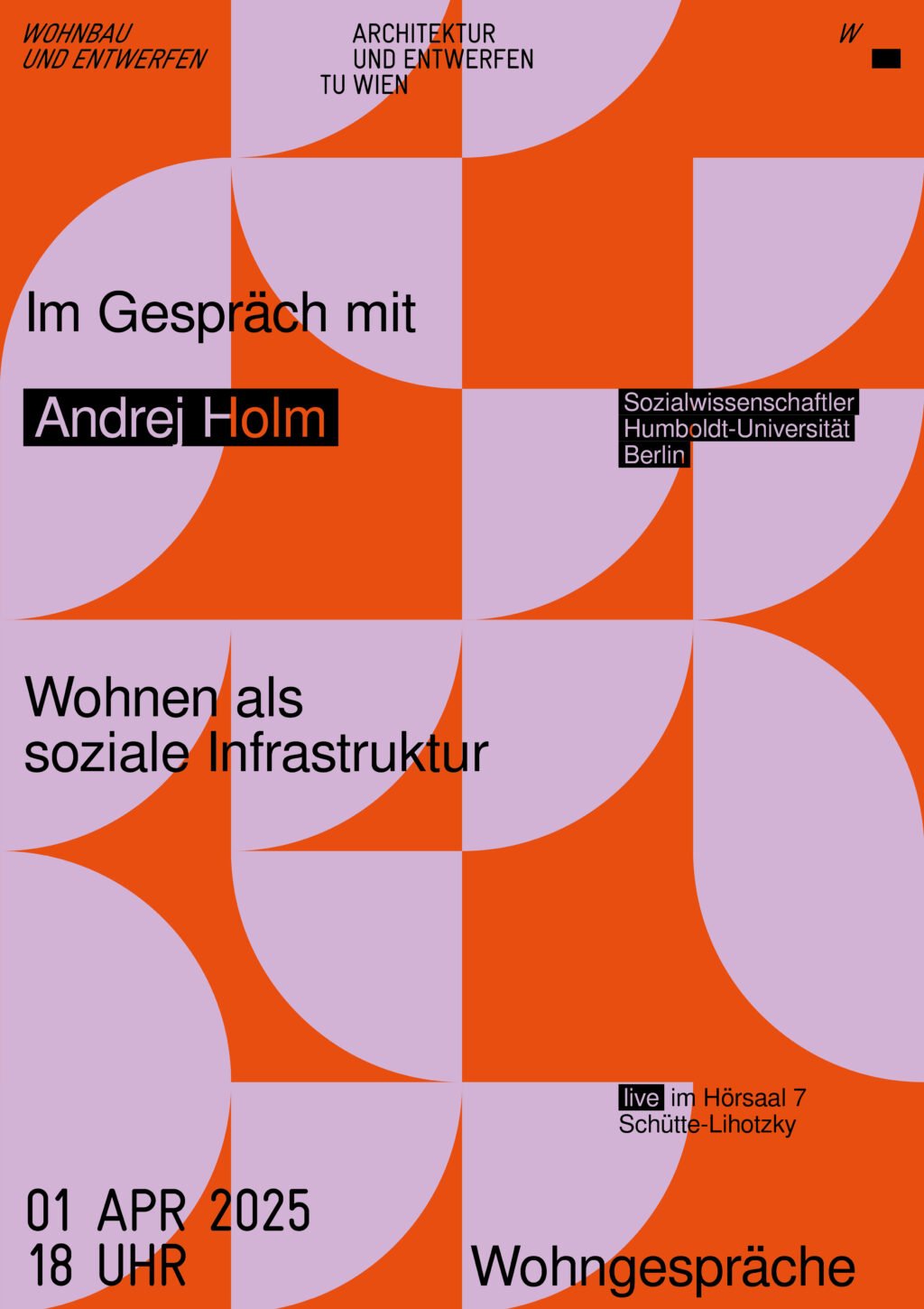
APR 1, 2025
18:00
HOUSING TALKS:
ANDREJ HOLM
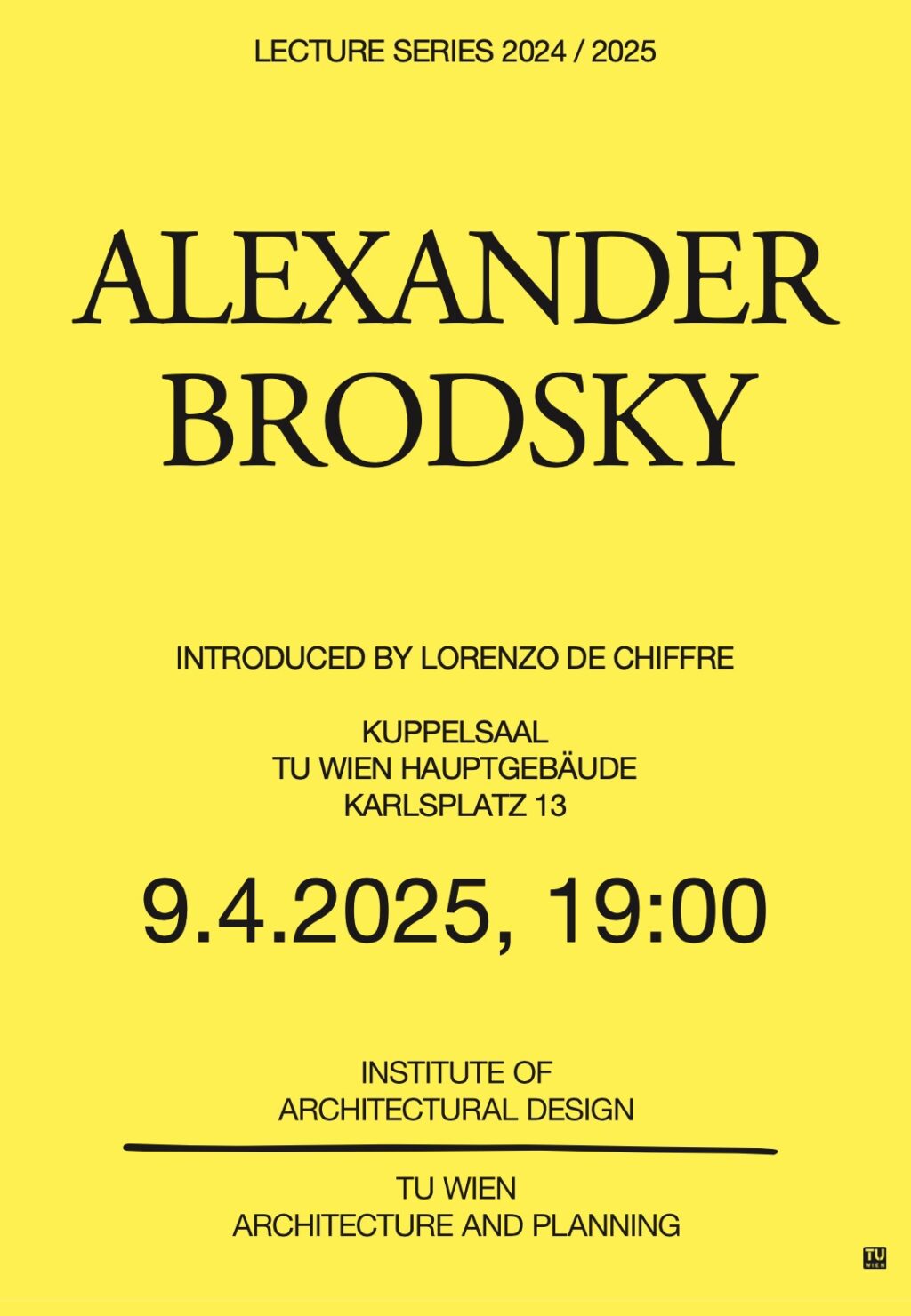
APR 9, 2025
19:00
LECTURE:
ALEXANDER BRODSKY
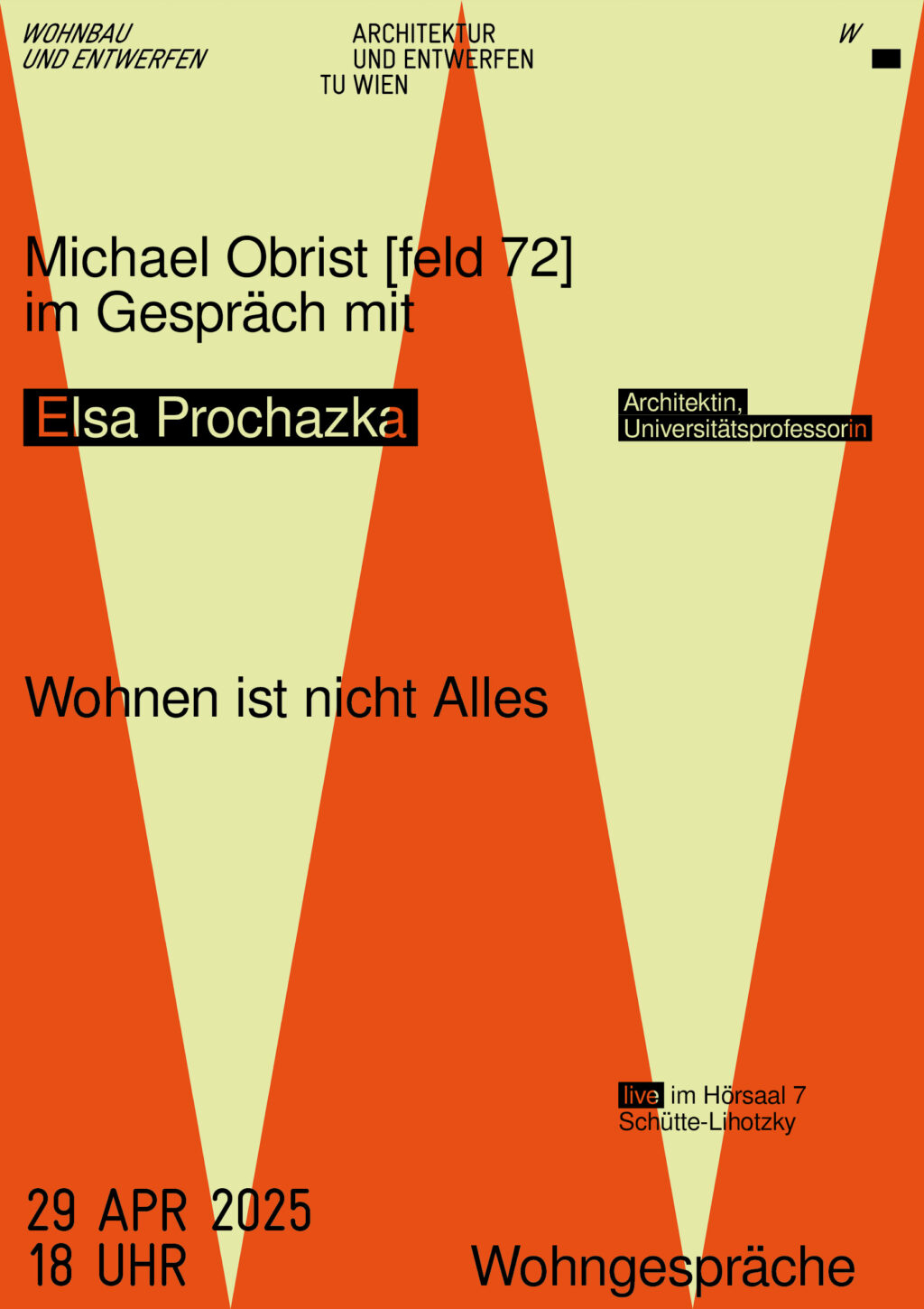
APR 29, 2025
18:00
HOUSING TALKS:
ELSA PROCHAZKA
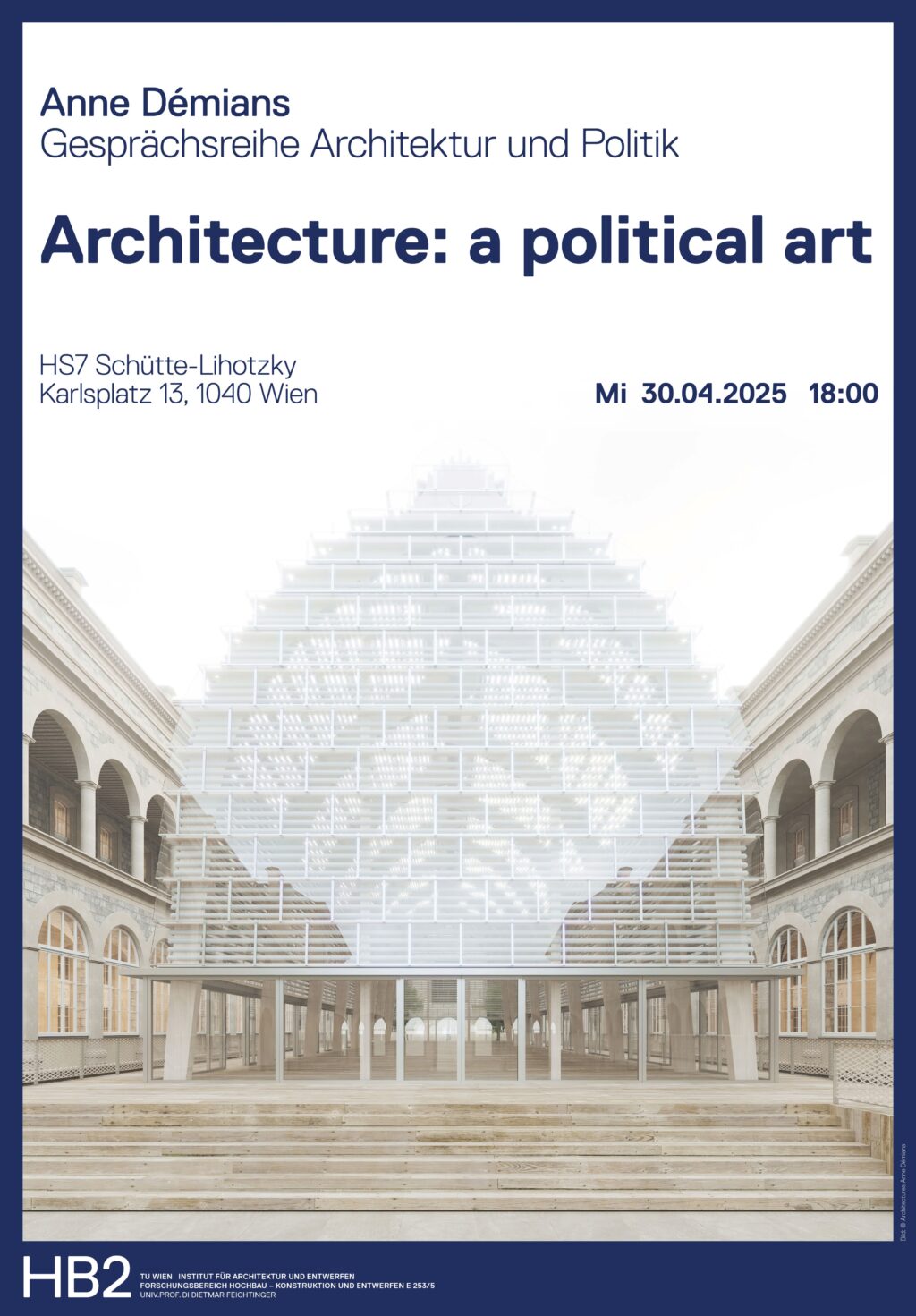
APR 30, 2025
18:00
Lecture:
Anne Démians
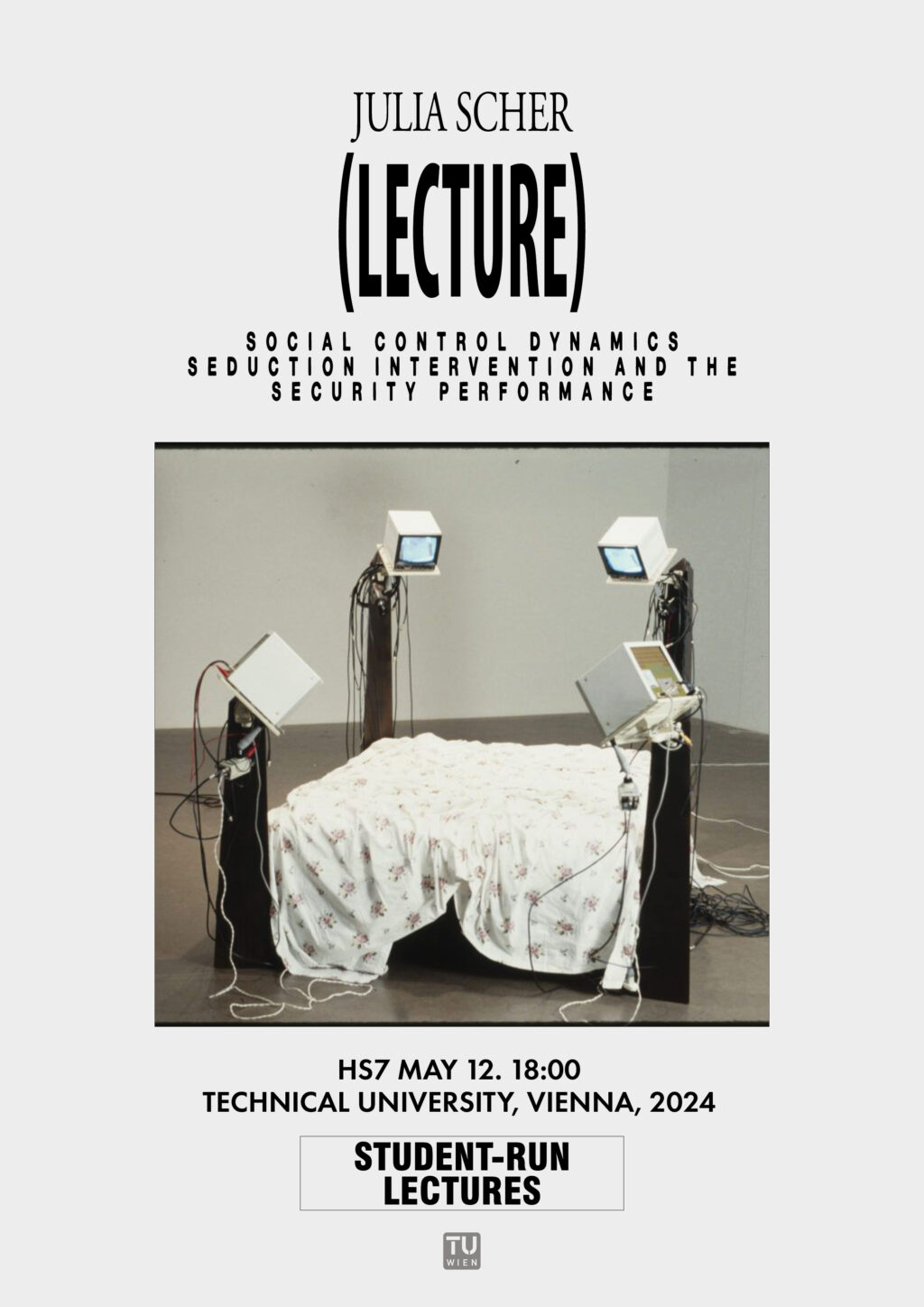
MAY 12, 2025
18:00
LECTURE:
JULIA SCHER
MAY 14, 2025
19:00
LECTURE.
MOMOYO KAIJIMA
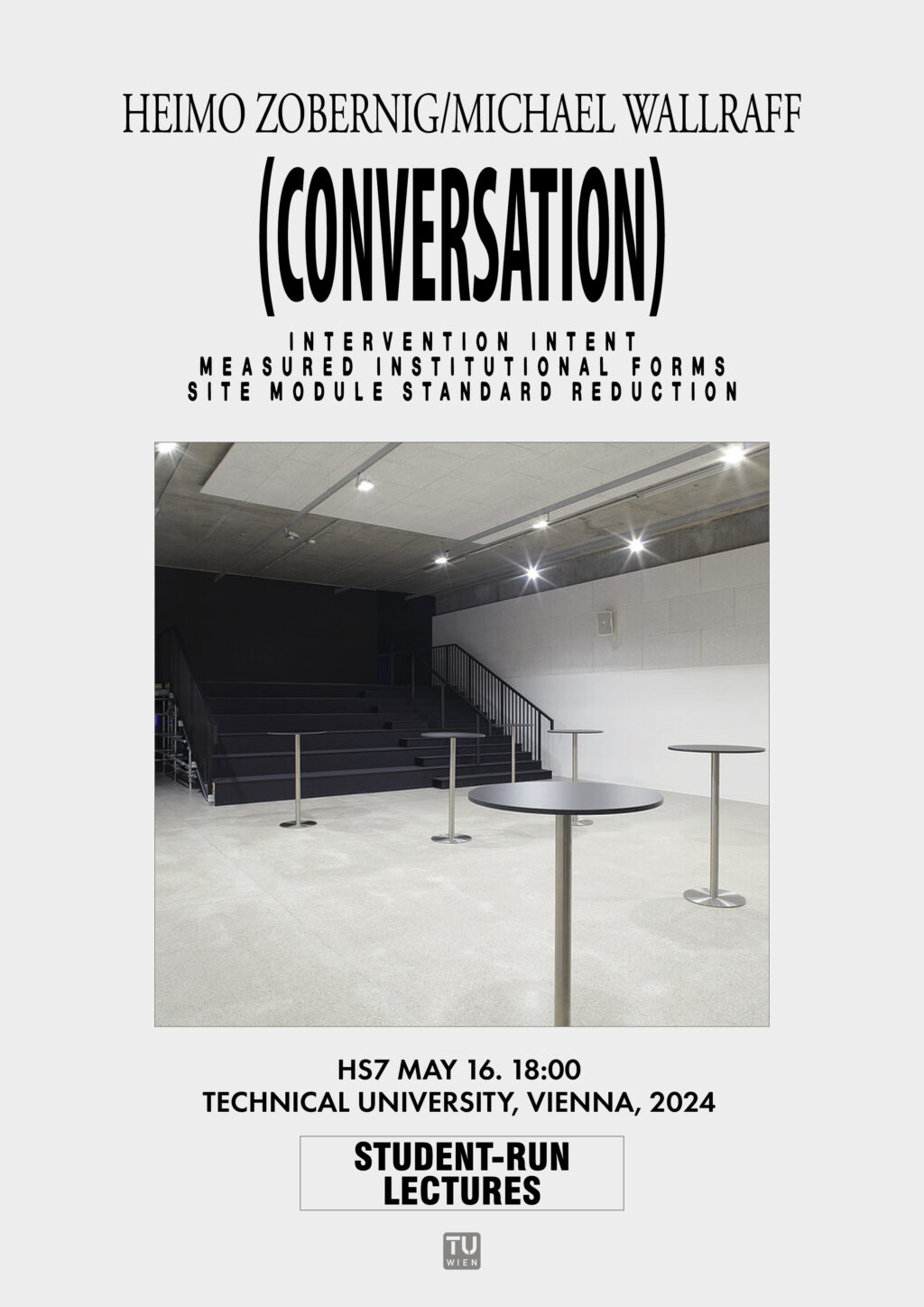
MAY 16, 2025
18:00
CONVERSATION:
HEIMO ZOBERNIG & MICHAEL WALLRAFF
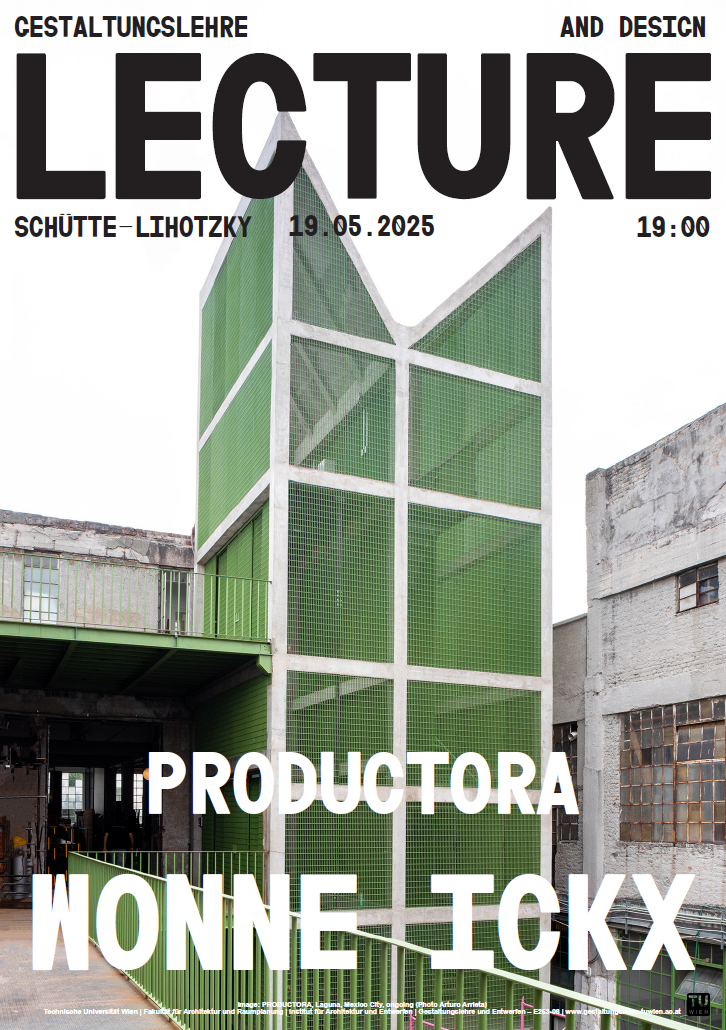
MAY 19, 2025
19:00
LECTURE:
WONNE ICKX
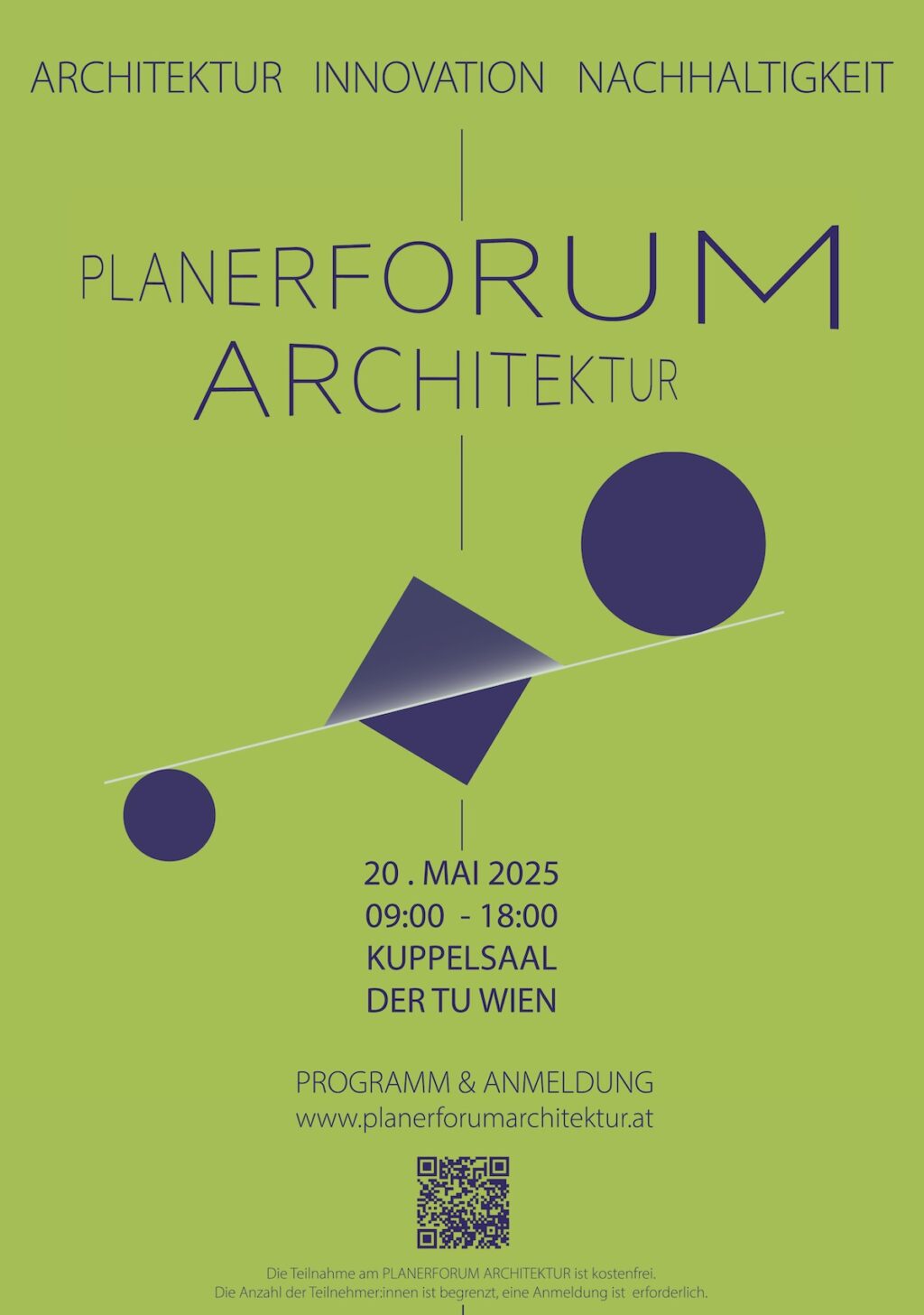
MAY 20, 2025
09:15
PLANERFORUM.
ARCHITEKTUR 2025

MAY 22, 2025
16:00
SYMPOSIUM, EXHIBITION:
MATERIALS & PROCESSES
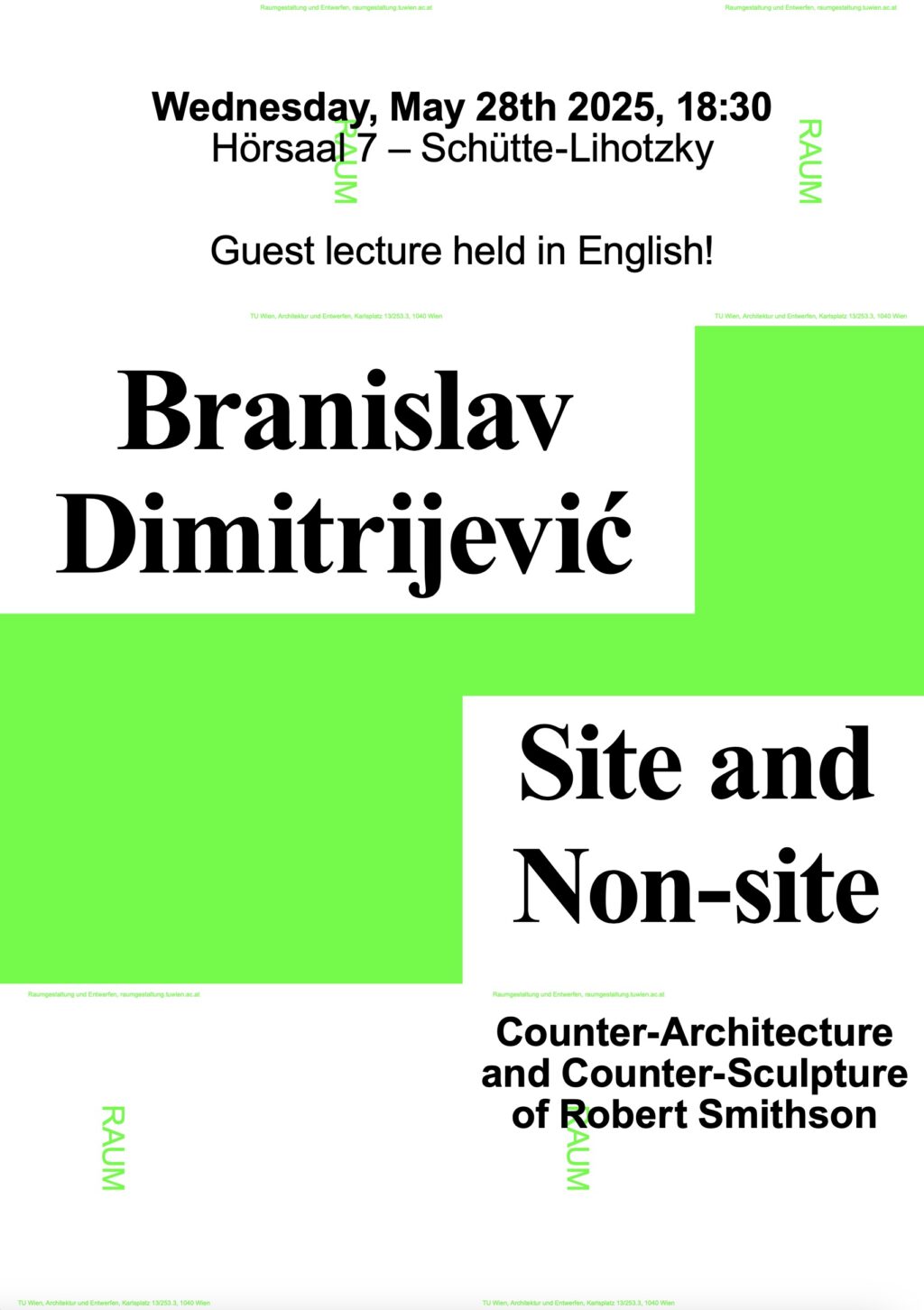
MAY 28, 2025
18:30
LECTURE:
BRANISLAV DIMITRIJEVIĆ
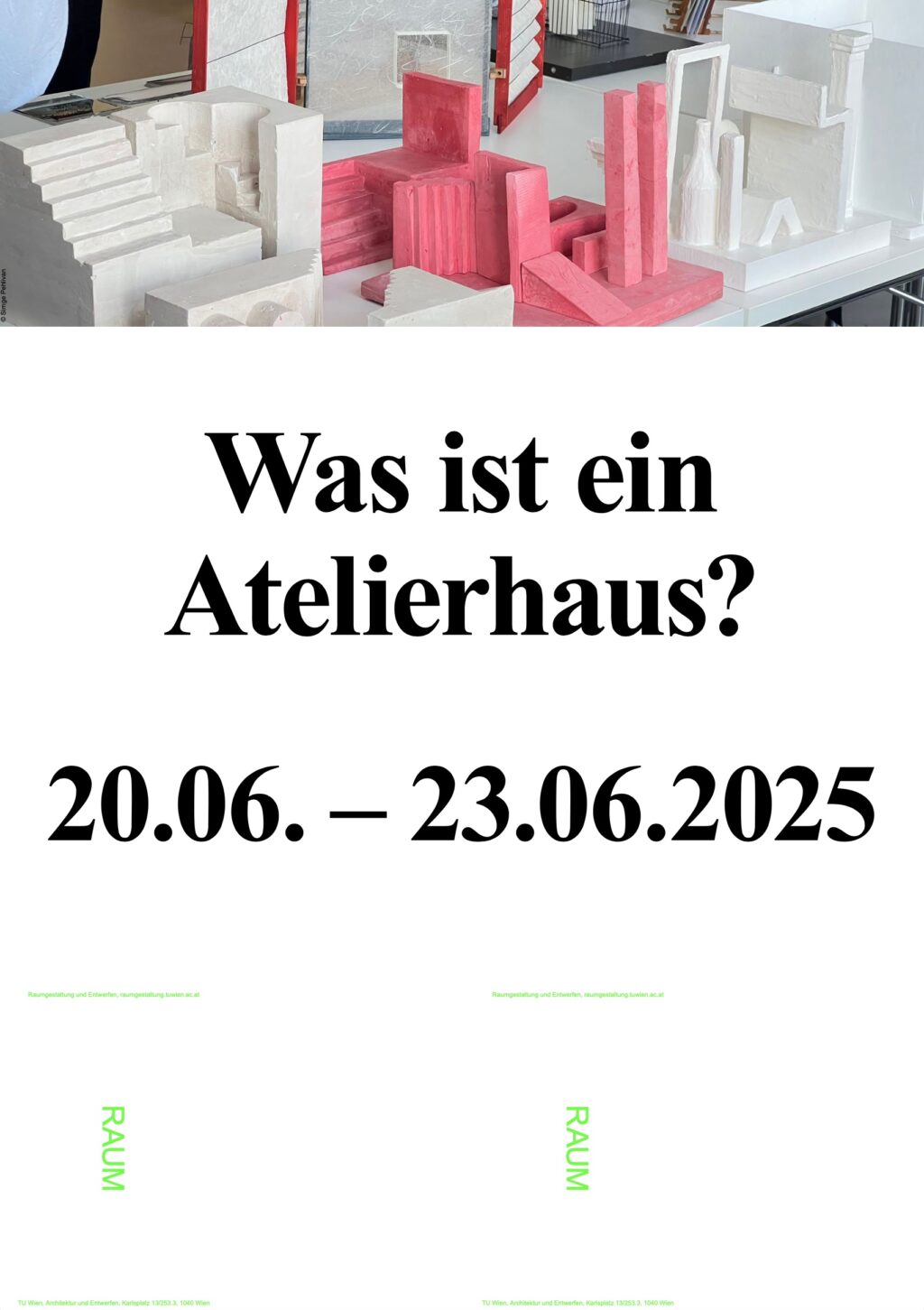
JUN 20, 2025
18:00
EXHIBITION:
WAS IST EIN ATELIERHAUS?
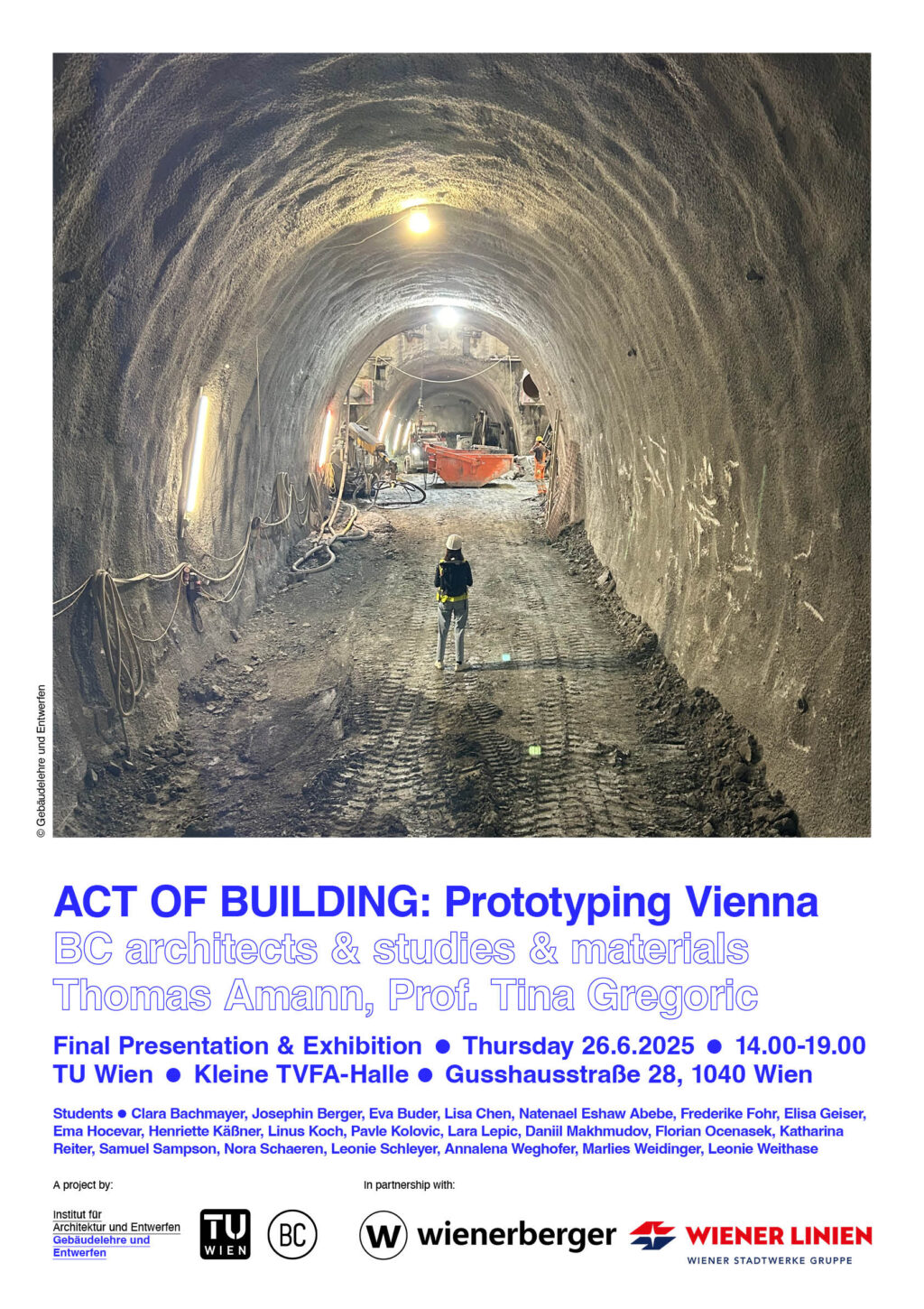
JUN 26, 2025
14:00
PRESENTATION, EXHIBITION:
ACT OF BUILDING
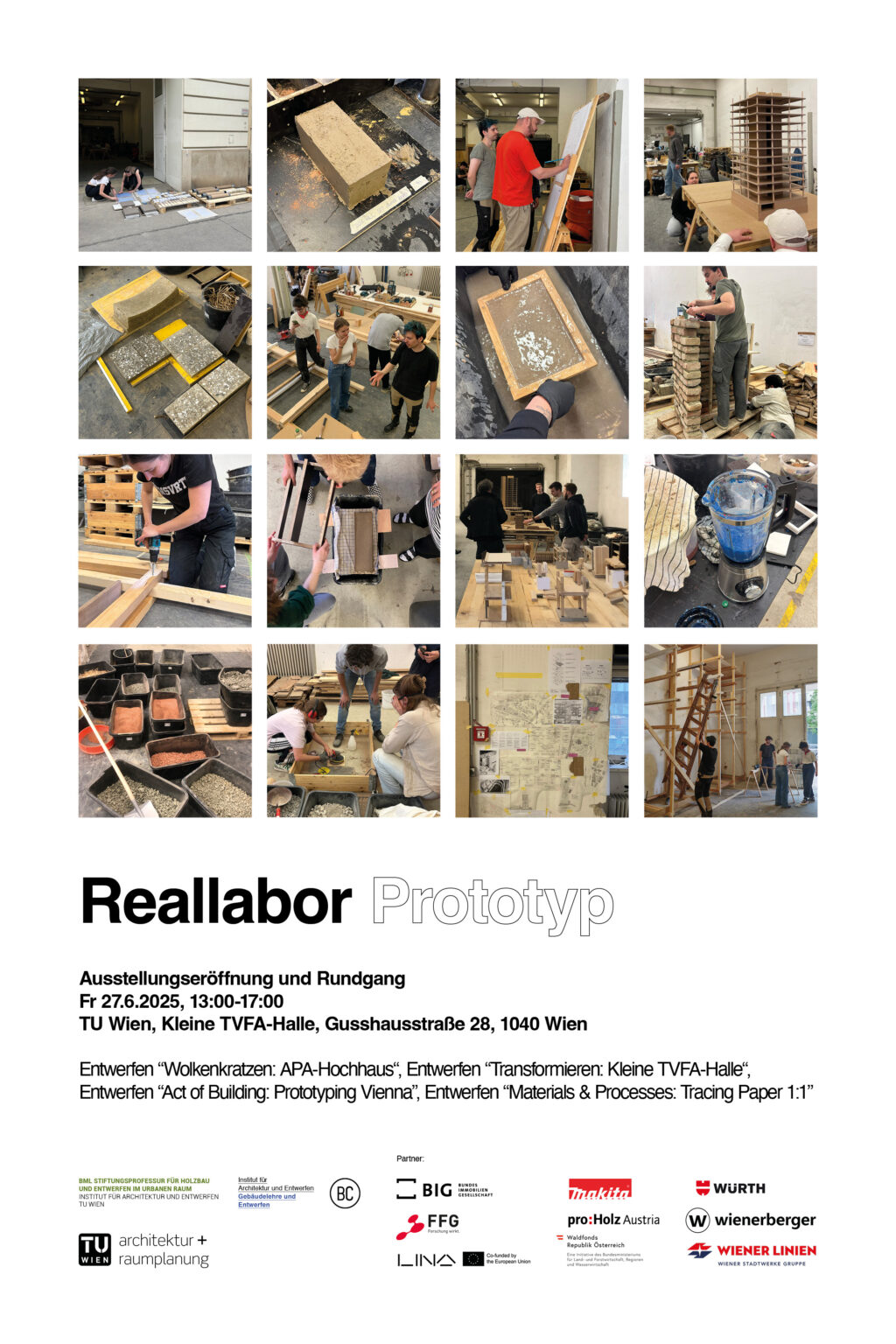
JUN 27, 2025
13:00
Presentation, Exhibition:
Reallabor Prototyp
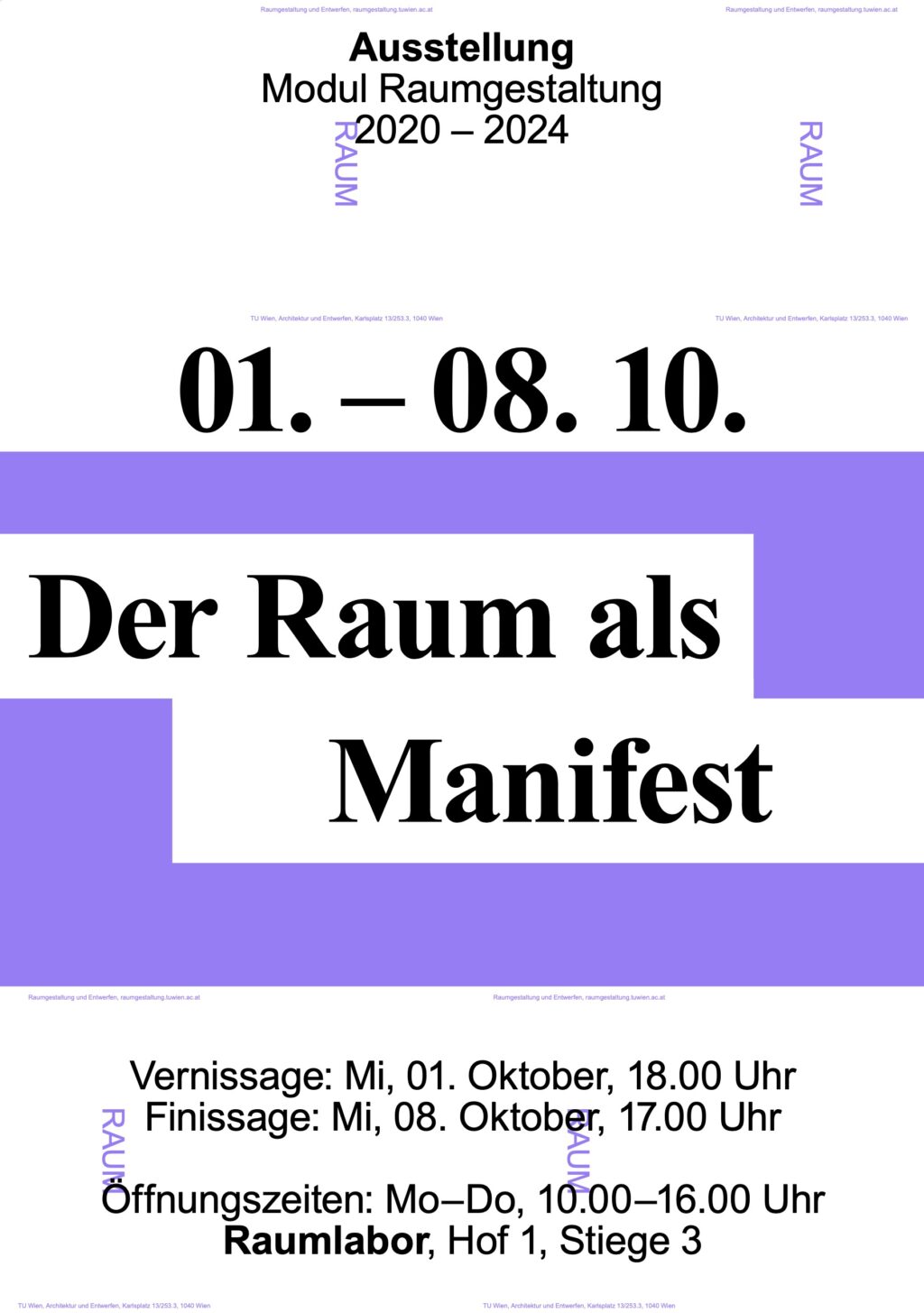
SEP 1, 2025
18:00
EXHIBITION:
DER RAUM ALS MANIFEST
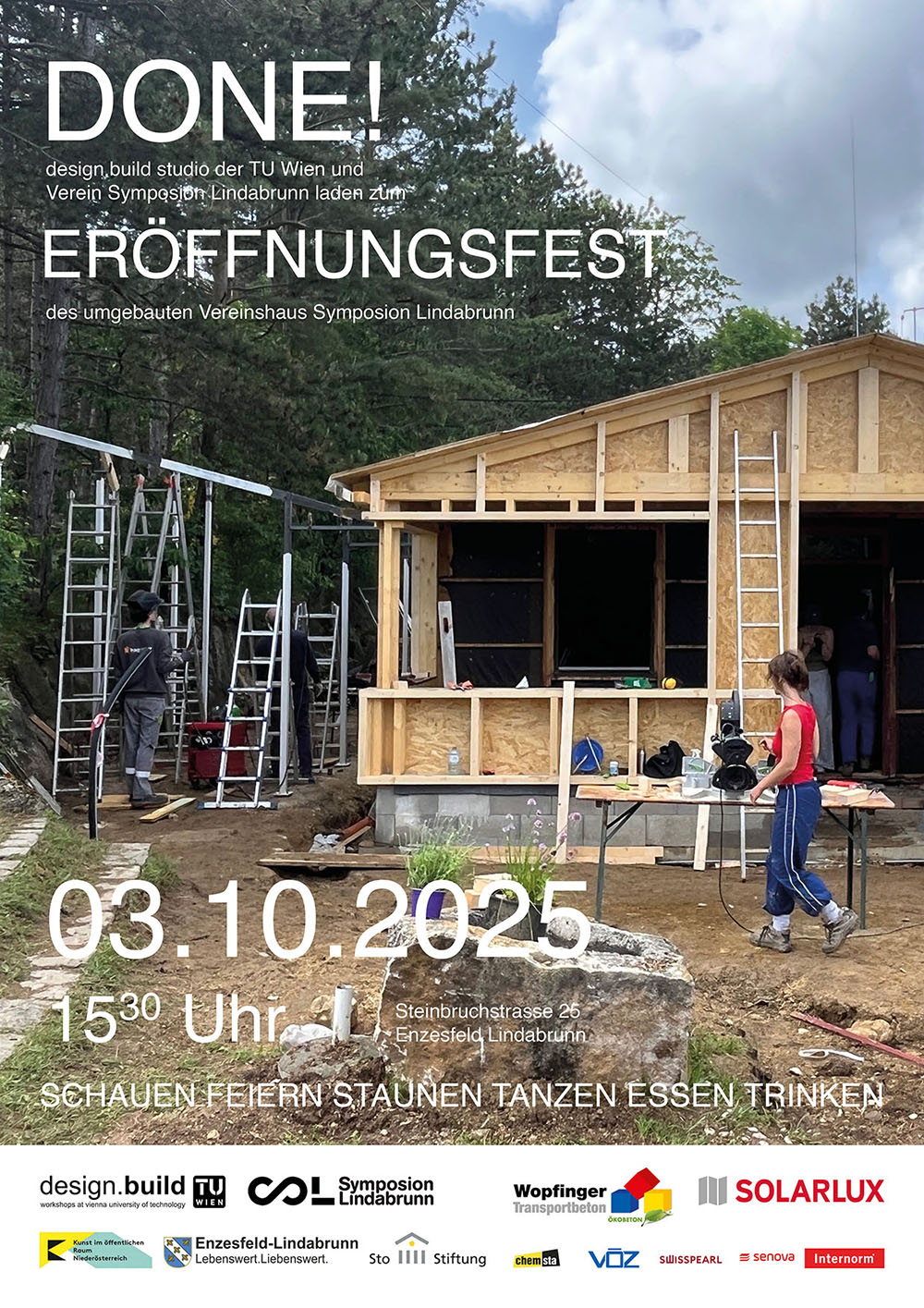
OCT 3, 2025
15:30
OPENING:
DESIGN.BUILD STUDIO
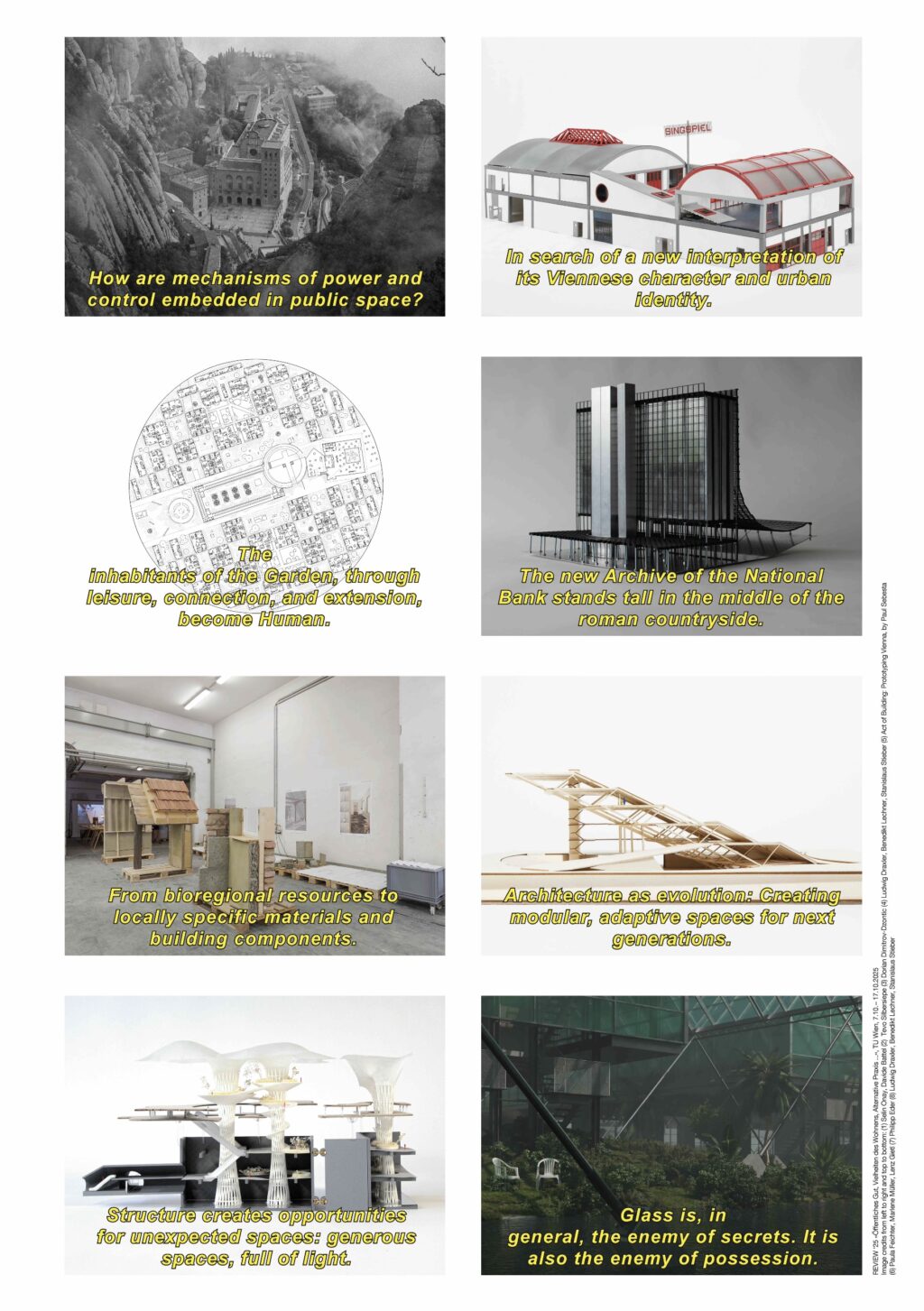
OCT 7, 2025
18:00
EXHIBITION:
REVIEW’25
OCT 9, 2025
16:00
OPENING:
WONDERS OF THE MODERN WORLD
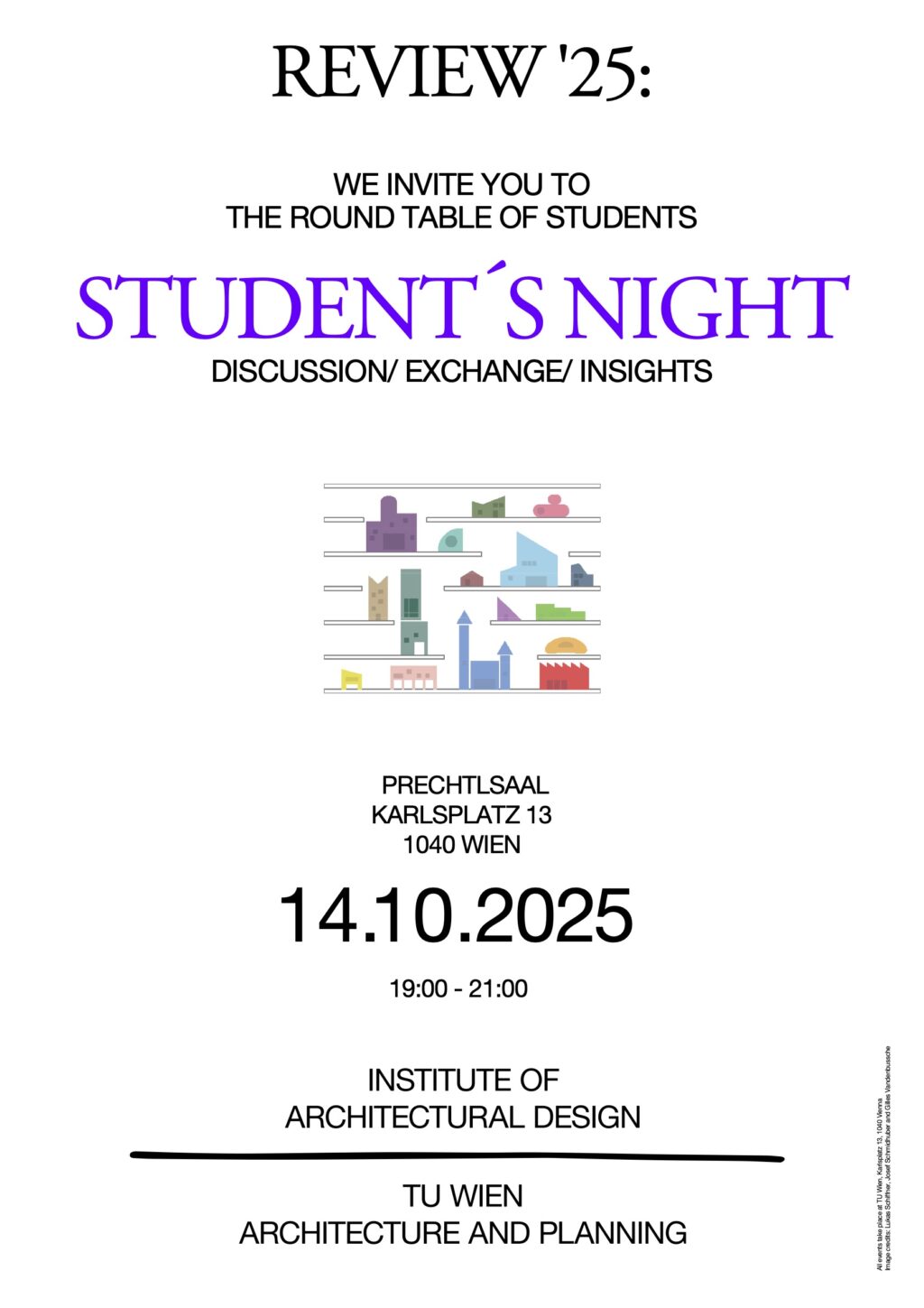
OCT 14, 2025
19:00
ROUND TABLE:
STUDENT'S NIGHT
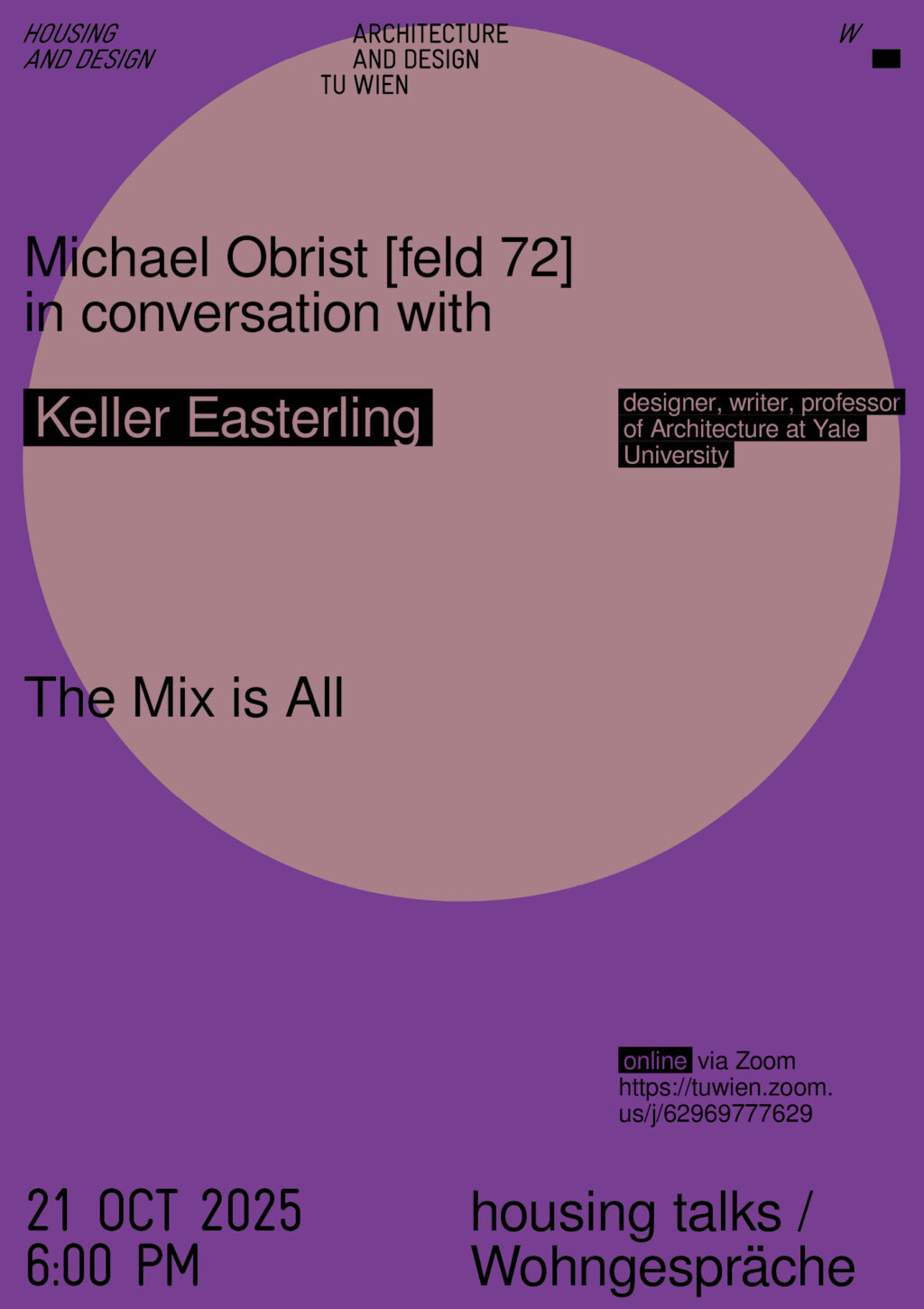
OCT 21, 2025
18:00
HOUSING TALKS:
KELLER EASTERLING

OCT 28, 2025
18:00
HOUSING TALKS:
AXEL TIMM
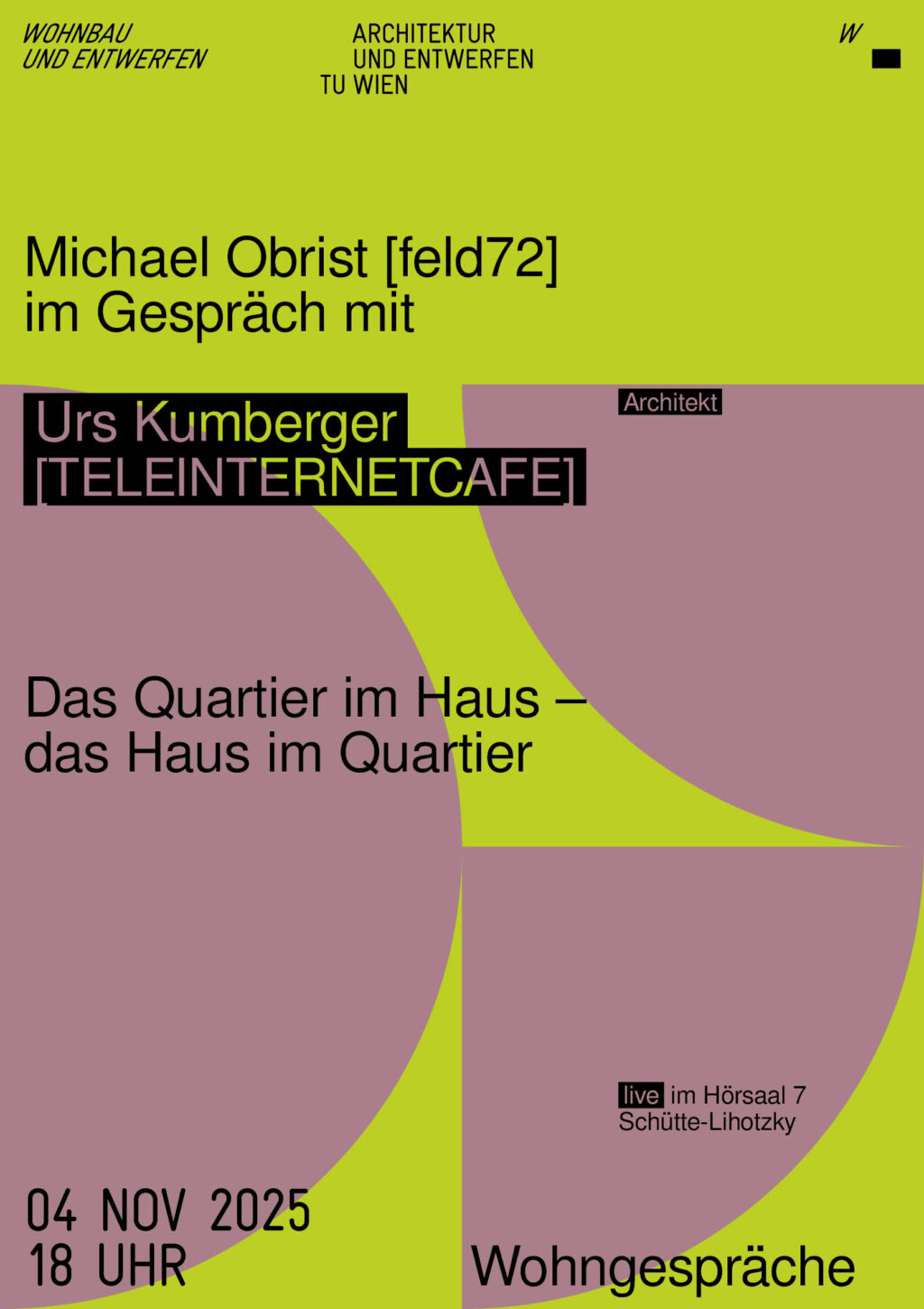
NOV 4, 2025
18:00
HOUSING TALKS:
URS KUMBERGER
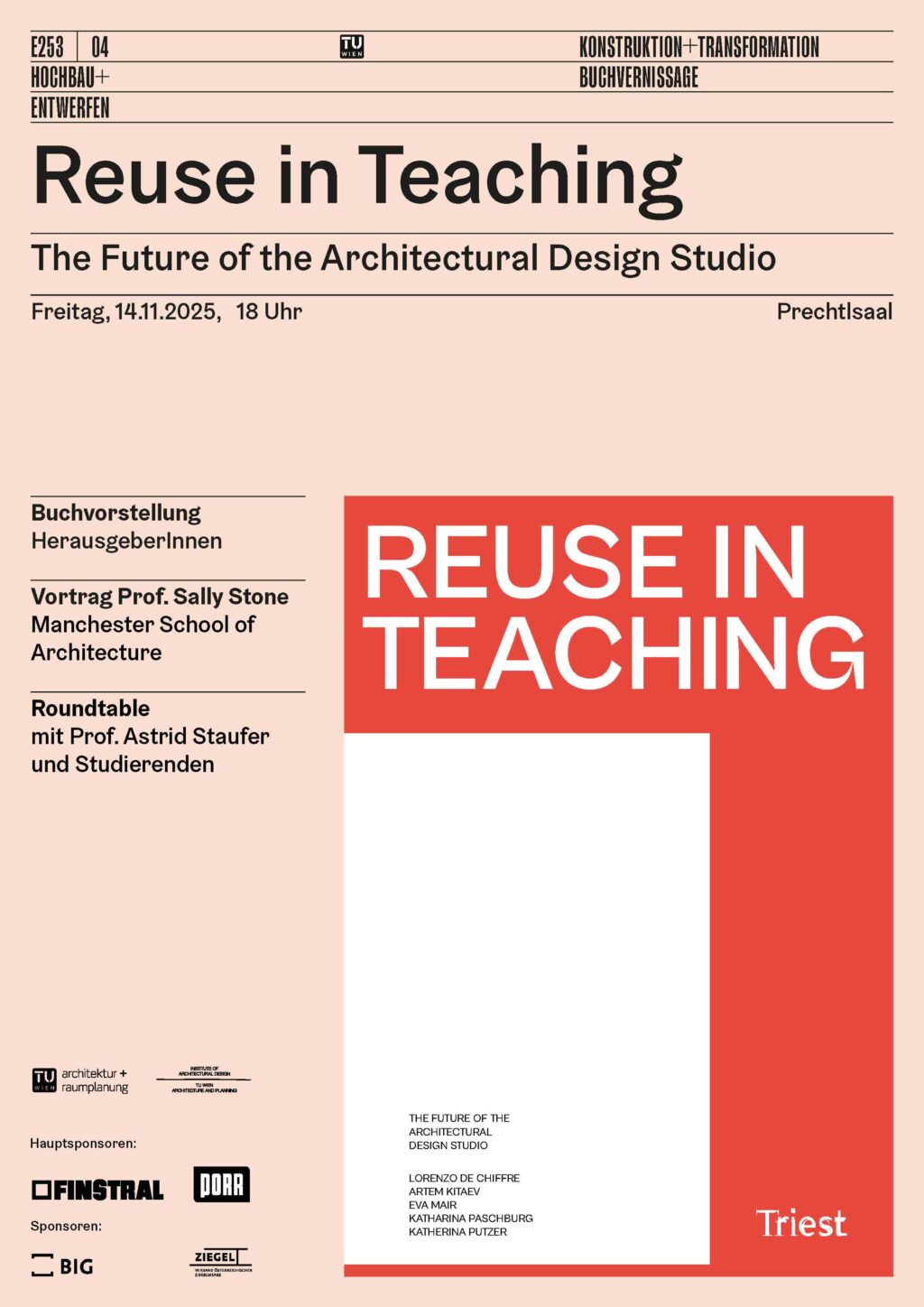
NOV 14, 2025
18:00
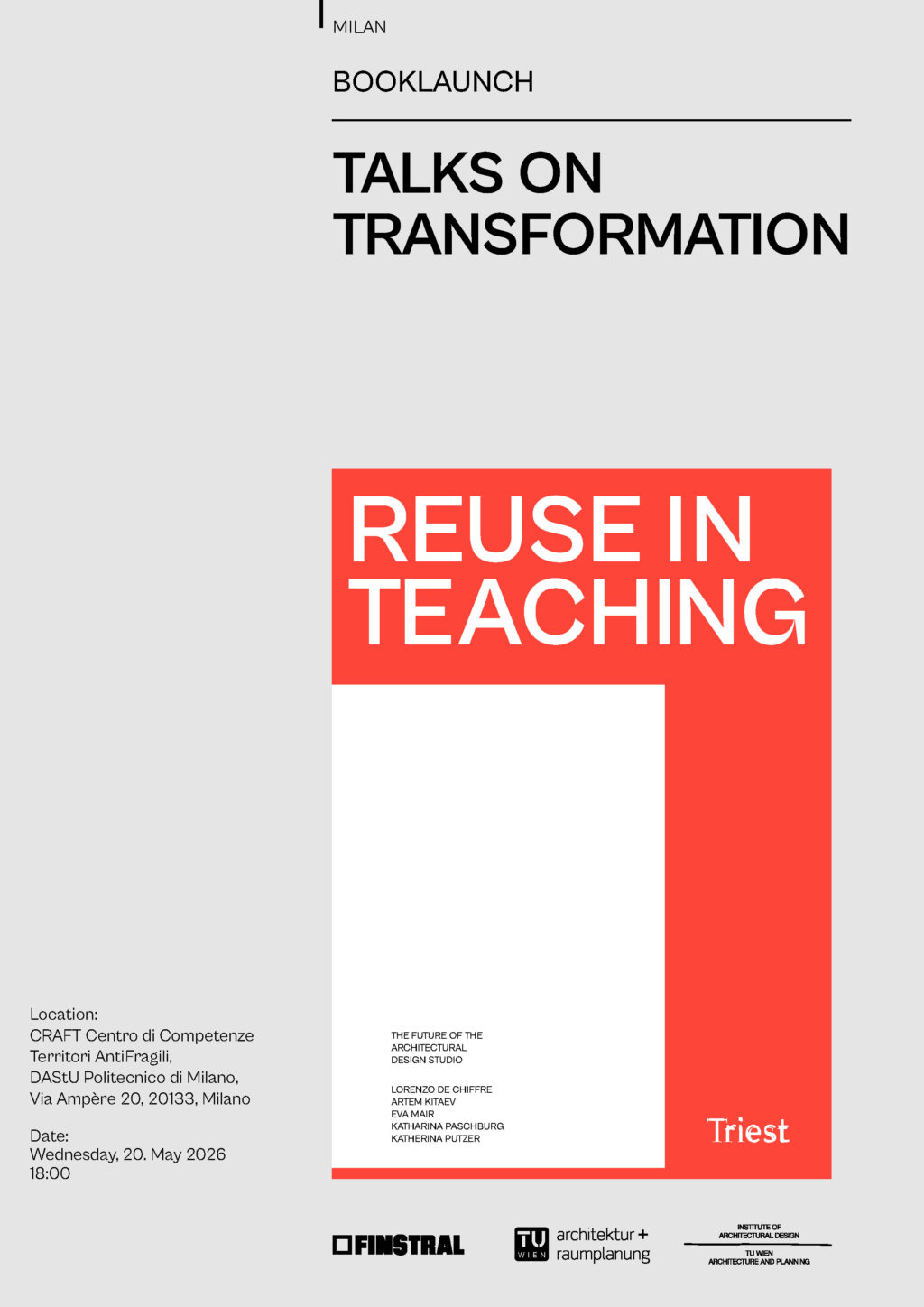
BOOK LAUNCH:
REUSE IN TEACHING
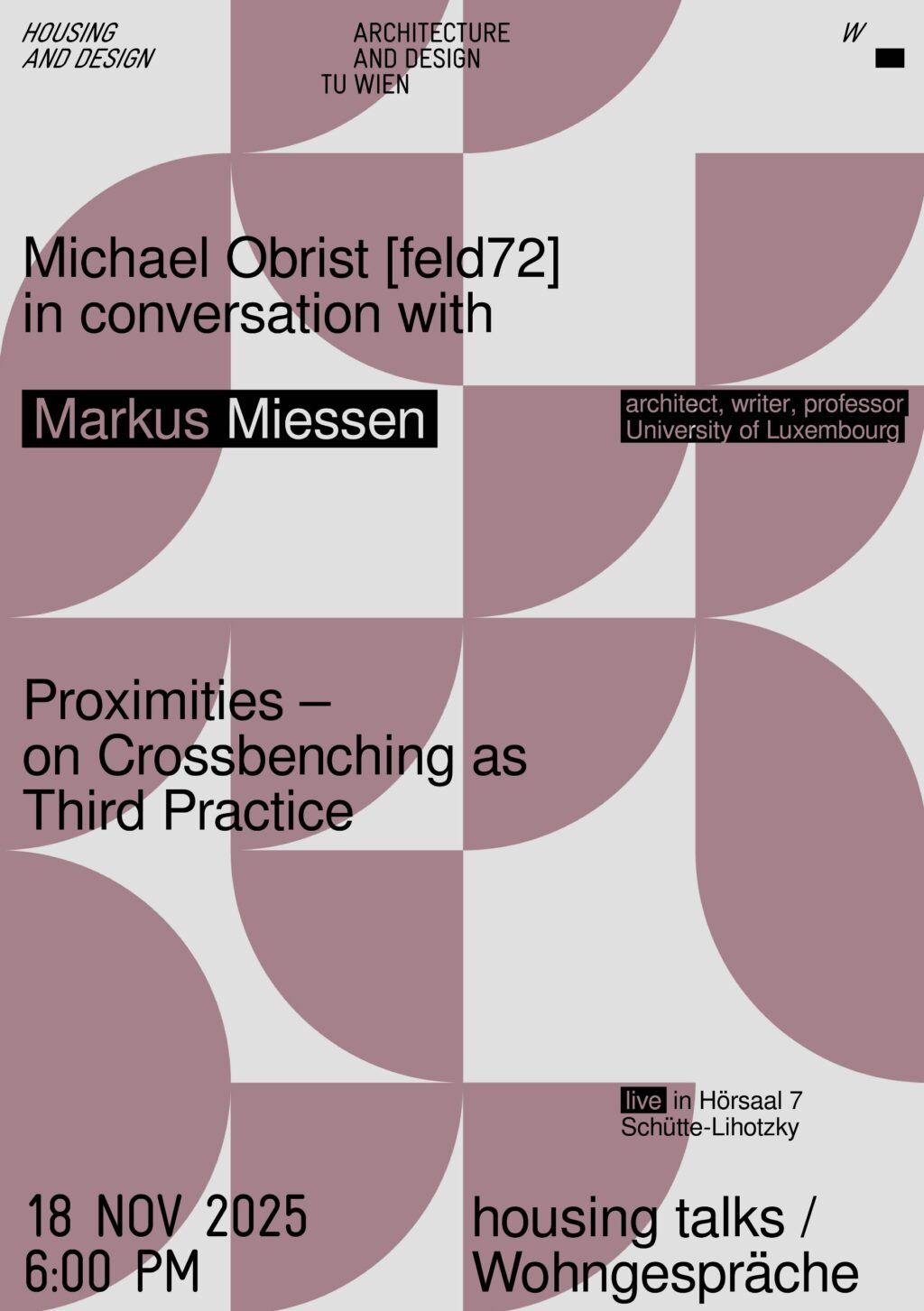
NOV 18, 2025
18:00
HOUSING TALKS:
MARKUS MIESSEN

NOV 25, 2025
18:00
HOUSING TALKS:
KADAMBARI BAXI
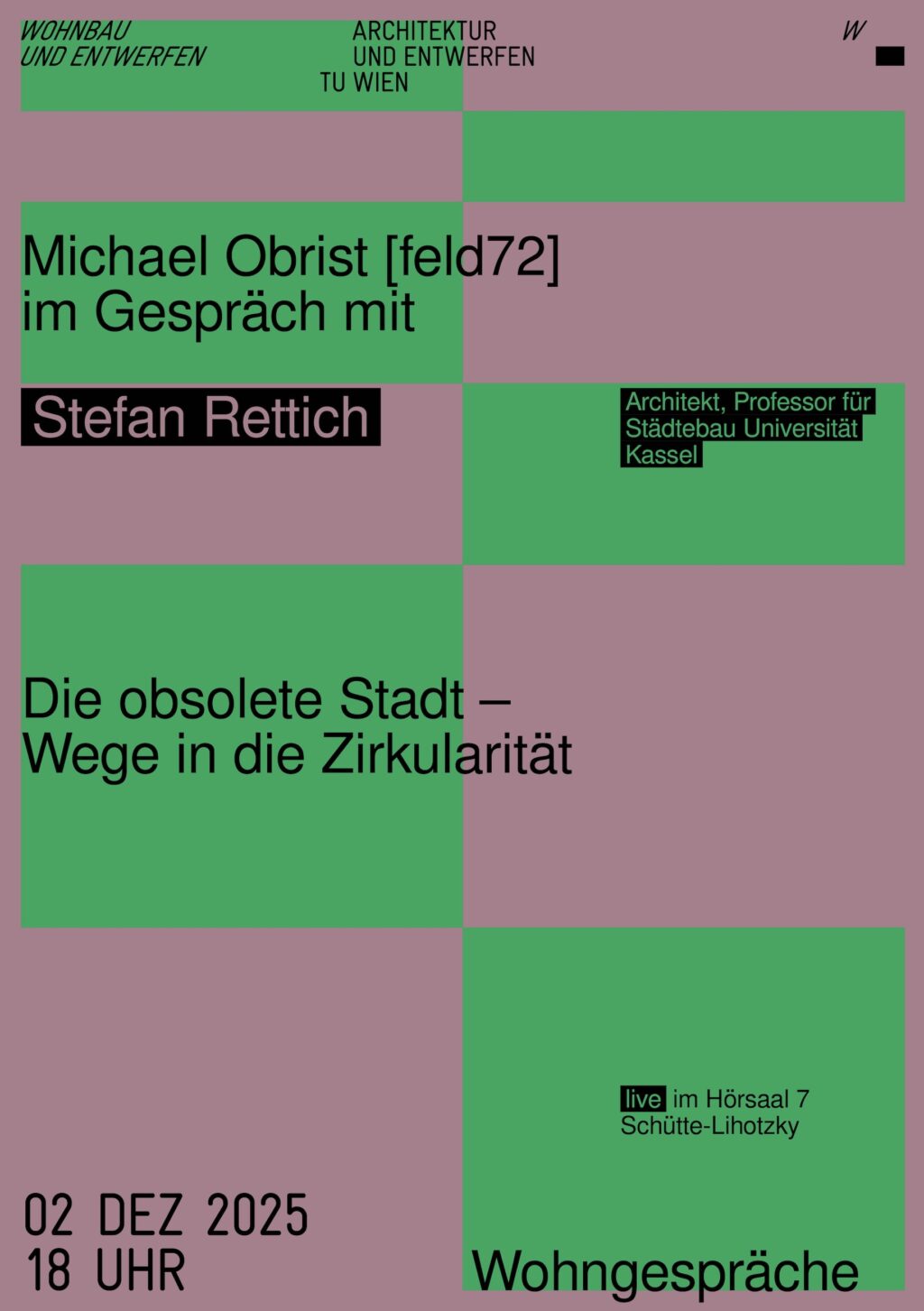
DEC 2, 2025
18:00
HOUSING TALKS:
STEFAN RETTICH
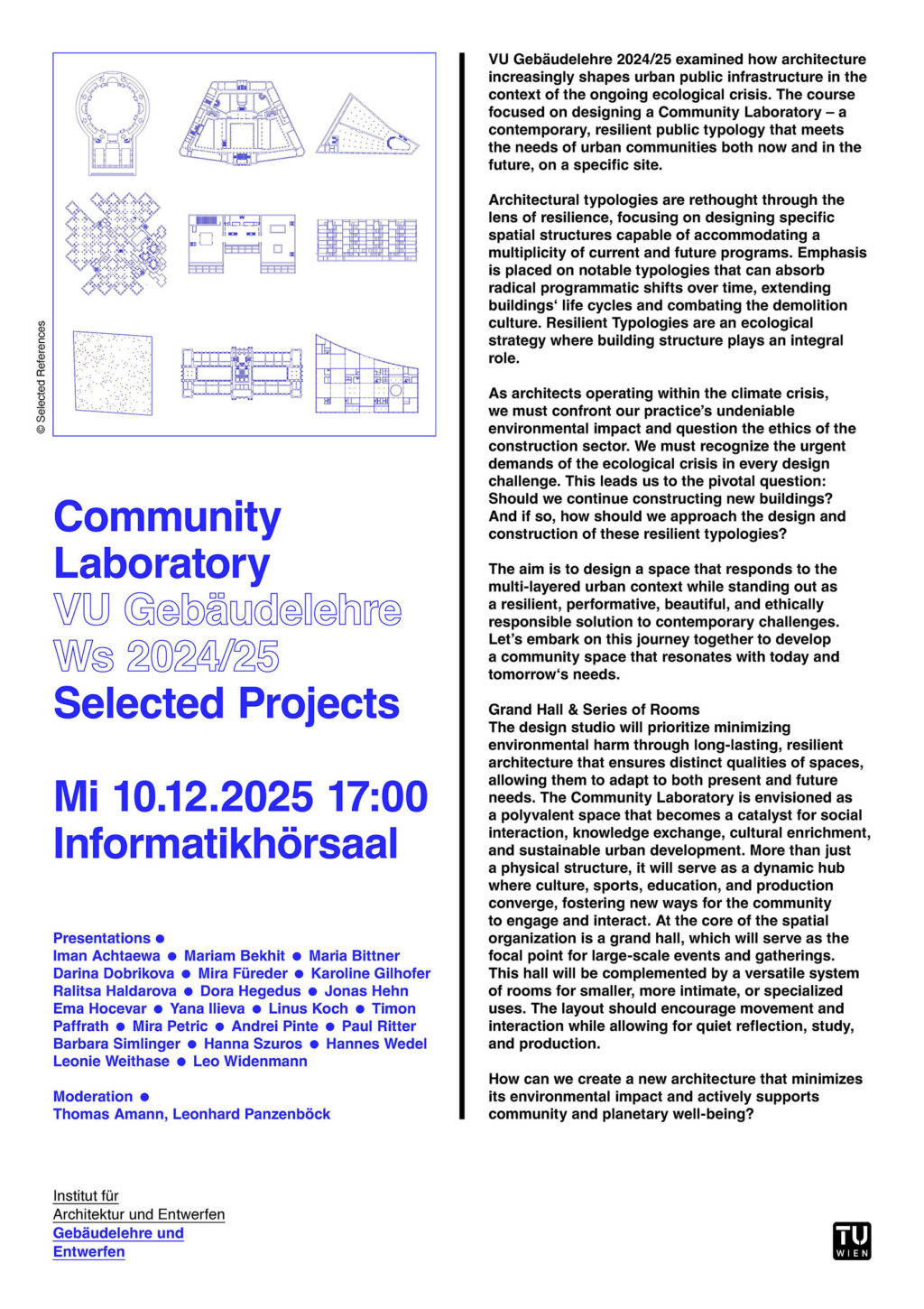
DEC 10, 2025
17:00
LECTURE:
COMMUNITY LABORATORY
SELECTED PROJECTS
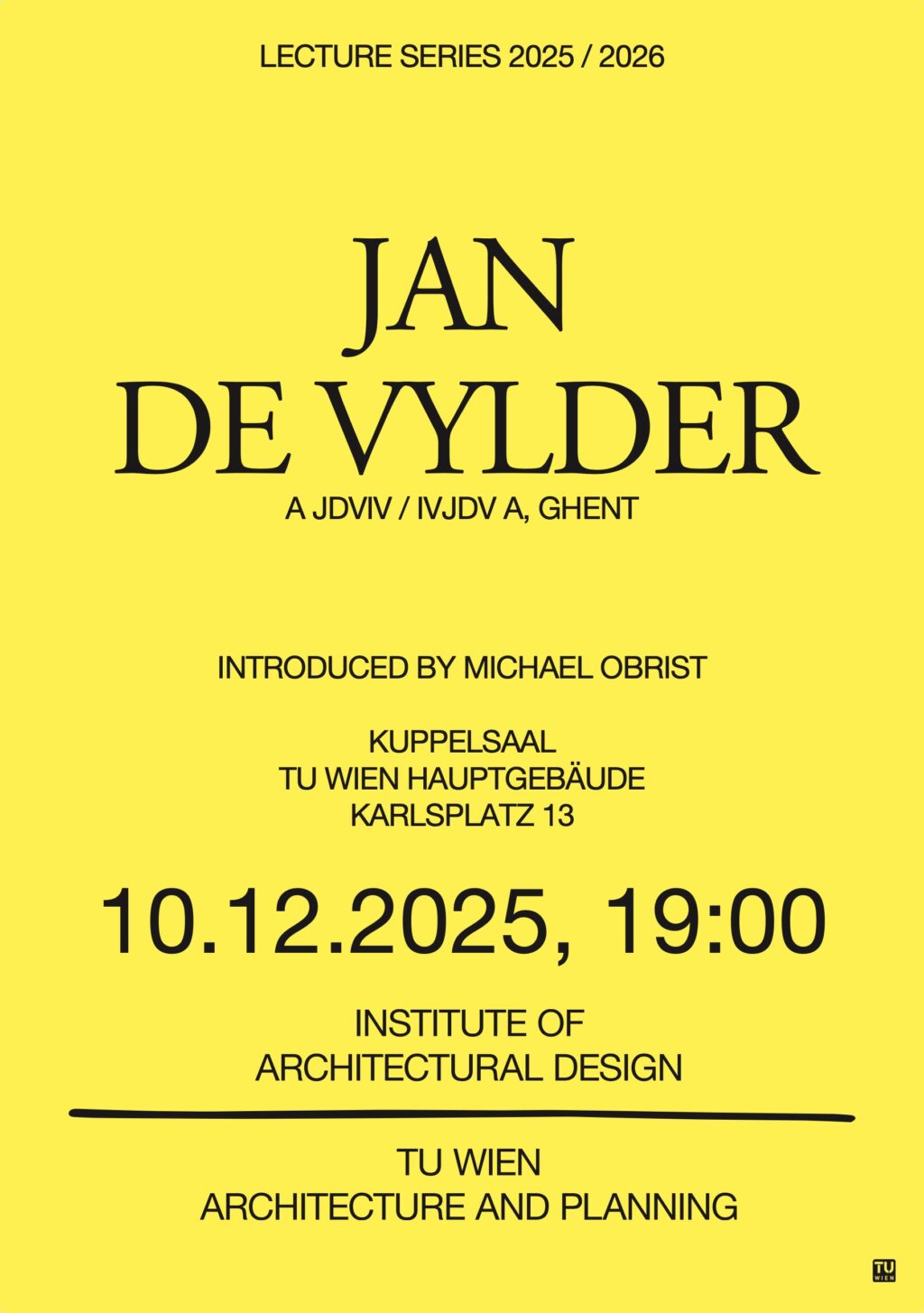
DEC 10, 2025
19:00
LECTURE:
JAN DE VYLDER
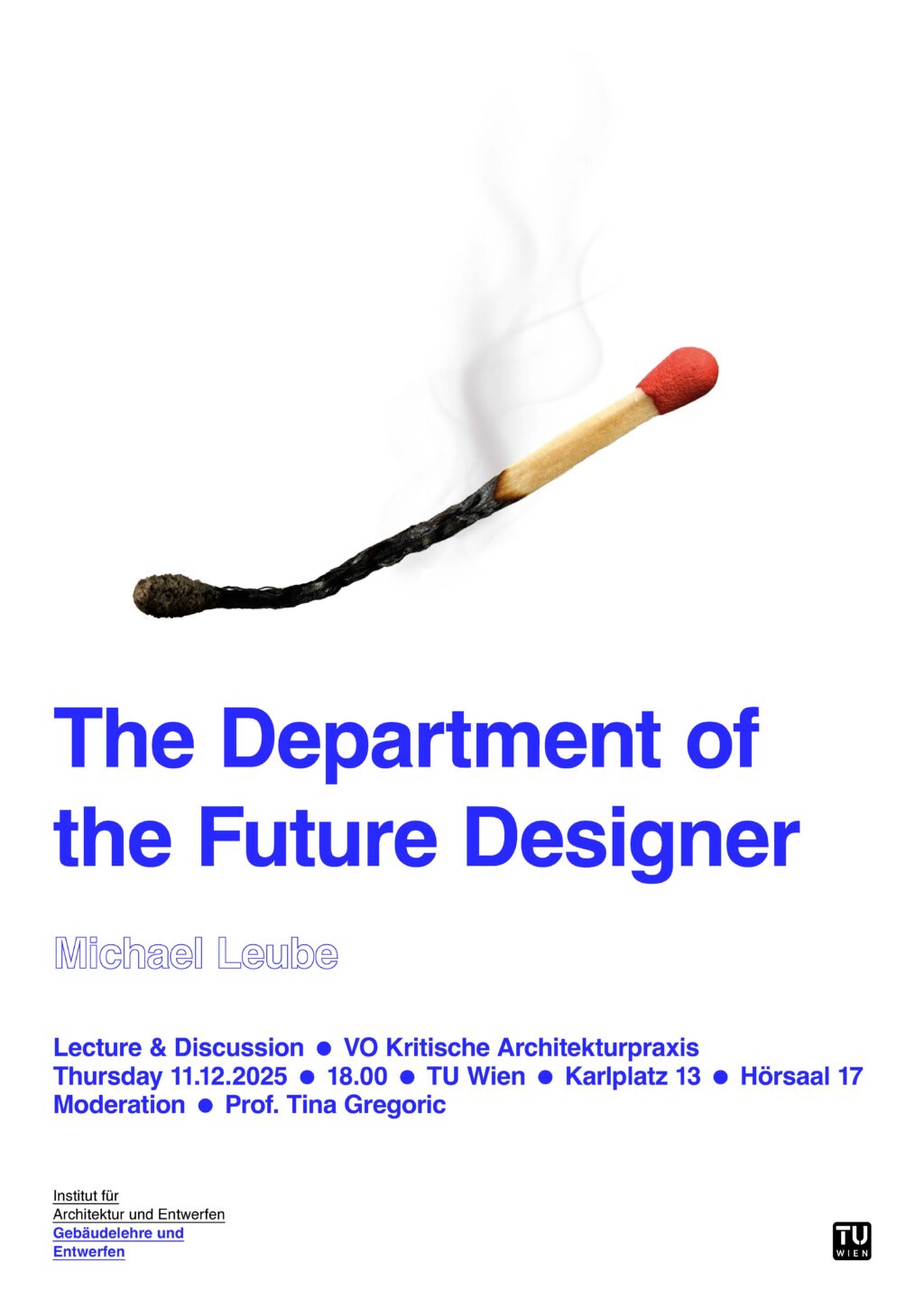
DEC 11, 2025
18:00
Lecture:
Michael Leube
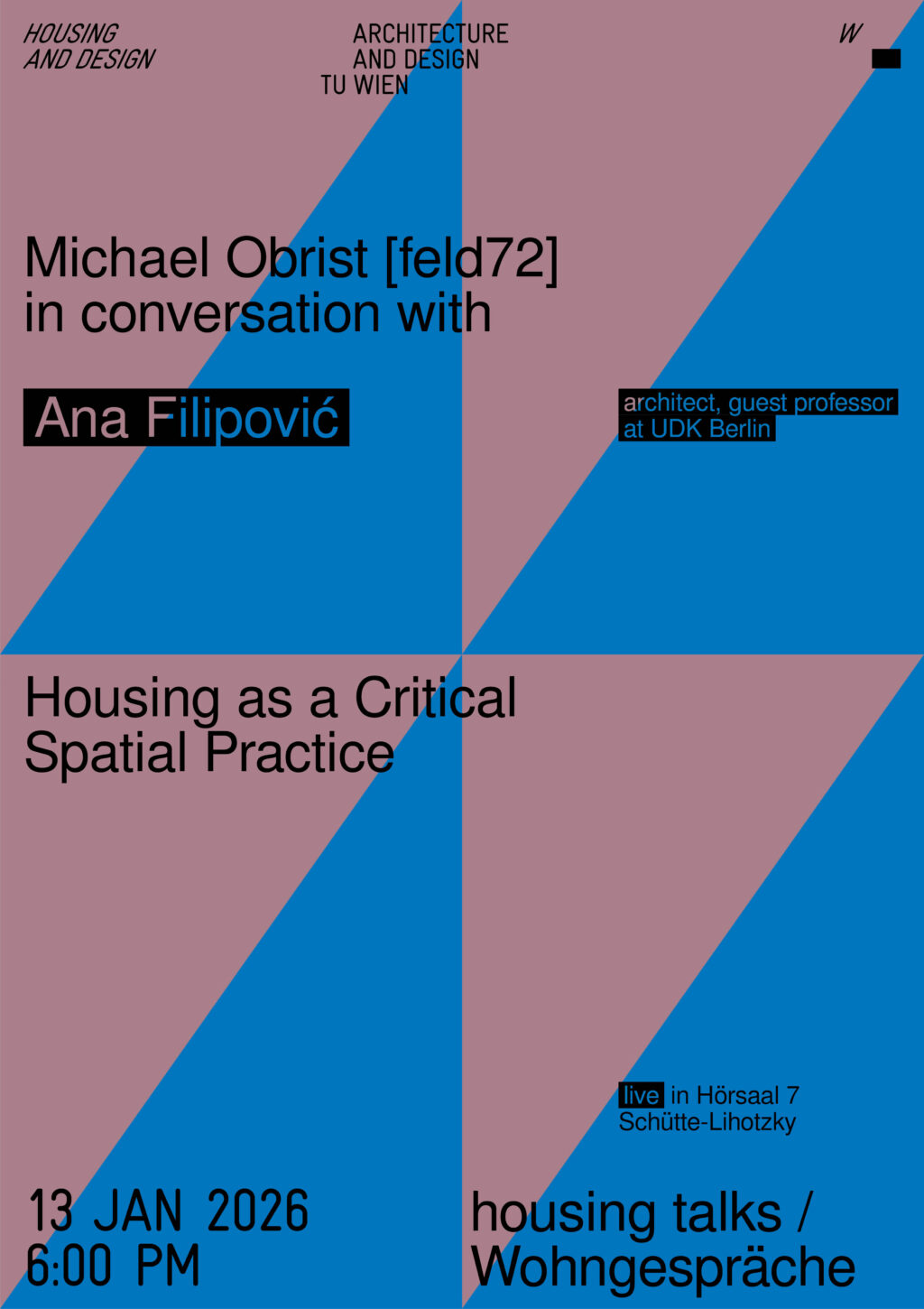
JAN 13, 2026
18:00
HOUSING TALKS:
ANA FILIPOVIĆ
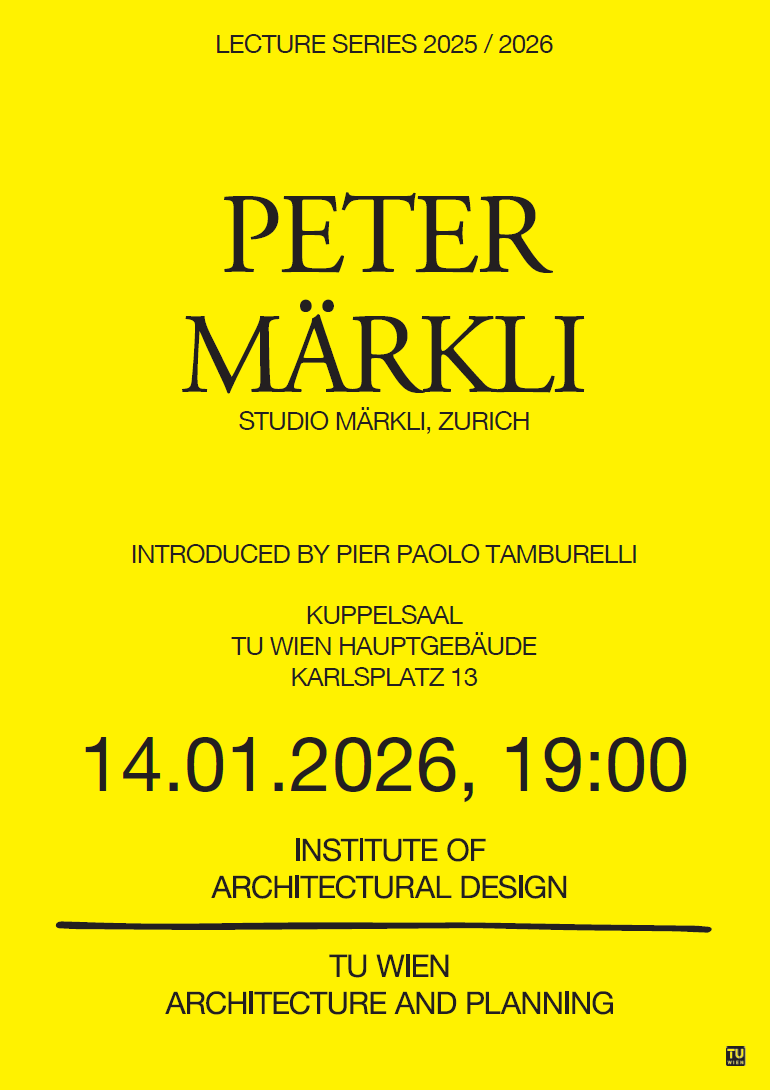
JAN 14, 2026
19:00
LECTURE:
PETER MÄRKLI
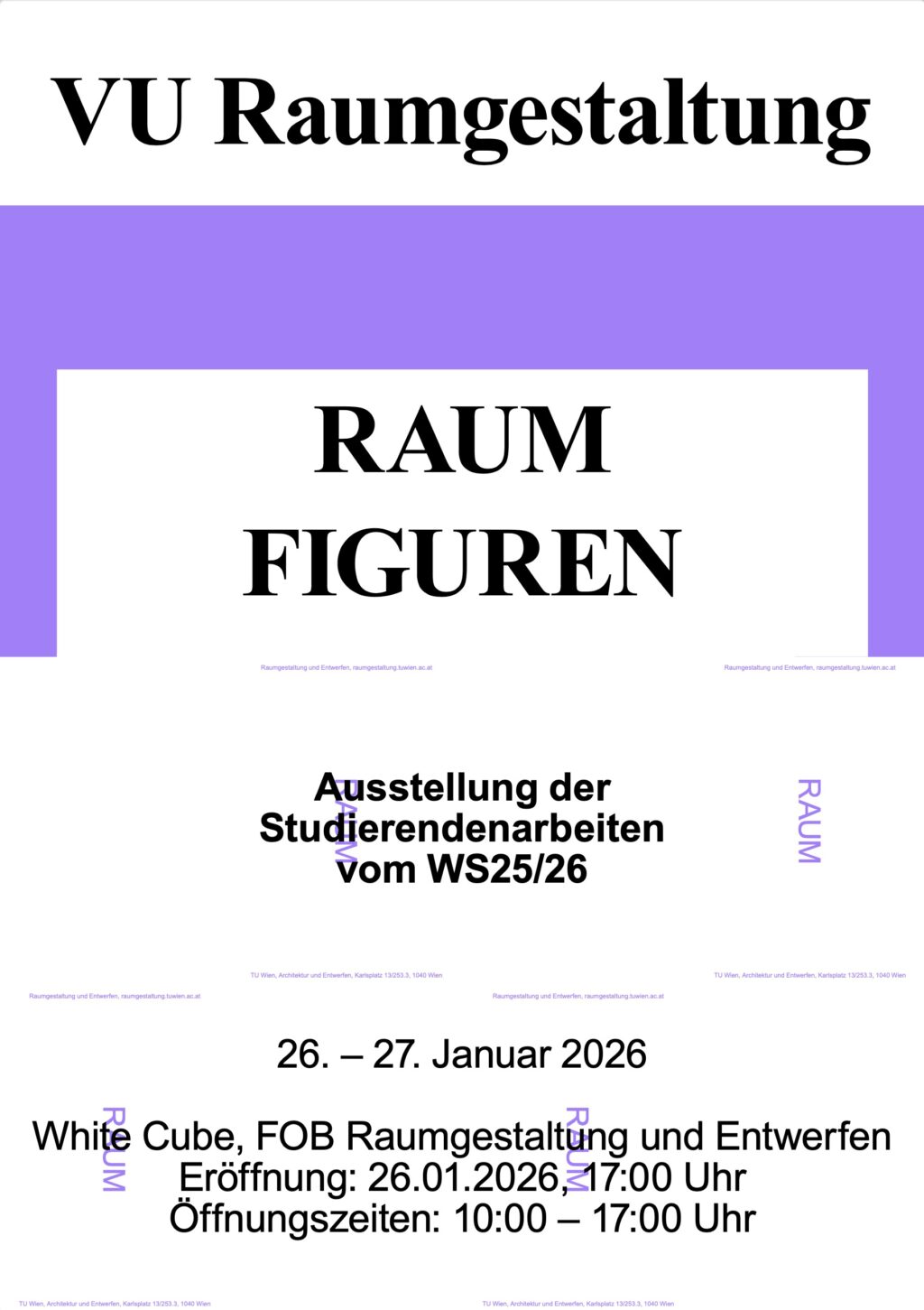
JAN 26, 2026
17:00
EXHIBITION:
RAUMFIGUREN
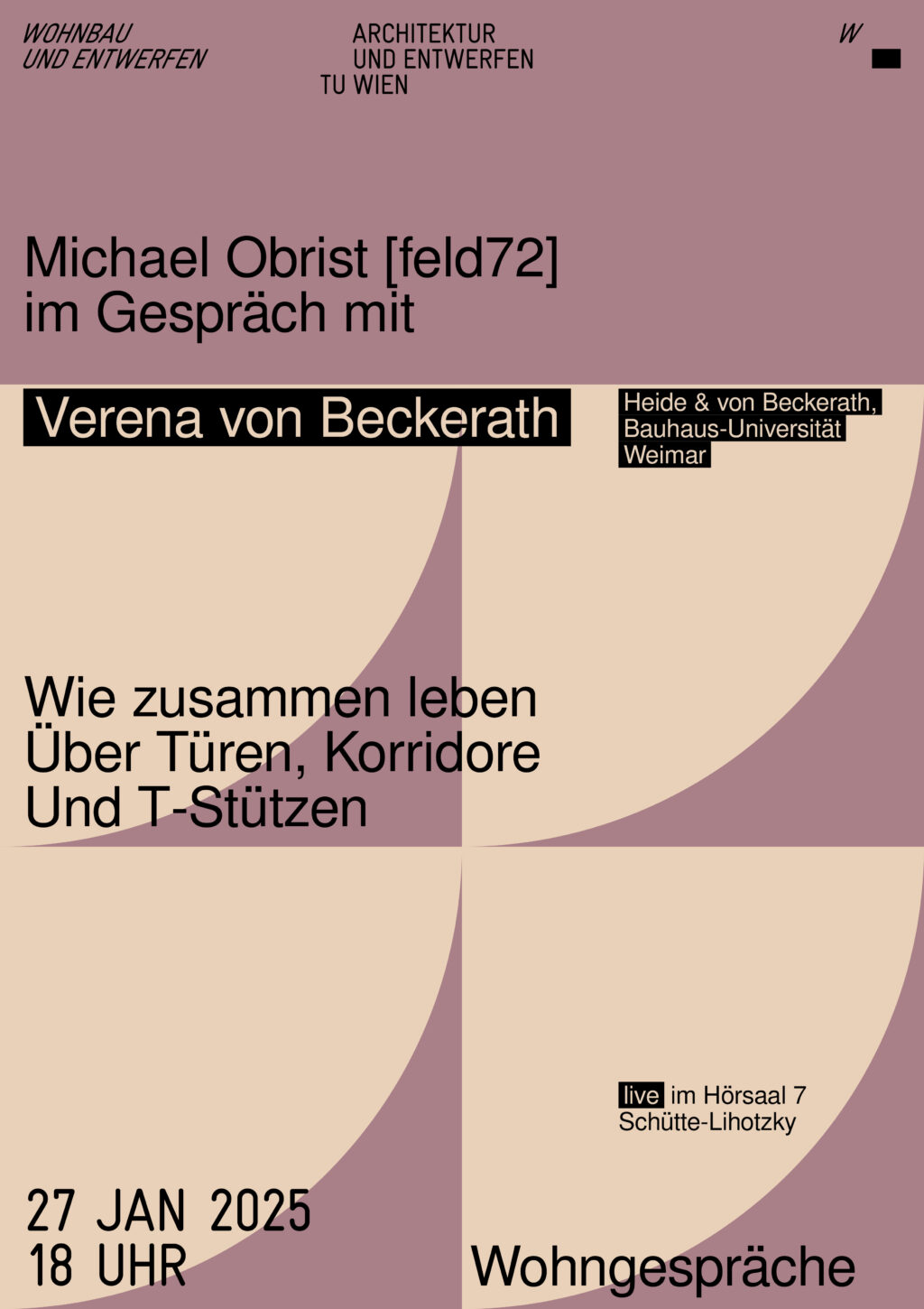
JAN 27, 2026
18:00
HOUSING TALKS:
VERENA VON BECKERATH
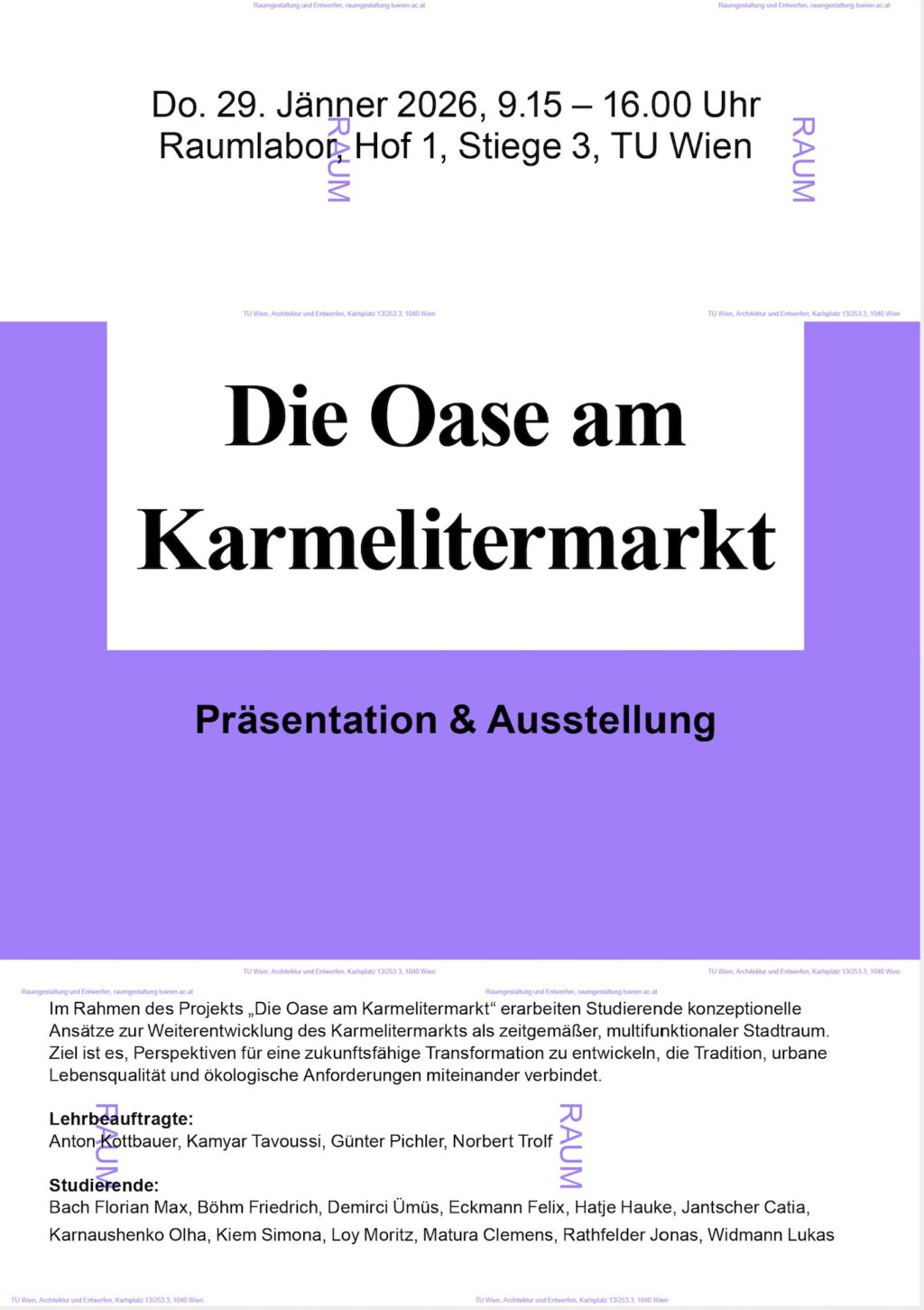
JAN 29, 2026
09:30
PRÄSENTATIONEN UND AUSSTELLUNG:
DIE OASE KARMELITER-
MARKT
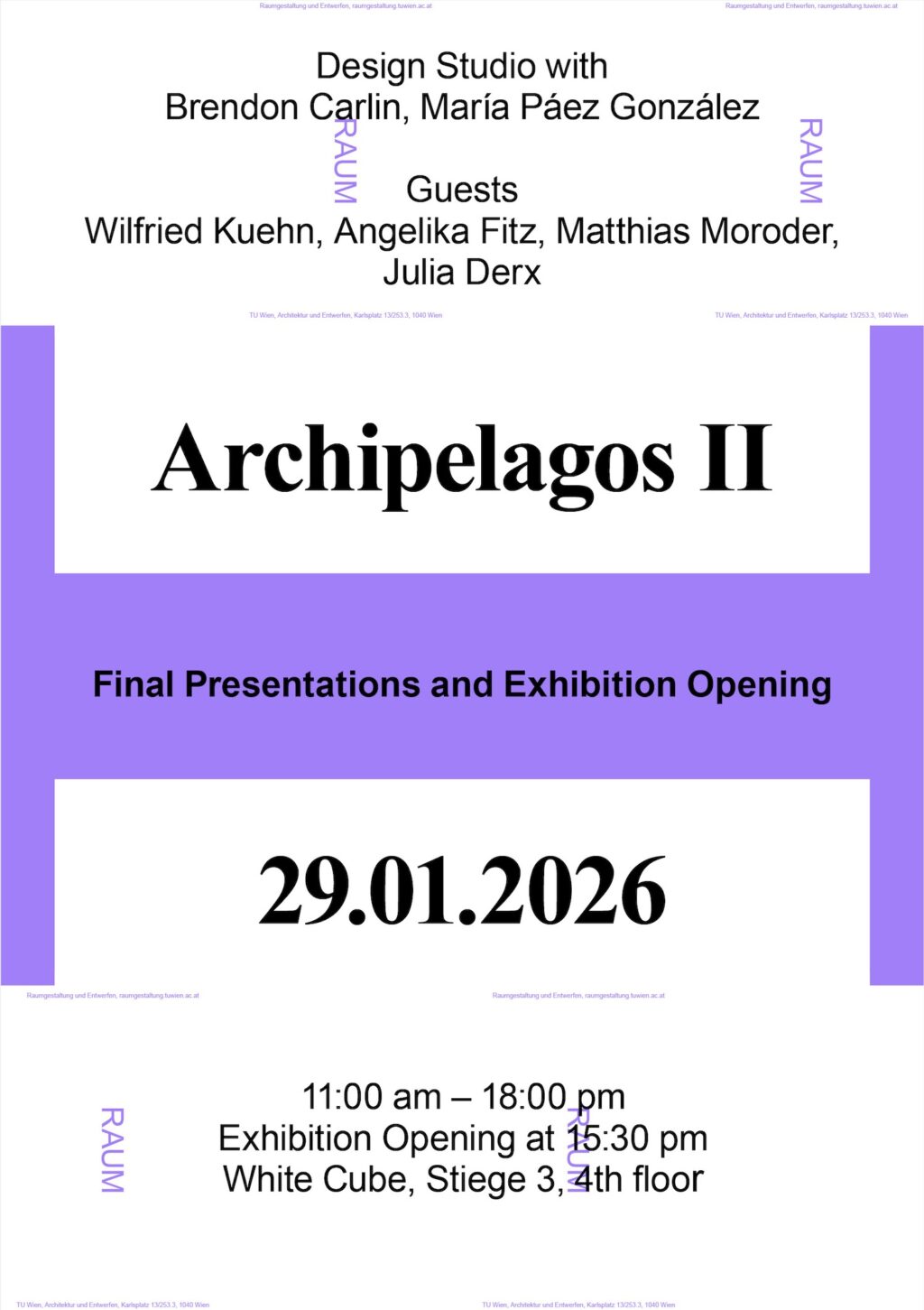
JAN 29, 2026
11:00
PRESENTATIONS AND EXHIBITION: ARCHIPELAGOS II
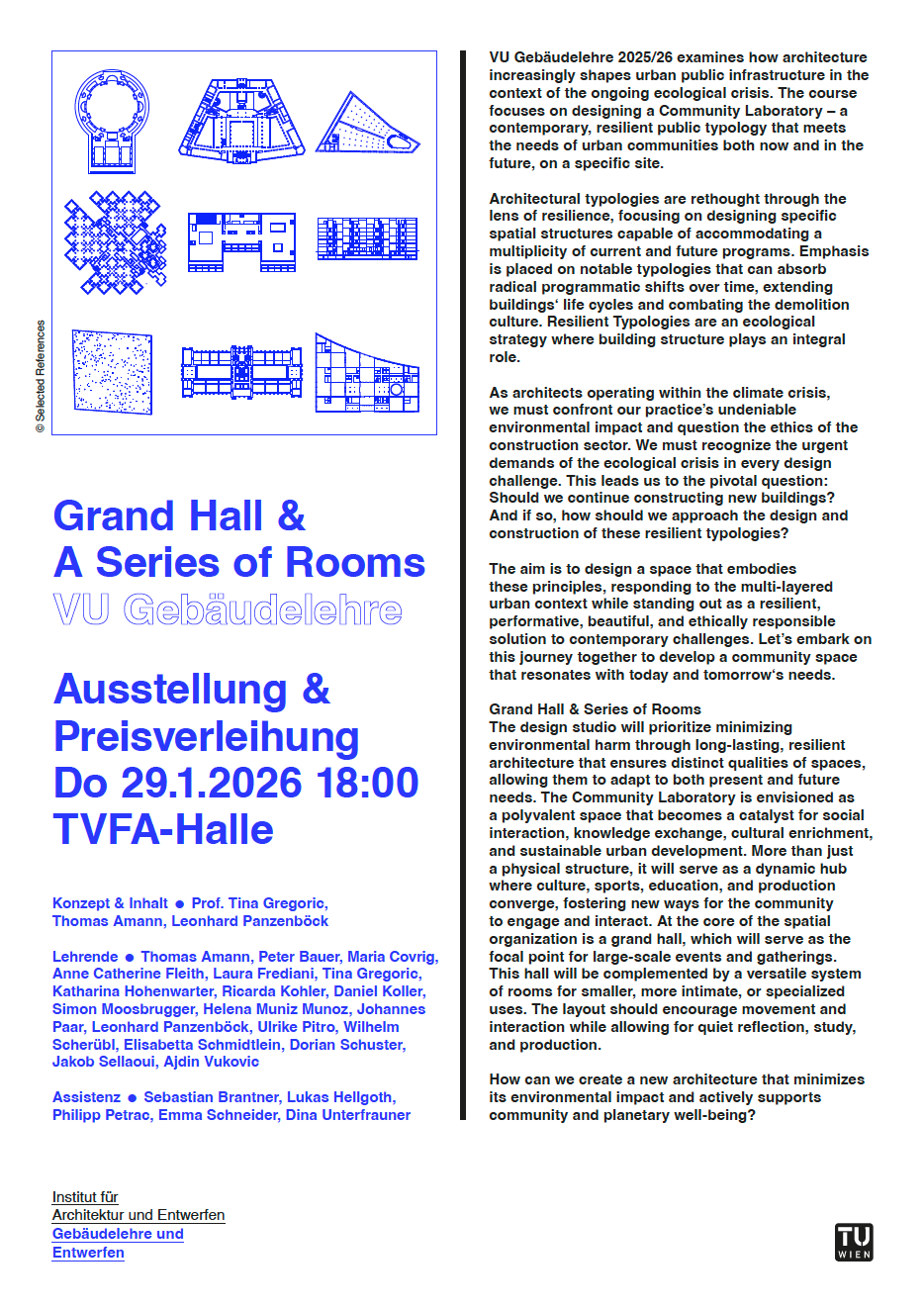
JAN 29, 2026
18:00
EXHIBITION: GRAND HALL & A SERIES OF ROOMS
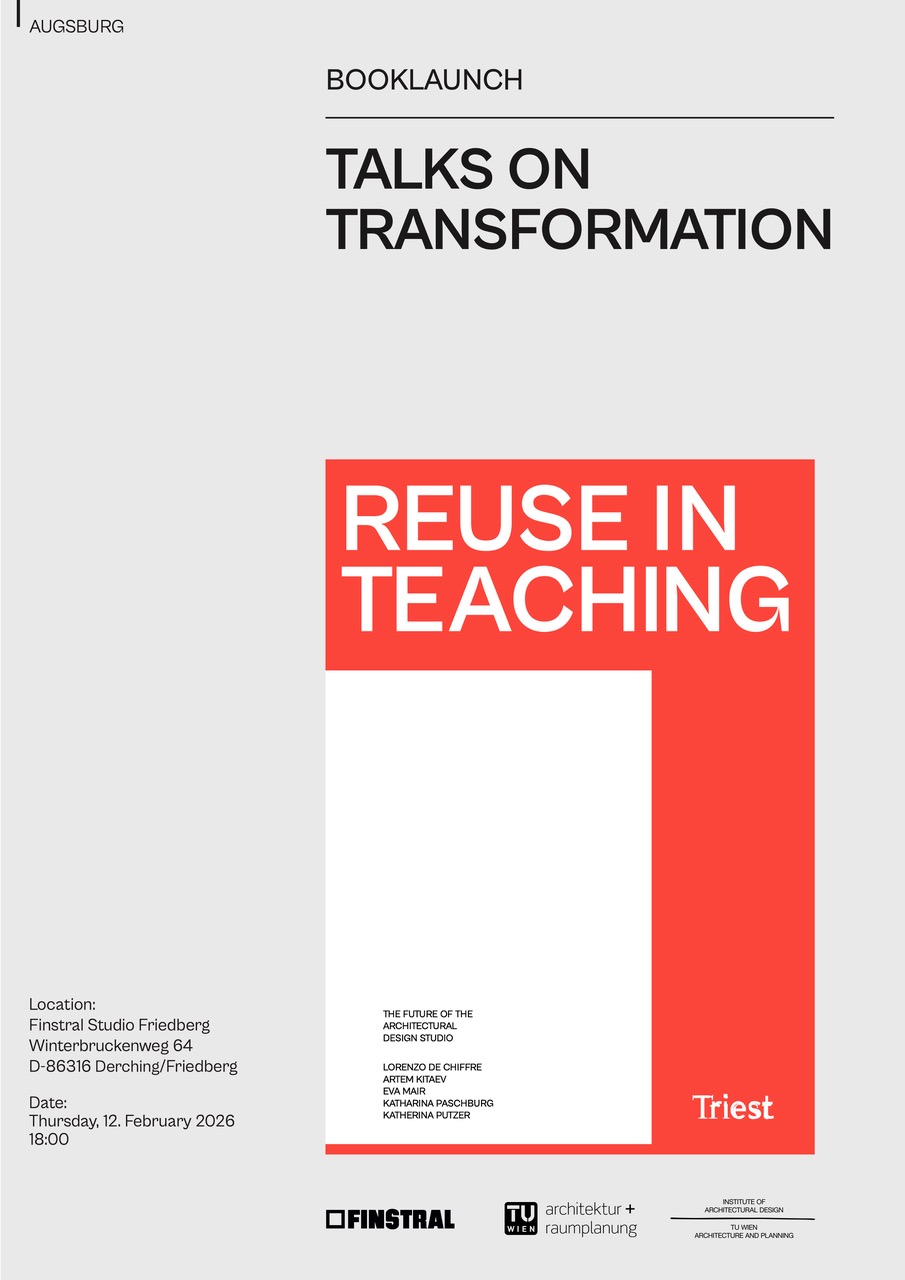
FEB 12, 2026
18:00
BOOK PRESENTATION:
TALKS ON TRANSFORMATION
MAR 11, 2026
19:00
LECTURE:
PHILIPPE MADEC
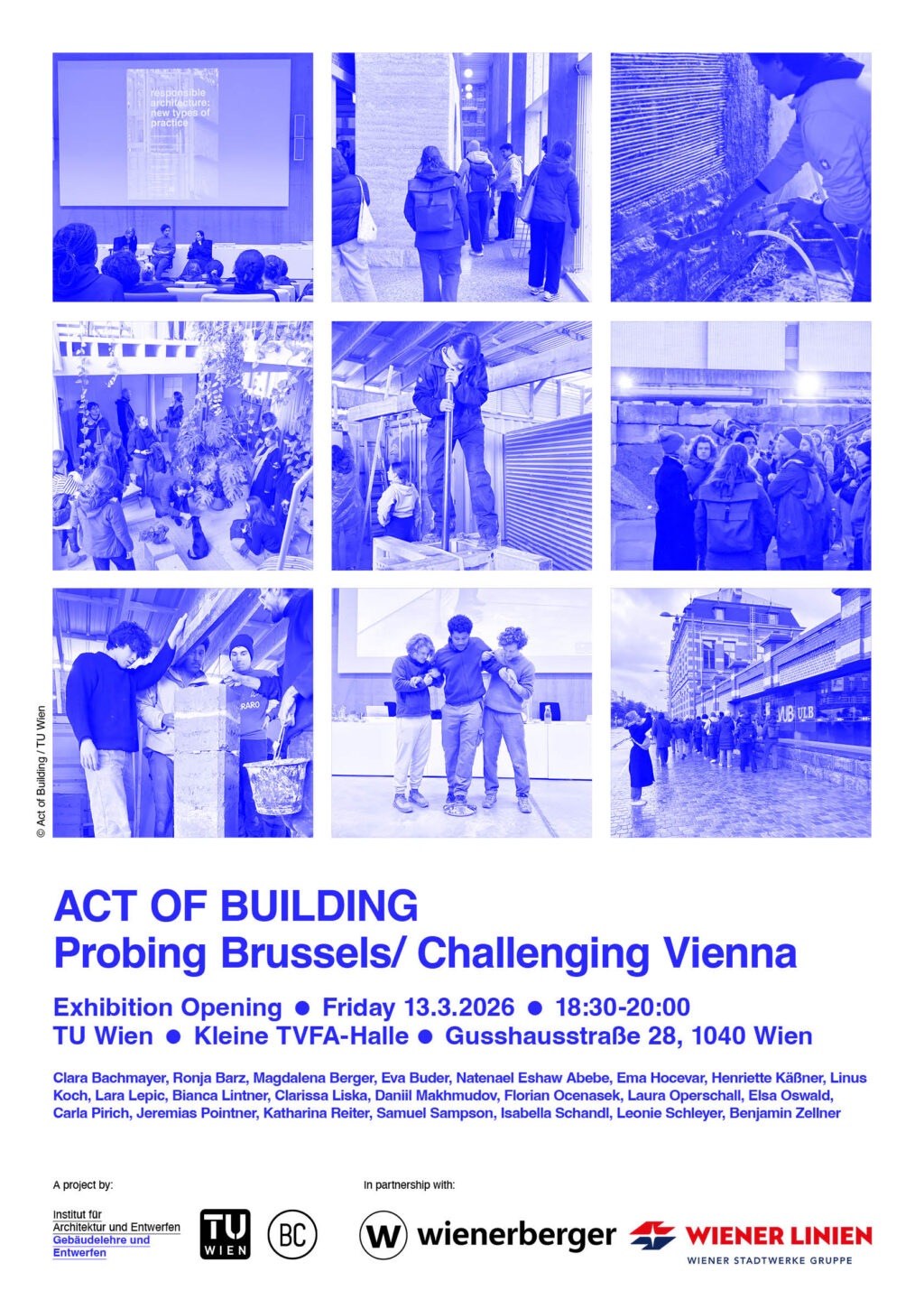
MAR 13, 2026
18:30
Exhibition:
Act of Building: Probing Brussels/ Challenging Vienna
MAR 19, 2026
19:00
LECTURE:
COLIN REYNIER AND LÉONARD LASSAGNE
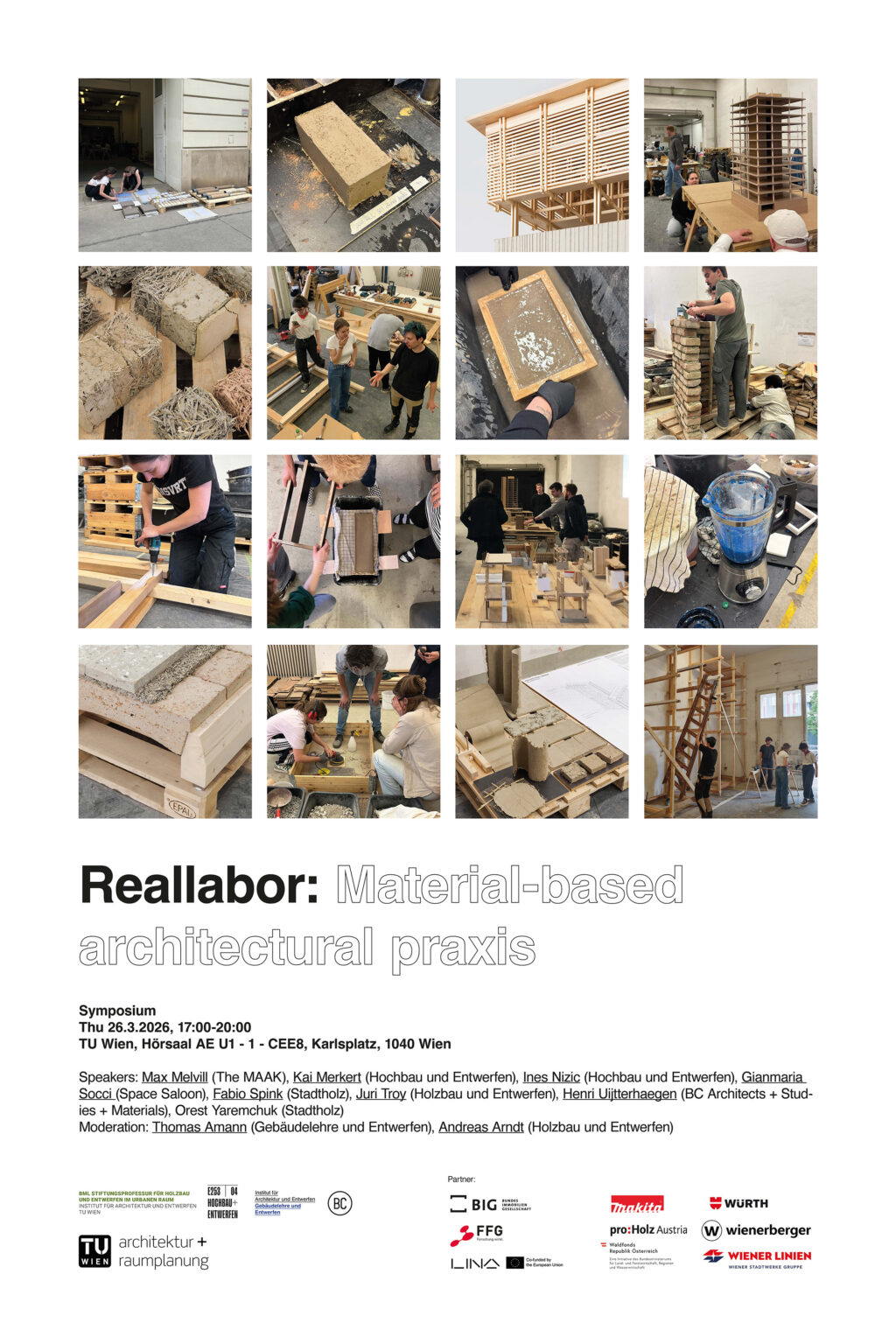
MAR 26, 2026
17:00
SYMPOSIUM:
Reallabor: Material-based architectural praxis
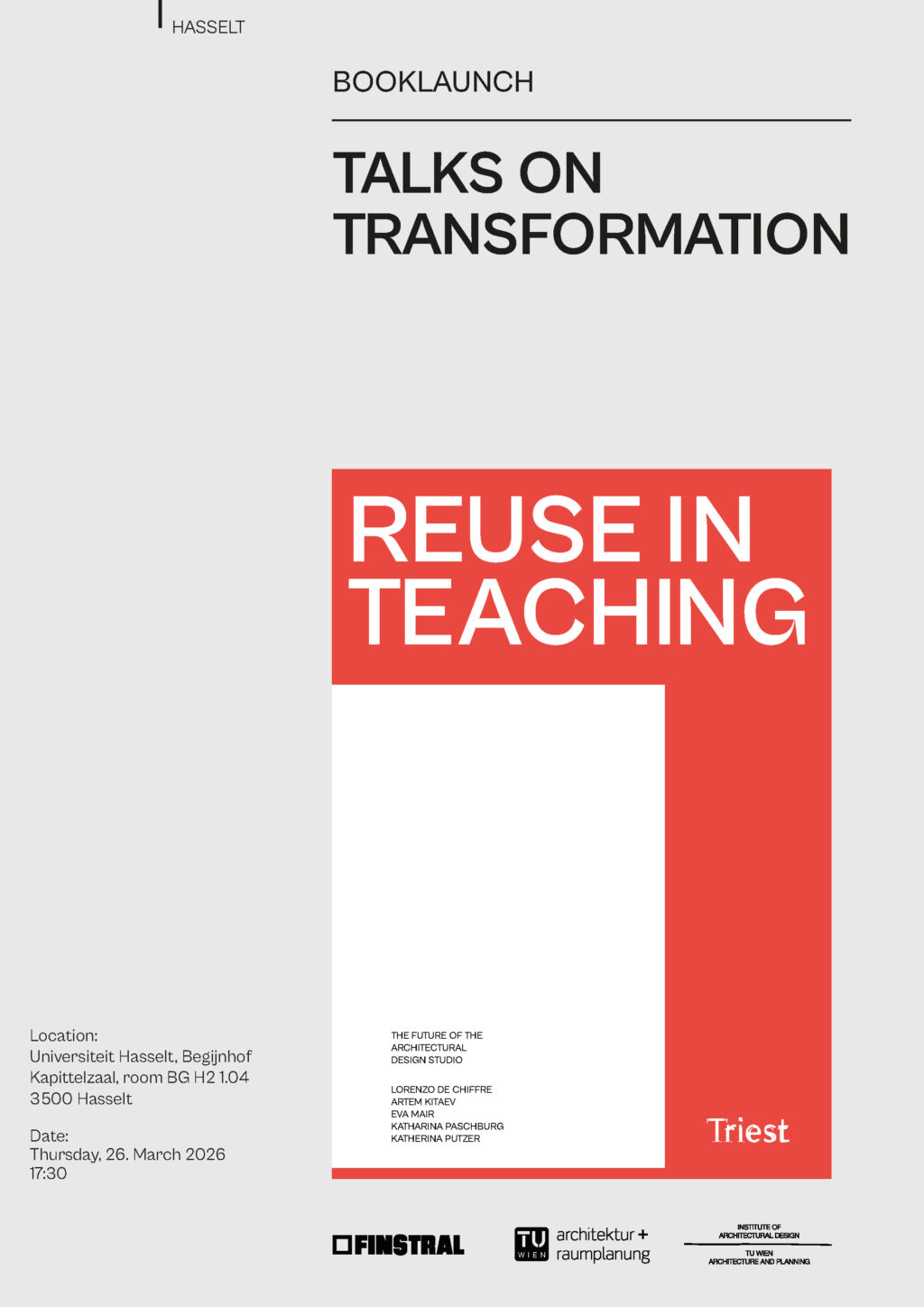
MAR 26, 2026
17:30
BOOK PRESENTATION:
TALKS ON TRANSFORMATION
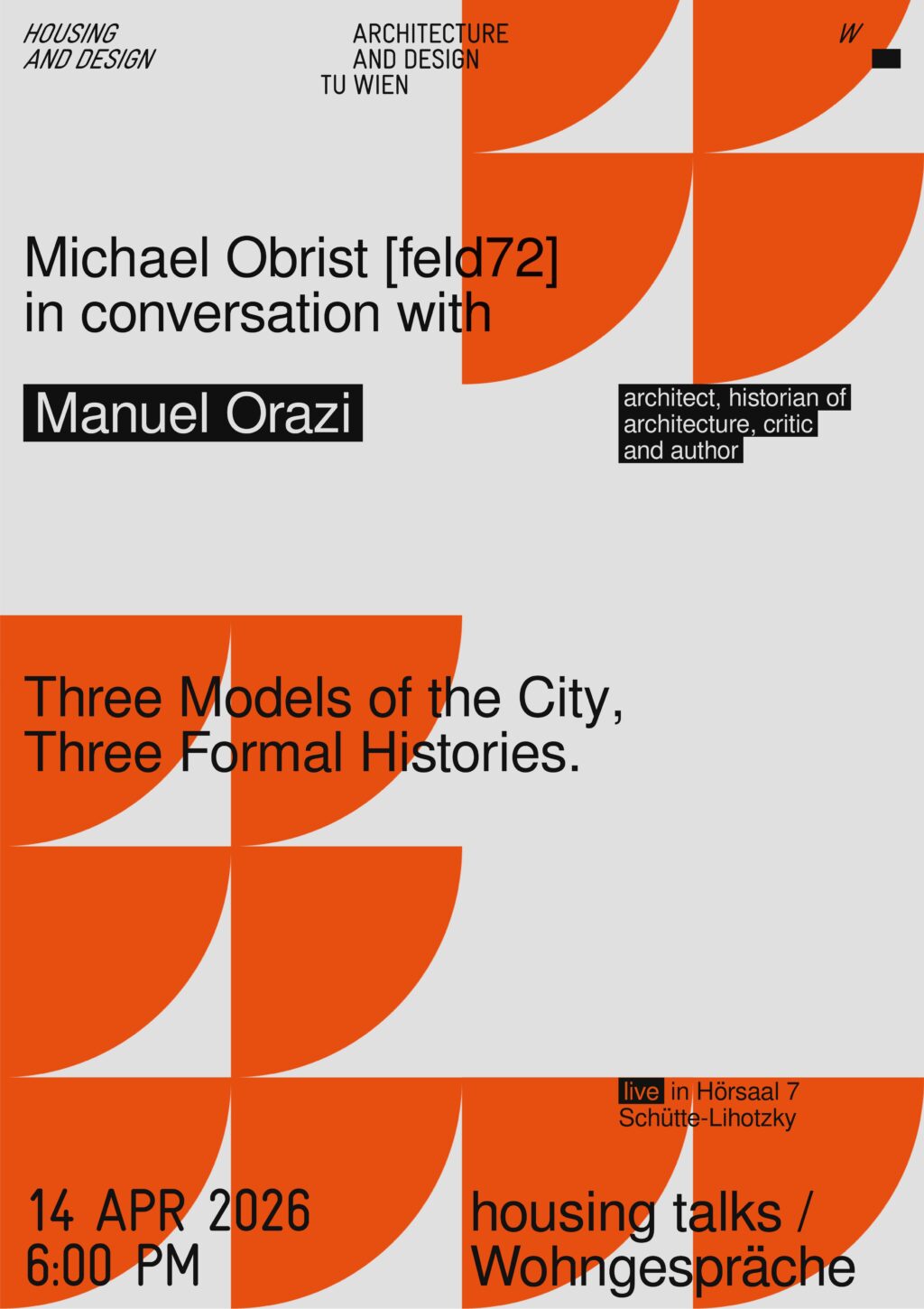
APR 14, 2026
18:00
HOUSING TALKS:
MANUEL ORAZI
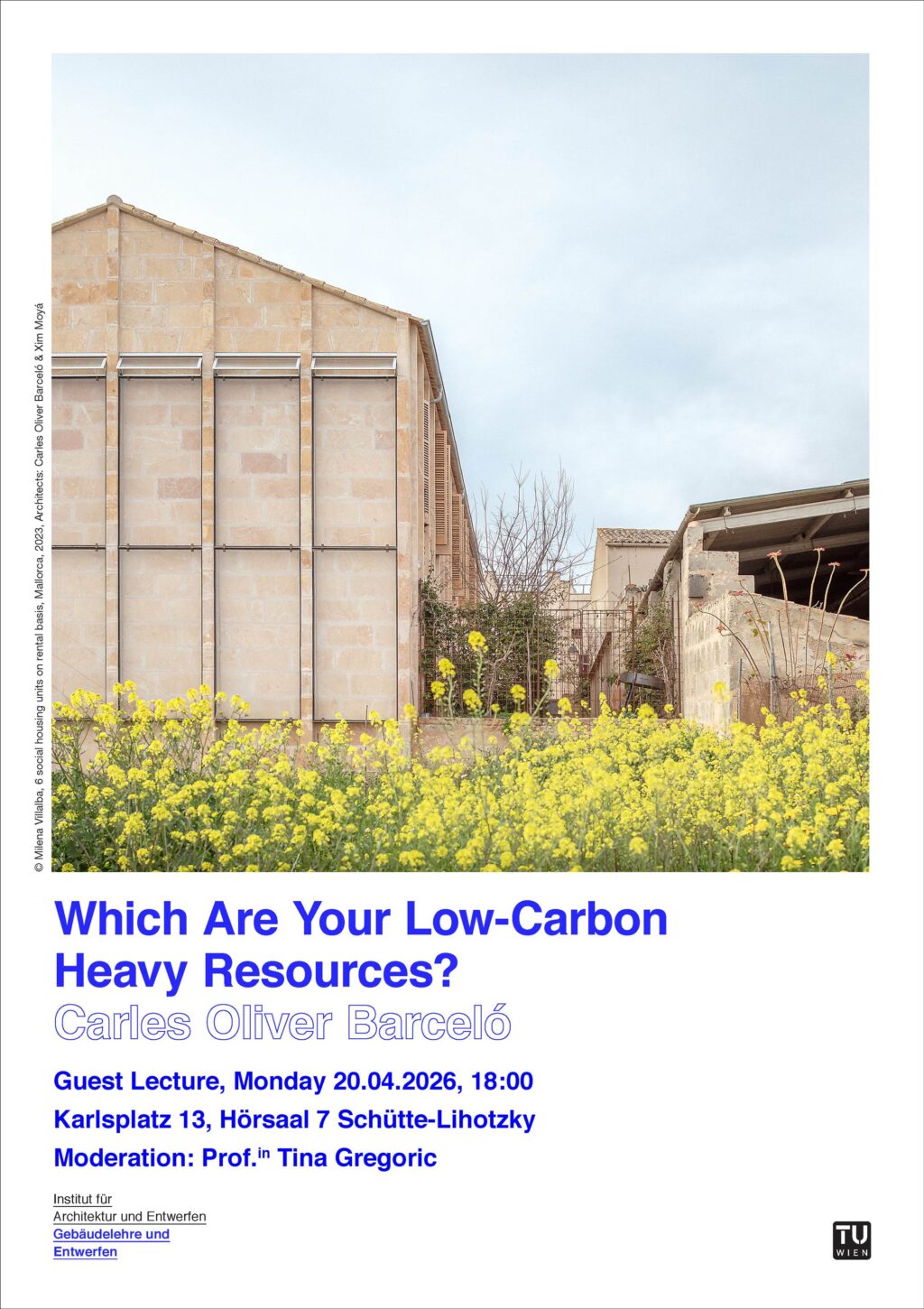
APR 20, 2026
18:00
LECTURE:
CARLES OLIVER BARCELÓ
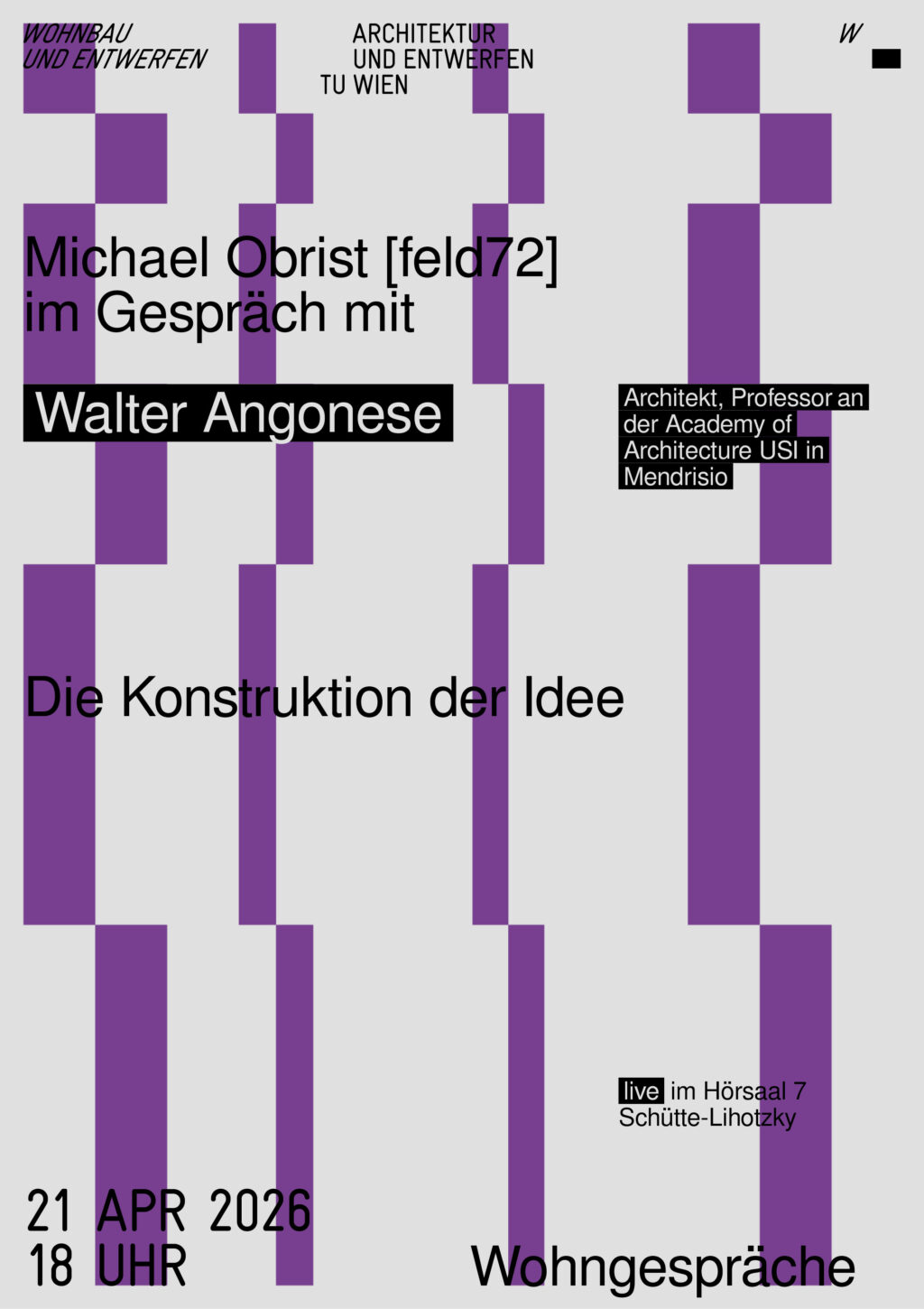
APR 21, 2026
18:00
HOUSING TALKS:
WALTER ANGONESE
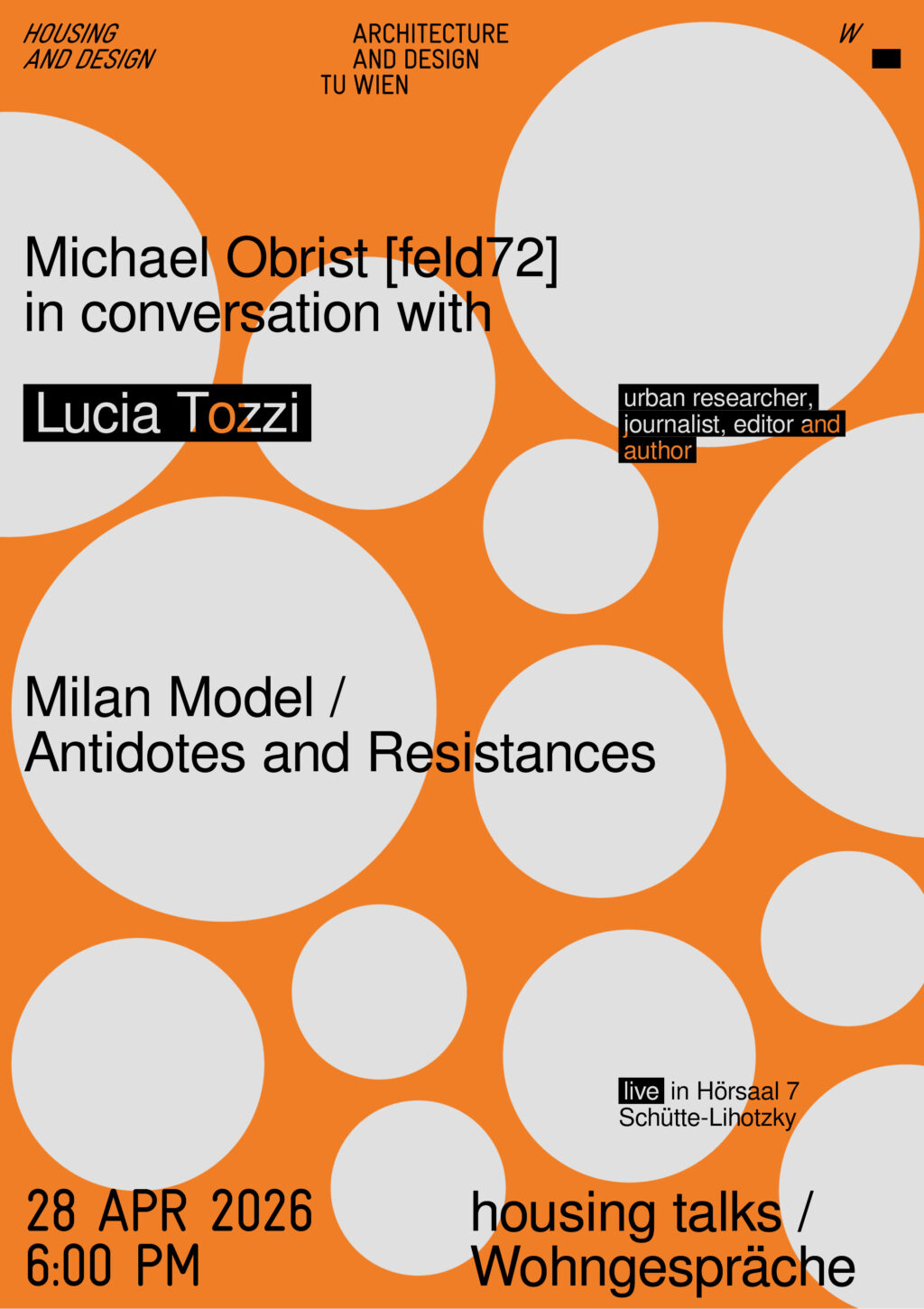
APR 28, 2026
18:00
HOUSING TALKS:
LUCIA TOZZI
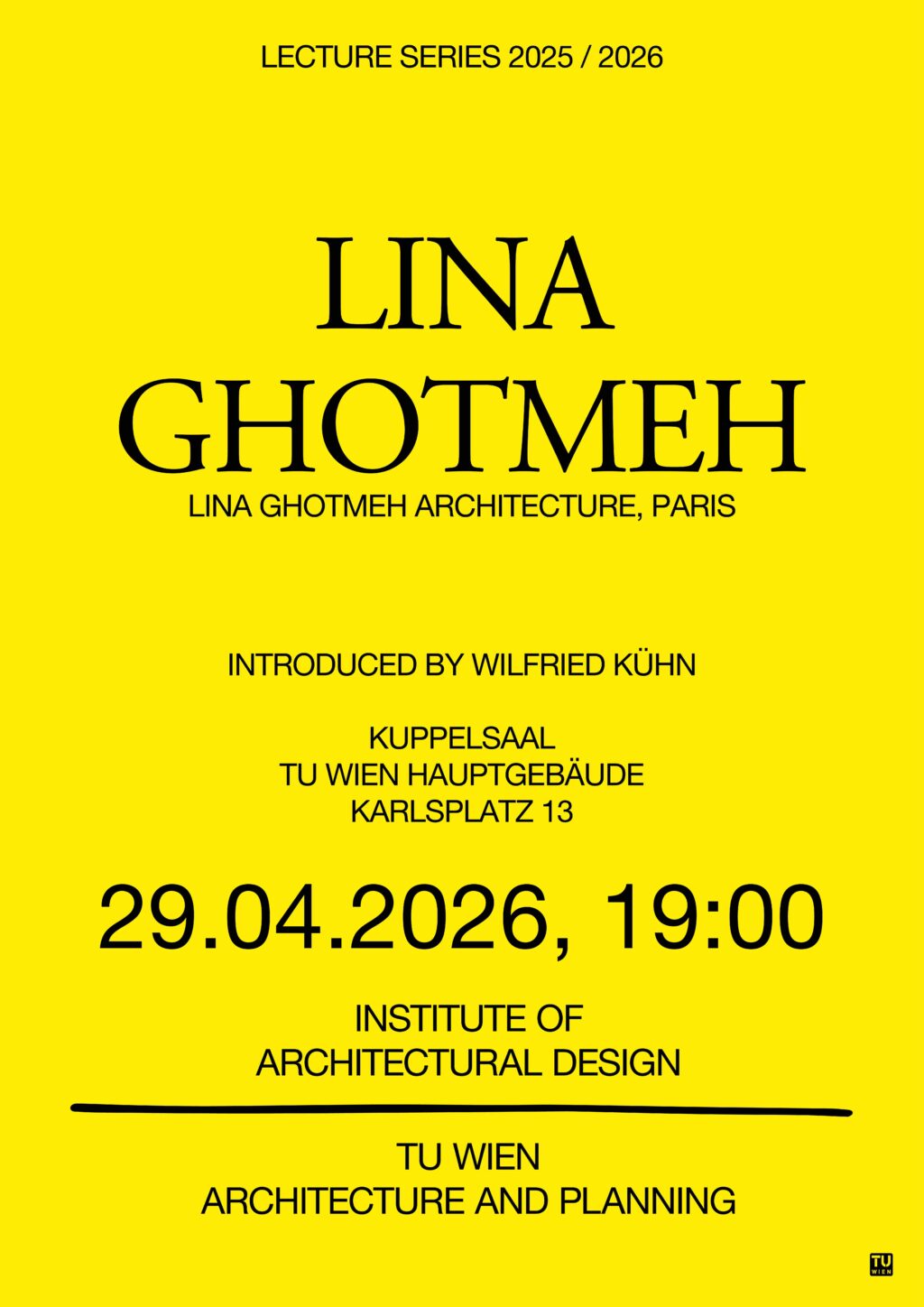
APR 29, 2026
19:00
LECTURE:
LINA GHOTMEH

MAY 5, 2026
18:00
HOUSING TALKS:
JESKO FEZER
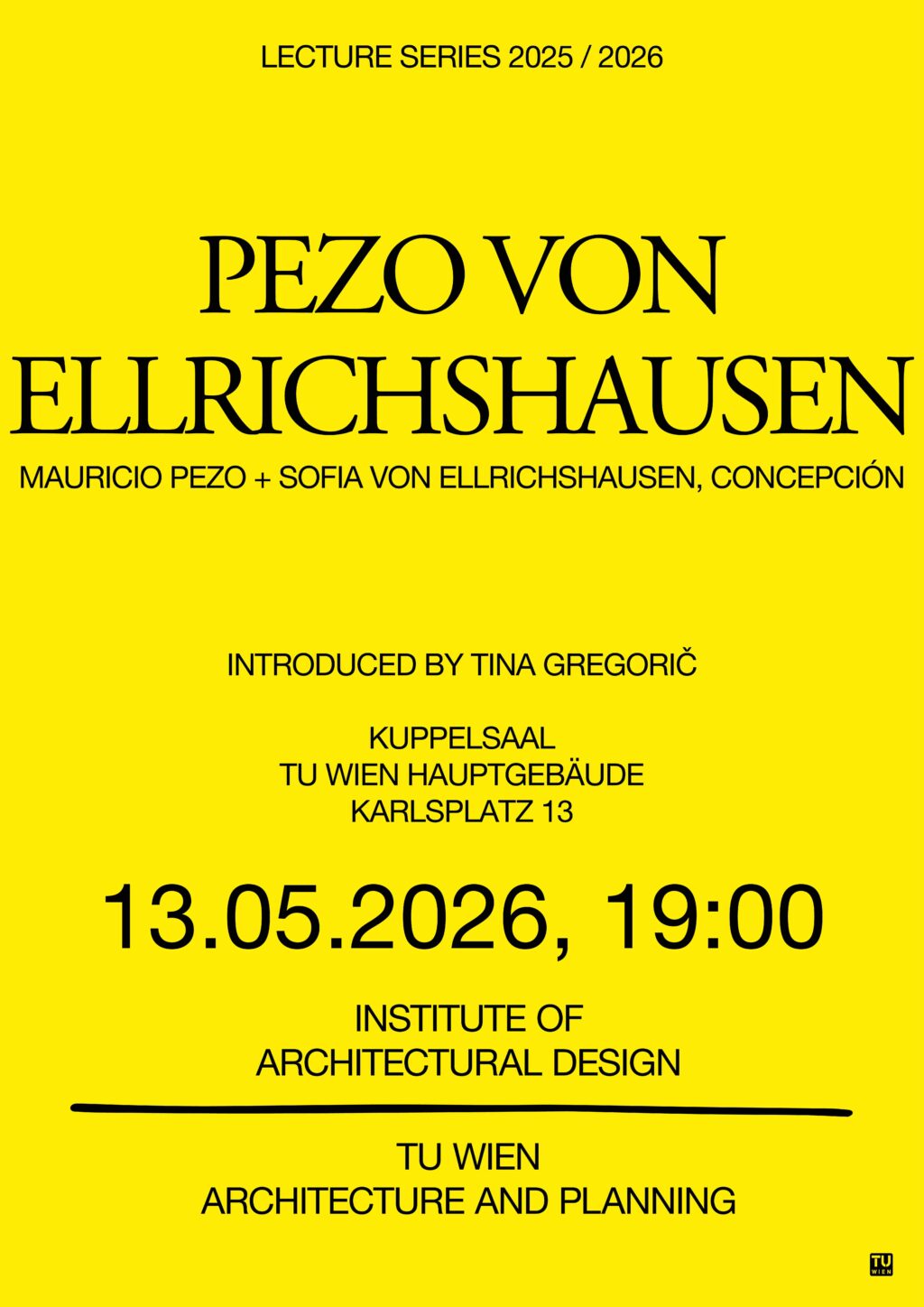
MAY 13, 2026
19:00
LECTURE:
PEZO VON ELLRICHSHAUSEN
MAY 20, 2026
18:00
BOOK PRESENTATION:
TALKS ON TRANSFORMATION - MILAN

MAY 27, 2026
18:00
LECTURE:
JULIENNE LORZ
EXHIBITION: BEZIRKSMUSEUM
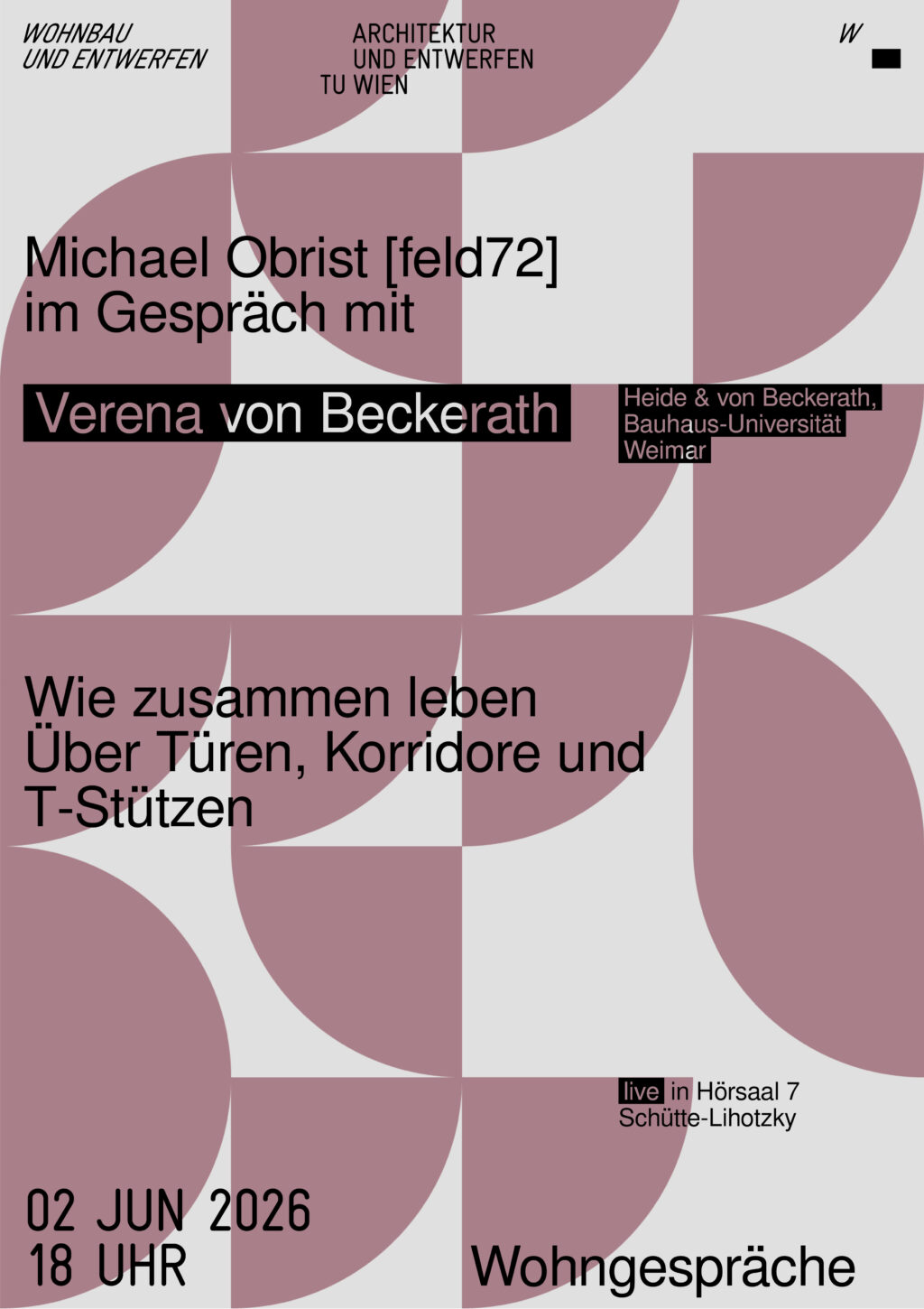
JUN 2, 2026
18:00
HOUSING TALKS:
VERENA VON BECKERATH
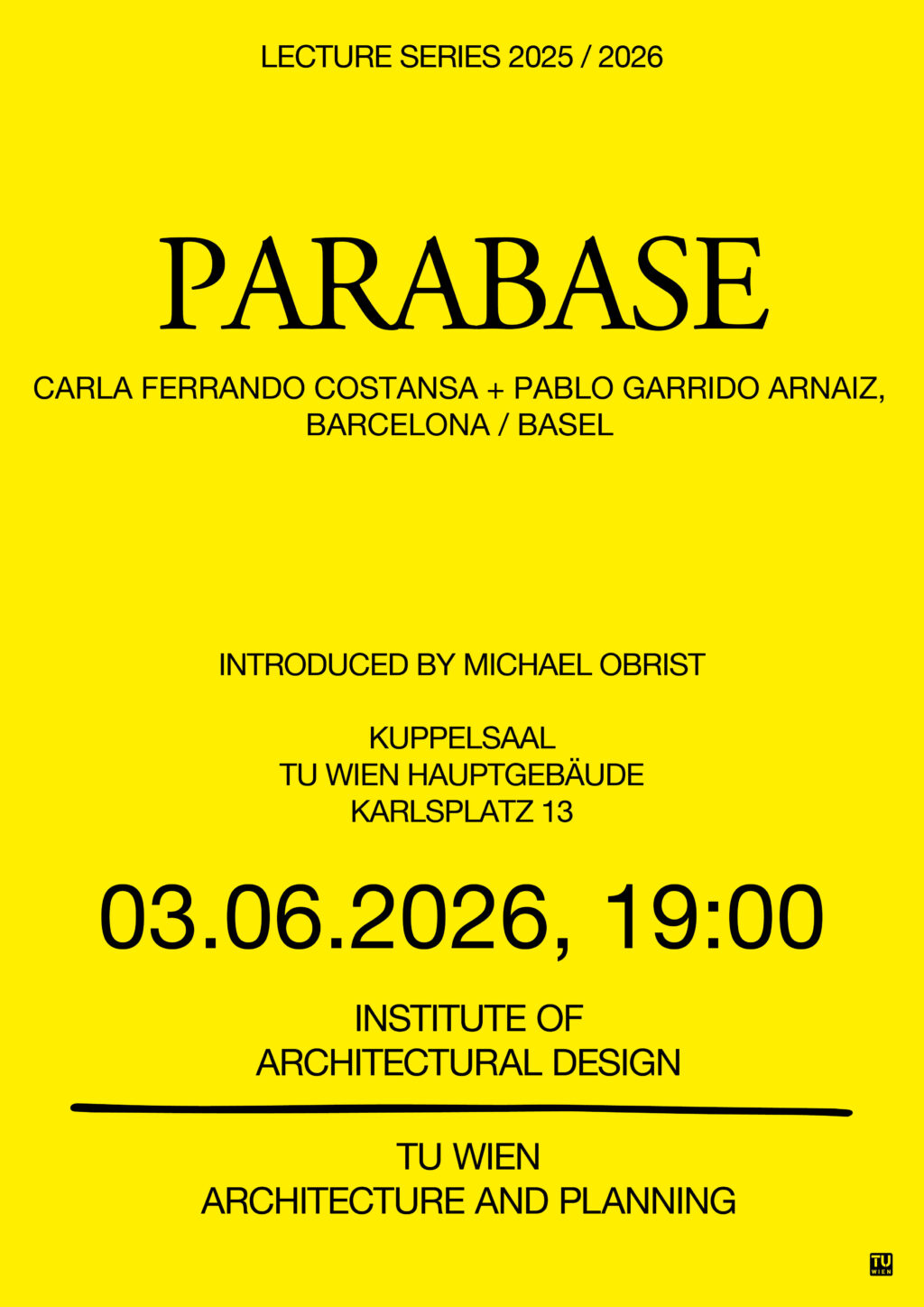
JUN 3, 2026
19:00
LECTURE:
PARABASE
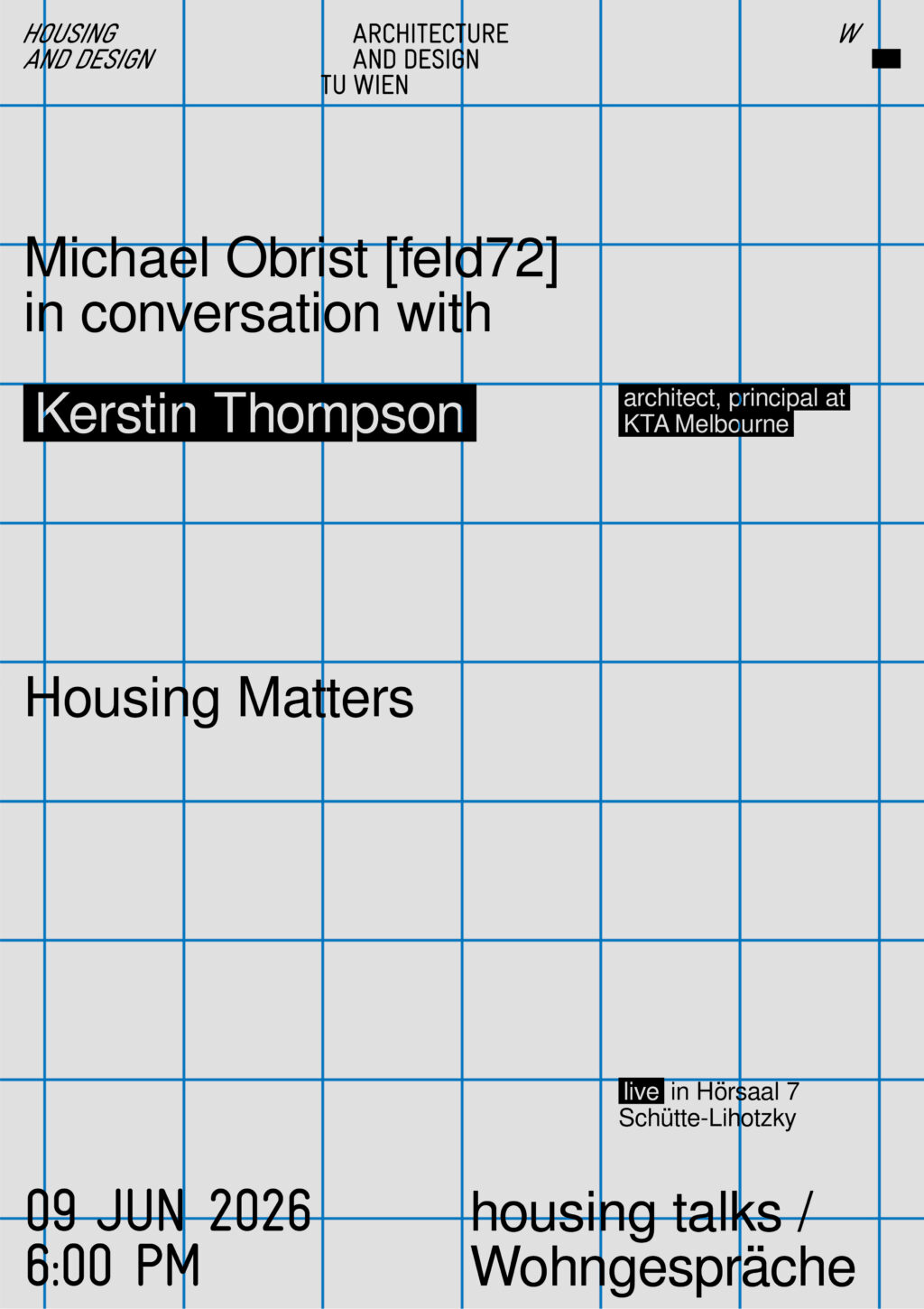
JUN 9, 2026
18:00
HOUSING TALKS:
KERSTIN THOMPSON
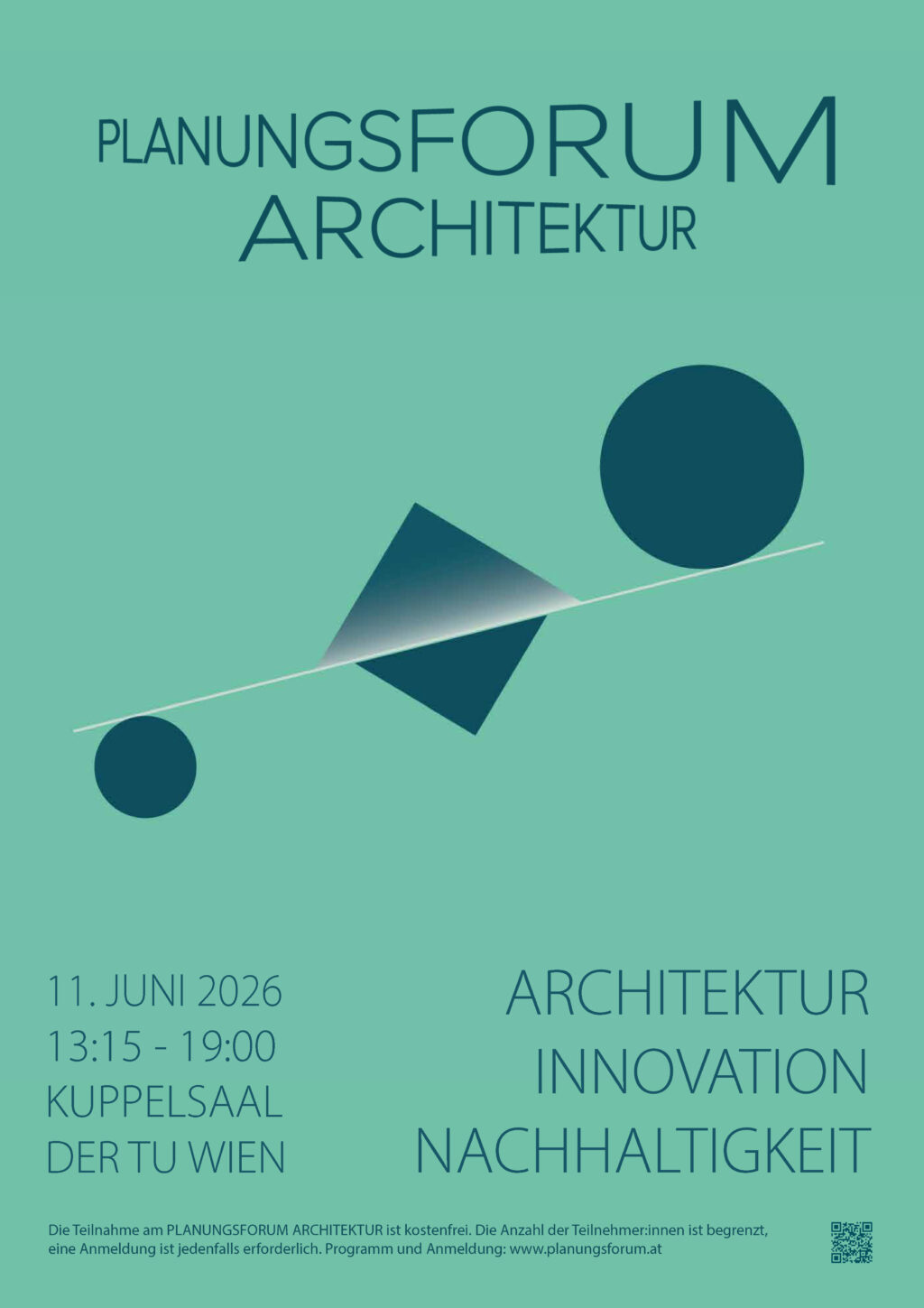
JUN 11, 2026
13:15
PLANUNGSFORUM. ARCHITEKTUR 2026
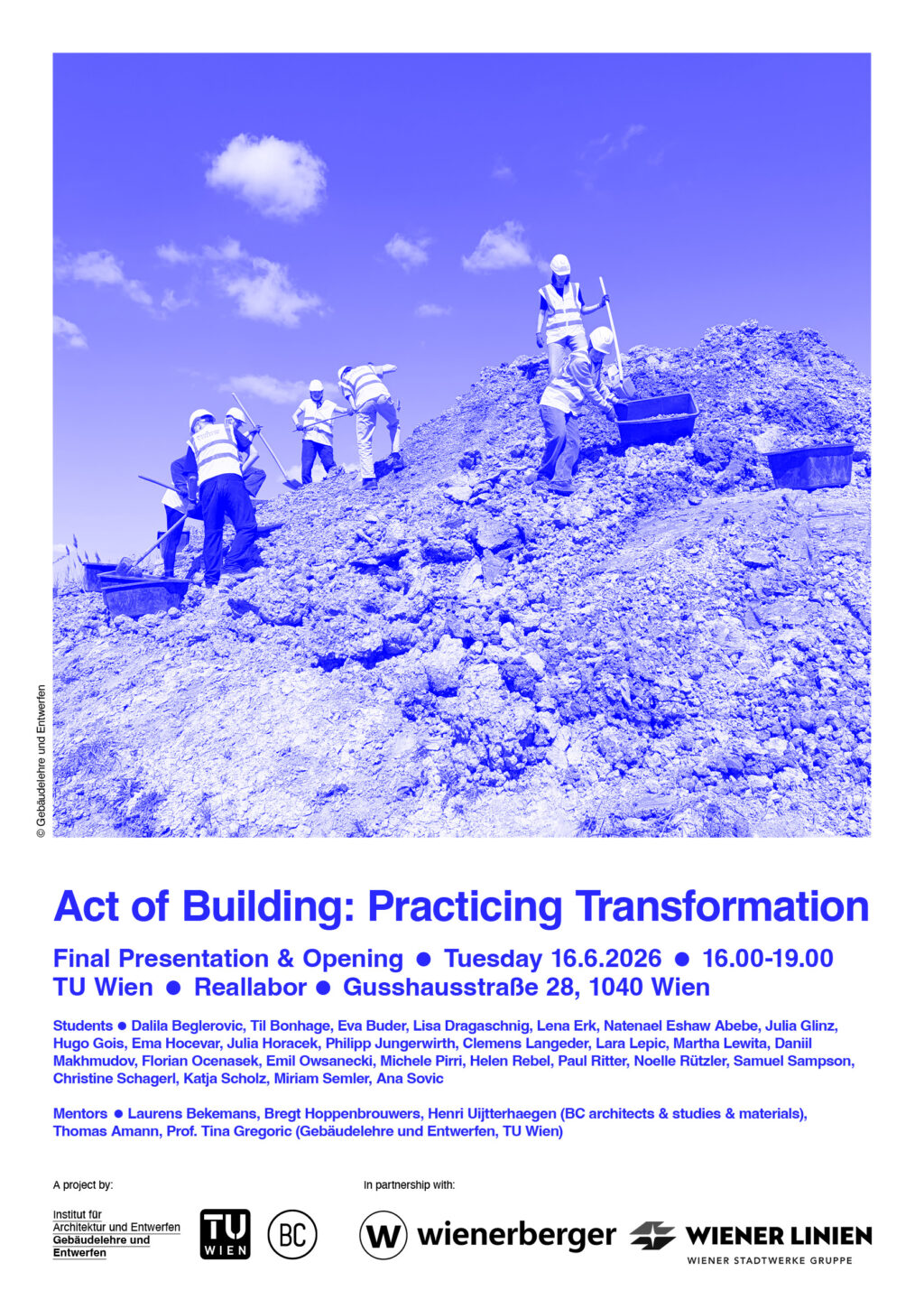
JUN 16, 2026
16:00
PRESENTATION, EXHIBITION:
ACT OF BUILDING
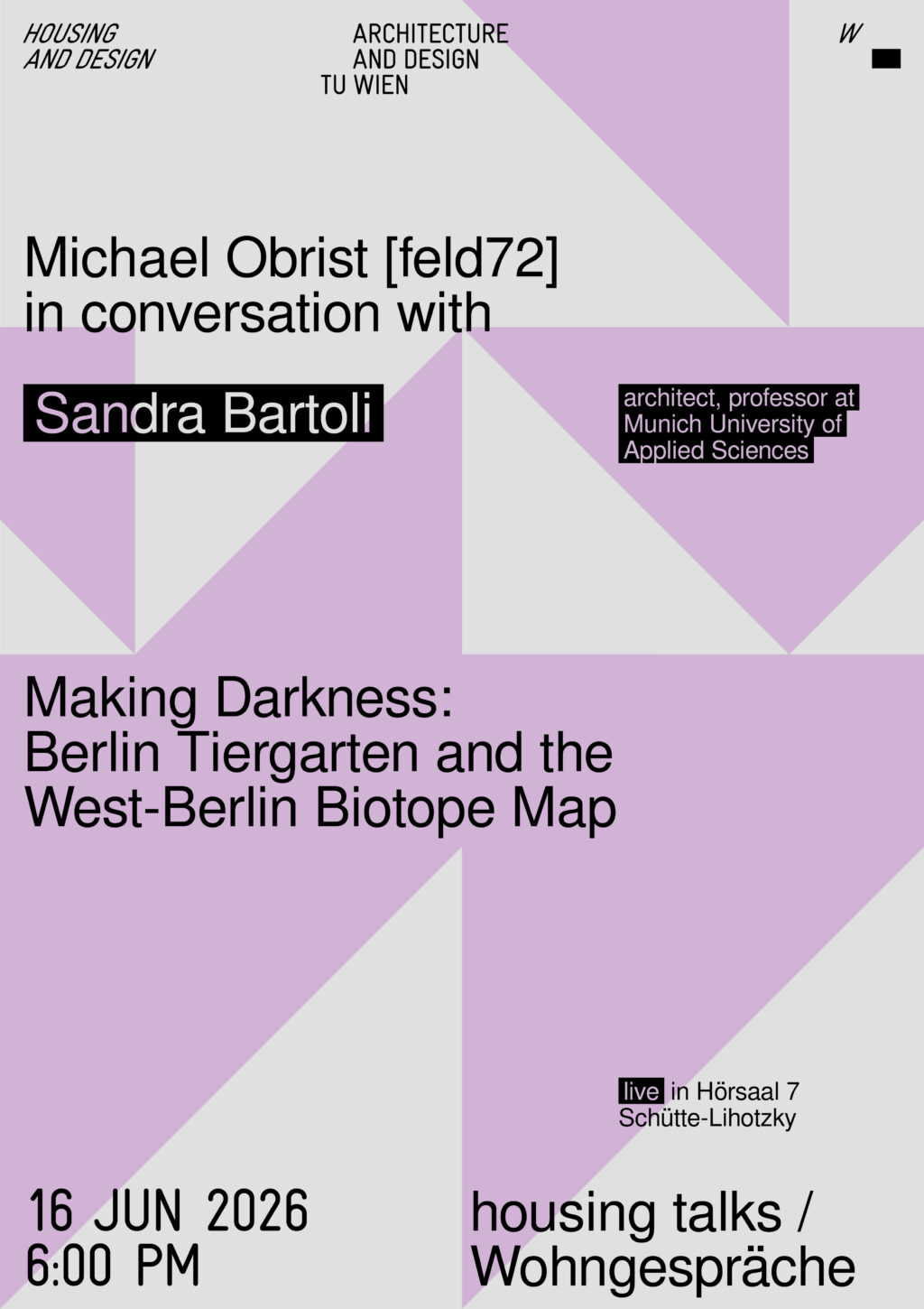
JUN 16, 2026
18:00
HOUSING TALKS:
SANDRA BARTOLI

JUN 25, 2026
18:00
EXHIBITION:
REALLABOR OPEN HOUSE

JUN 26, 2026
10:00
PRESENTATIONS AND EXHIBITION:
NIKOLA DOBROVIĆ

OCT 1, 2026
19:00
LECTURE & BOOK LAUNCH:
KLAUS ZWERGER – BAMBOO
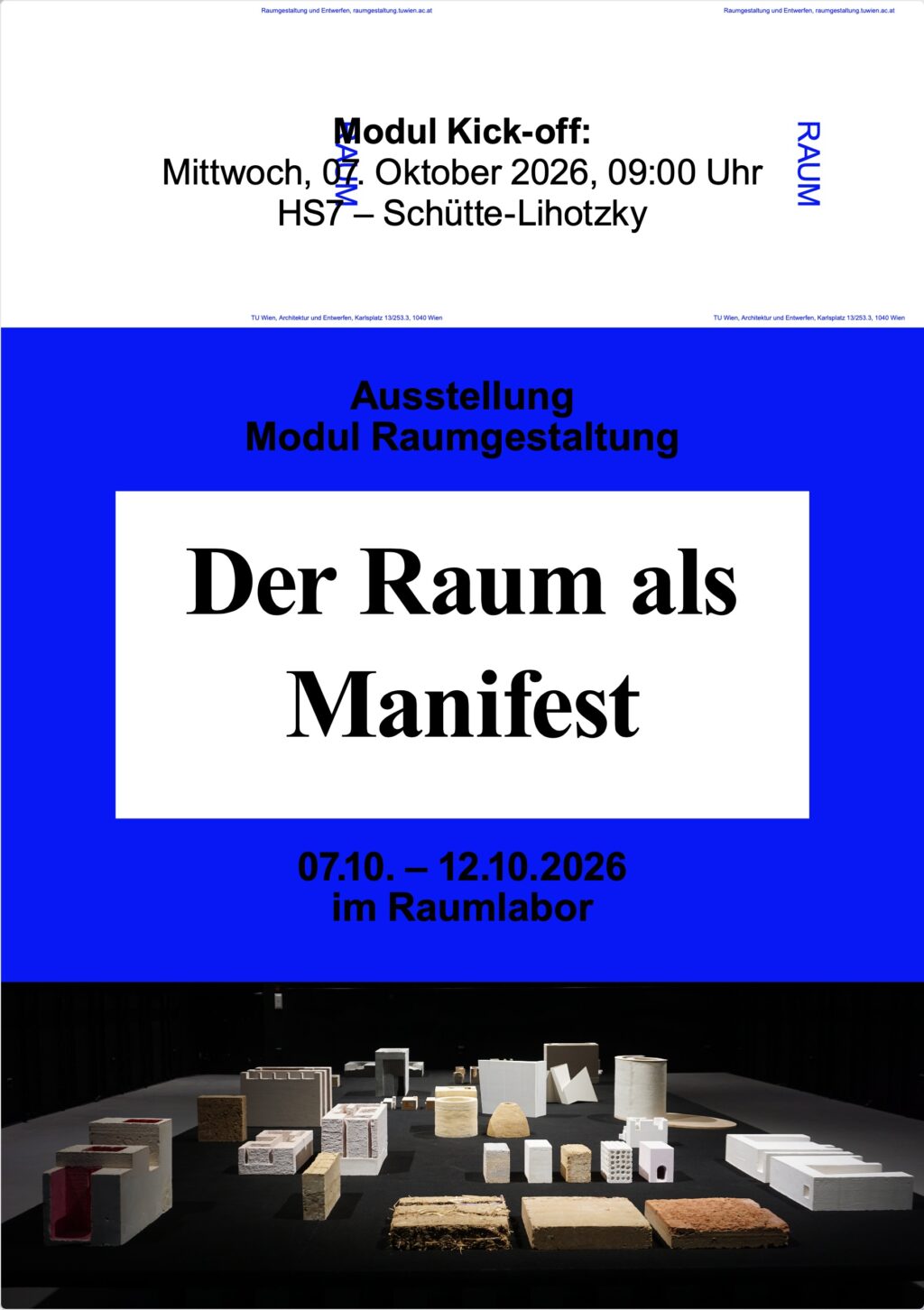
OCT 7, 2026
09:00
Exhibition:
Der Raum als Manifest, Modul Raumgestaltung
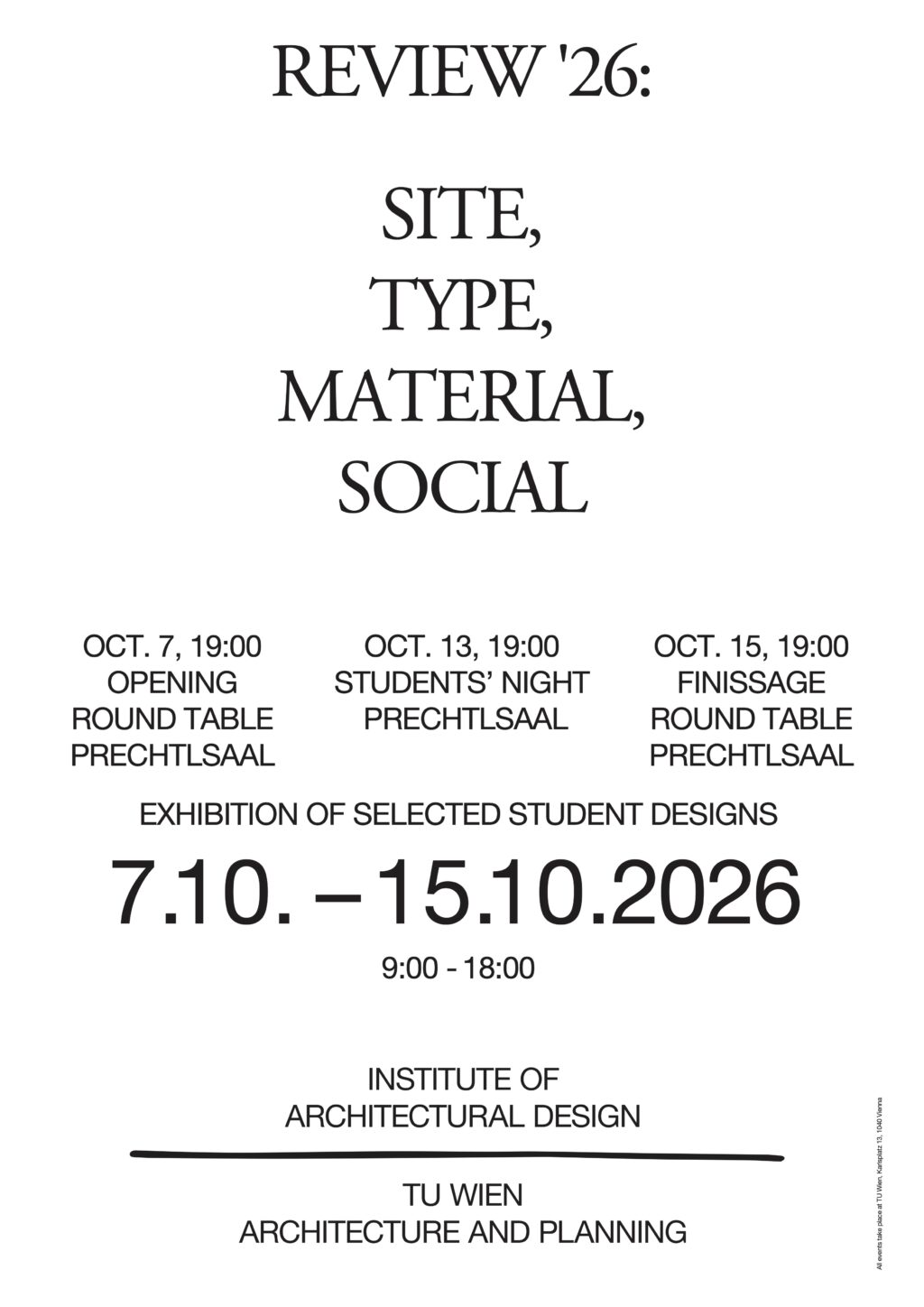
OCT 7, 2026
19:00
EXHIBITION:
REVIEW’26
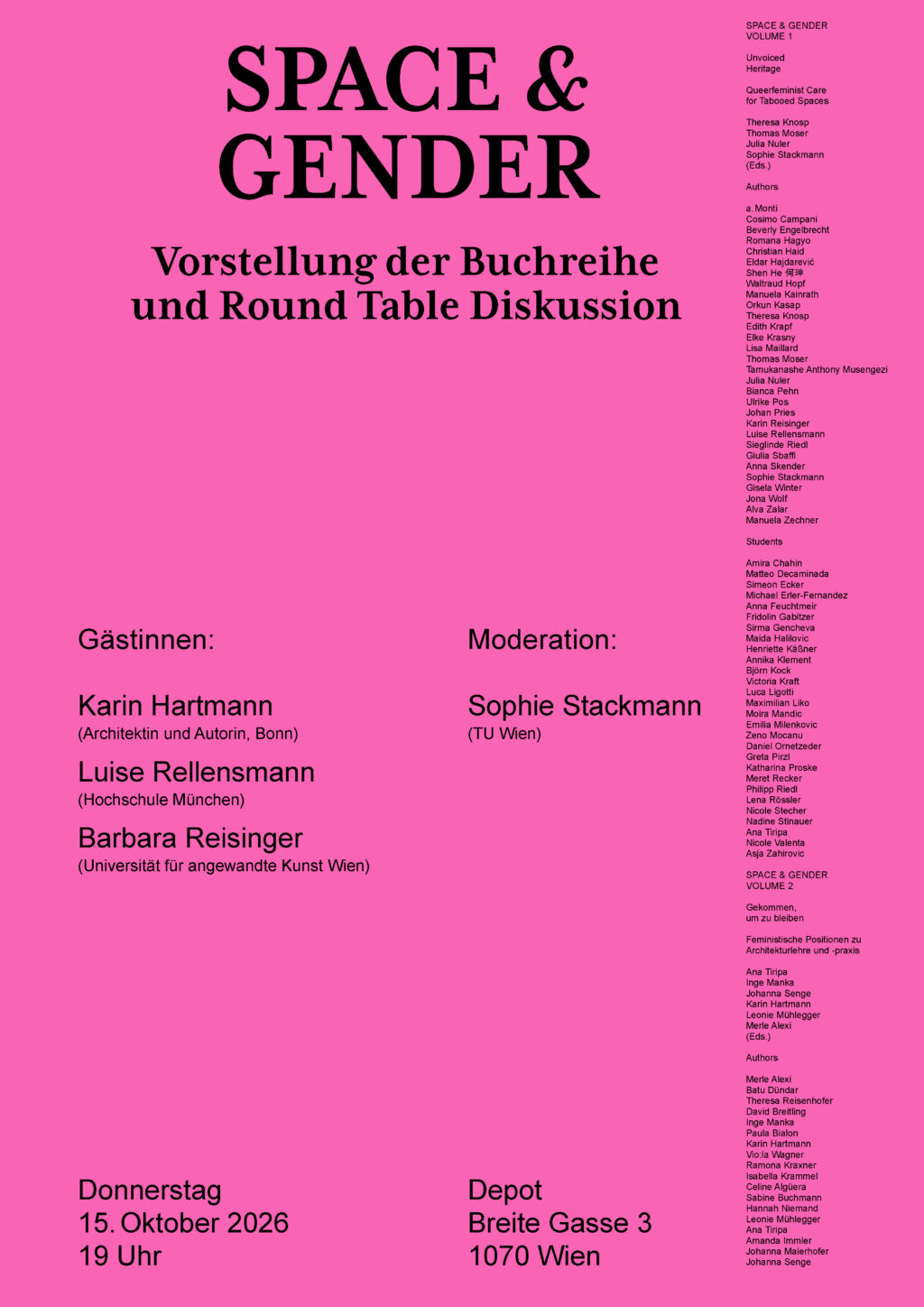
OCT 15, 2026
19:00
PRESENTATION AND ROUND TABLE: "SPACE & GENDER"
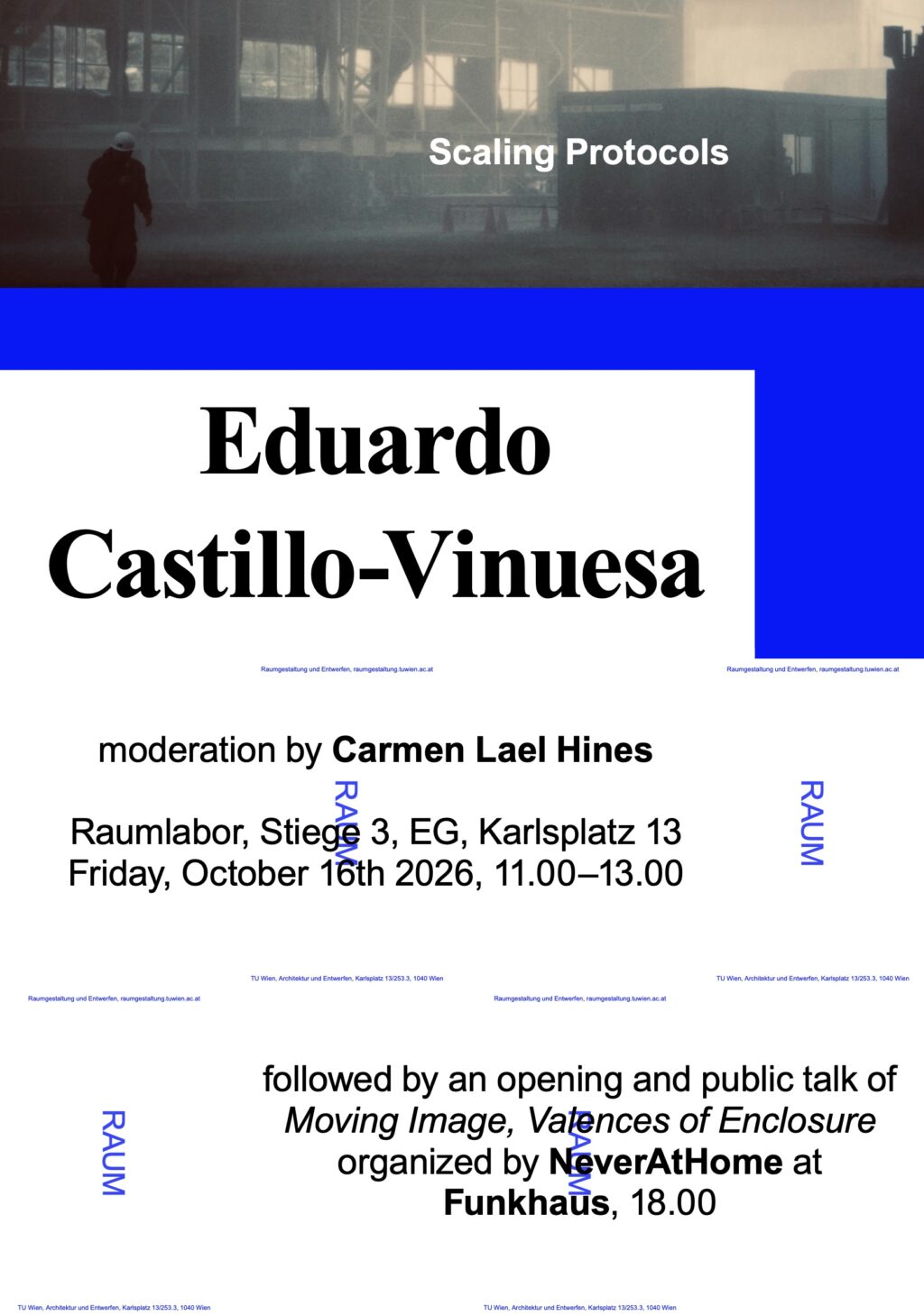
OCT 16, 2026
11:00
LECTURE:
EDUARDO CASTILLO-VINUES
SCALING PROTOCOLS
MAKING DARKNESS: BERLIN TIERGARTEN AND THE WEST-BERLIN BIOTOPE MAP
SANDRA BARTOLI
IN CONVERSATION WITH MICHAEL OBRIST
16.06.2026, 18:00 – HS7, Schütte-Lihotzky
Michael Obrist [feld72] in conversation with Sandra Bartoli about "Making Darkness: Berlin Tiergarten and the West-Berlin Biotope Map"
When does a human-constructed place go beyond the human, and how necessary is this transgression? To look at the built environment from the perspective of natural history allows one to explore the city as a system and construct of the natural and human together; furthermore, it introduces the notion of the city (of tomorrow) as a producer of resources and not as the machine of consumption we are used to assuming. Tiergarten, 210 hectares of forest in the middle of Berlin and the oldest park in the city, is an example of a place where many aspects of ecology, urbanism, heritage, daily culture, and politics are simultaneously present and evidently interfering with each other — to the point of bothering each other — in a way that transgresses established urban norms both spatial and societal. Over time, Tiergarten has become an island of anomalies that can be read as the radical expression of what is most urban and public in the city. Among many characteristics of Tiergarten is that here human history and natural history are constructed together to shape a model for future environments in an ever-expanding sea of urbanisation. This talk ranges from Tiergarten’s transgression as a key to shift established ways of talking about what is considered urban to elements of the biotope map of West Berlin, a far-sighted document of 1984 proposing to understand the city as a system of ecological processes that makes of wilderness a sanctioned agent of the urban environment, ultimately dissolving the alleged antagonism between city and nature.
Sandra Bartoli
Sandra Bartoli is a landscape architect and architect, co-founder of the Büros für Konstruktivismus in Berlin with Silvan Linden. She co-publishes the series AG Architektur in Gebrauch (Architecture in use), an architectural zine started by the office in 2014, in which “use” is explored as an aesthetic category that informs the development and transformation of architectural space. Her research focuses on sites of the entanglement of nature and city, such as Tiergarten in Berlin, a transgressive example of place, which leads to new definitions and models of what is “urban” under the challenge of the Anthropocene. In 2019, Bartoli co-edited the book Tiergarten: Landscape of Transgression (Park Books) with Jörg Stollmann. Bartoli was co-curator with Silvan Linden and Florian Wüst of the exhibition project Licht Luft Scheisse. Perspectives on Ecology and Modernity with the shows Archaeologies of Sustainability and Über Natur in Berlin at the Botanical Garden Museum and the nGbK. She is co-editor of the respective books, published in 2020 with adocs Hamburg. From 2017 to 2018, Bartoli began work on the research theme “The City’s Future Natural History” as an Endowed Professor for Visionary Forms of Cities at the Institute for Art and Architecture, Academy of Fine Arts Vienna. She is currently leading the research project “Wilde Dächer: die Ökosystemleistung extensiver Dachbegrünungen” financed by Zukunft Bau (BBSR). Bartoli is a full professor at the Architecture Faculty of Munich University of Applied Sciences.
Find it on our website: wohnbau.tuwien.ac.at